Best Shopify Inventory Apps for High-Volume Brands 2026
/

Shopify's built-in inventory tracking works until it doesn't. The breaking point usually isn't one dramatic failure. It's a pattern: overselling during a promotion, losing confidence in available stock across channels, or trying to forecast purchase orders manually across a catalog that's grown beyond a spreadsheet.
That's where most serious operators start looking for the best Shopify inventory apps. Shopify's own developer documentation makes the core reason for this category clear: inventory apps help merchants track stock to avoid selling out-of-stock products and can automate inventory updates by querying and adjusting quantities on a merchant's behalf, which is why this app category exists in the first place, as Shopify explains in its inventory management app documentation. For brands dealing with real operational complexity, that usually means moving from native tracking to software built for forecasting, multi-channel sync, purchasing, production, or warehouse logic.
That shift tends to happen in the same upgrade band seen across the Curvature customer profile, where many operators are already managing the kind of DTC complexity that makes basic inventory tools feel thin. This guide is built for those teams. It focuses on operational fit by sales velocity, SKU count, and warehouse setup, not generic feature stuffing. It also points to the hidden cost of getting this decision wrong.
For a related operations angle, this piece on optimizing inventory for secure environments is worth reviewing.
Table of Contents
When You Outgrow Shopify's Native Inventory
What usually breaks first
How to tell you have outgrown it
Stocky When Basic Shopify Native Is Enough
Who should stay simple
Inventory Planner Strongest for Forecasting
Where Inventory Planner earns its keep
Cin7 Strongest for Multi Channel and B2B
Katana Strongest for Manufacturers
Why manufacturers need different inventory logic
Single vs Multi Warehouse Decision
When one warehouse tool is enough
When multi-warehouse Shopify becomes the real requirement
Cost vs Cost of Stockouts
1. Inventory Planner by Sage
Best fit
2. Katana Cloud Inventory
Best fit
3. Cin7 Core formerly DEAR
Best fit
4. Trunk Stock Sync and Bundling
Best fit
5. Brightpearl by Sage
Best fit
6. Extensiv Order Manager formerly Skubana
Best fit
7. Veeqo
Best fit
8. Zoho Inventory
Best fit
9. Finale Inventory Descartes Finale
Best fit
10. Ordoro
Best fit
Top 10 Shopify Inventory Apps: Feature Comparison
Get Direct Access to the Teams Building Your Tech Stack
When You Outgrow Shopify's Native Inventory
A Shopify store can run fine on native inventory right up to the week orders spike, one SKU sells through on two channels at once, and the ops team starts checking three tabs before promising stock to a customer. That is usually the breakpoint. Shopify is still processing orders, but inventory control has stopped keeping up with how the business operates.
The pattern is consistent. Native inventory holds up longest when the catalog is small, sales are concentrated in one channel, and one team can mentally track what is coming in and going out. It starts to strain when SKU count rises, faster-selling products need tighter reorder timing, or fulfillment gets split across locations, marketplaces, and wholesale accounts.
What usually breaks first
The first issue is confidence in stock accuracy. Teams stop trusting the available quantity because bundles, transfers, returns, and marketplace orders do not always line up cleanly in one place.
Next comes purchasing. A low stock alert is not enough when lead times vary by supplier and a fast-moving SKU can go from healthy to out of stock in a few days. Operators need to know what to buy this week, in what quantity, and for which location.
Then visibility breaks. Once a business is asking which warehouse should fulfill an order, whether reserve stock should be protected for wholesale, or how to allocate inventory across Shopify and Amazon, it has moved beyond basic quantity tracking.
Shopify native inventory records units. Growing operators need a system that supports allocation, replenishment, and channel control.
How to tell you have outgrown it
Three operating breakpoints usually force the upgrade decision.
SKU count is the first. More SKUs mean more edge cases, slower cycle counts, and more money tied up in the wrong products.
Sales velocity is the second. The faster items move, the less margin for bad reorder timing. A missed purchase order on a top seller hurts far more than carrying an extra month of a slow mover.
Warehouse complexity is the third. One location is manageable with lighter tools. Multiple warehouses, 3PLs, store pickup, or regional fulfillment create allocation problems that basic Shopify workflows do not solve well.
That is why app selection should start with operating model, not feature lists. A merchant evaluating tools should first identify whether the pain is forecasting, multi-location control, manufacturing, or channel sync. This framework for how to evaluate Shopify apps is useful for that step because it pushes the decision back to workflow fit instead of app store marketing.
The category is crowded, and the clutter makes weak buying decisions more likely. An Uptek review of Shopify app usage and app store size gives useful context on how many apps merchants are already stacking into operations. That matters because inventory software rarely lives alone. It has to work with purchasing, shipping, accounting, bundles, and sometimes B2B systems too.
The actual requirement is usually narrower than teams first assume. Some brands need forecasting. Others need multi-channel sync. Others need warehouse logic or manufacturing control. The operators who choose well are usually the ones who diagnose the breakpoint first, then buy the software category built for that problem.
Stocky When Basic Shopify Native Is Enough
Stocky still matters as a reference point because it represents the level of inventory control many brands need before they overbuy software. If the business runs primarily on Shopify, has a simpler purchasing rhythm, and doesn't need broad multi-channel orchestration, staying closer to the native stack can still be the right decision.
Who should stay simple
A simpler setup still works when a team has one main sales channel, a manageable catalog, and purchasing handled by a small ops team that understands the business well. In that environment, too much software can create more admin than value.
Shopify's own guidance points merchants back to workflow fit rather than the idea of one universal winner, which aligns with a Prediko analysis focused on operational scenario fit. That's the right lens. A team with one location and straightforward replenishment shouldn't jump into an ERP-shaped tool just because the category is noisy.
Stay with basic tools if the main problem is purchase visibility, not channel sync.
Upgrade later if stockouts are coming from forecasting errors, warehouse complexity, or marketplace mismatch.
Avoid overbuilding if no one on the team will own system setup and process discipline.
Inventory Planner Strongest for Forecasting
A common breakpoint looks like this. The stock count in Shopify is accurate enough, orders are flowing, but buyers still miss demand, tie up cash in slow movers, and scramble when lead times slip. That is the point where Inventory Planner by Sage starts to make sense.
Where Inventory Planner earns its keep
Inventory Planner fits operators who have outgrown reactive replenishment. Usually that shows up once SKU count rises, sales velocity becomes less predictable, or suppliers stop behaving on a fixed cadence. A merchant with 40 steady sellers can often buy from experience. A merchant with hundreds of variants, seasonal swings, and staggered supplier lead times usually cannot.
The value is planning discipline. The tool helps teams turn sales history, vendor timing, and stock position into purchase decisions that are easier to defend. That matters when the problem is not sync accuracy. It is deciding how much inventory the business can carry without creating dead stock six weeks later.
It also tends to fit brands that are tightening their broader systems, not just adding one more app. Teams reviewing forecasting software usually benefit from looking at the wider Shopify tech stack for ecommerce operations, because forecasting quality depends on clean product data, channel inputs, and a buyer who owns replenishment.
A practical way to judge fit:
Choose Inventory Planner when purchasing has become a planning job, with reorder decisions made across many SKUs or variants.
Choose it sooner if stockouts come from bad forecasts and supplier timing, not from warehouse mistakes or channel overselling.
Wait if the catalog is still small, demand is stable, and one operator can manage buys in a spreadsheet without creating avoidable misses.
The trade-off is straightforward. Forecasting software improves buying only when the catalog is maintained well, seasonality is understood, and someone reviews recommendations with context. If the team wants automatic purchase orders without process discipline, the output will be wrong in a more expensive way.
Cin7 Strongest for Multi Channel and B2B
A common breaking point looks like this: Shopify is still the storefront, but inventory decisions now depend on Amazon, wholesale orders, EDI requirements, a 3PL, and a finance team that wants cleaner purchasing controls. At that stage, native Shopify inventory usually stops being the system of record. It becomes one input among several.
Cin7 fits operators who have moved past single-channel retail and need one system to coordinate sales, purchasing, warehouse activity, and B2B workflows. The appeal is operational control. Teams use it when stock errors are no longer caused by one bad count, but by disconnected systems updating at different times.
The strongest fit usually shows up at a specific level of complexity:
SKU counts are high enough that manual purchasing and channel checks break down.
Sales velocity is uneven across channels, so the same item can be overcommitted fast.
Warehouse logic is no longer simple, especially if a 3PL, multiple locations, or wholesale allocations are involved.
B2B orders need different pricing, terms, or fulfillment rules from DTC orders.
That is why brands move to Cin7. They need inventory to sit in the middle of the business, not inside Shopify alone.
It can also help teams clean up app sprawl. Brands often add point solutions one by one, then end up with separate tools for bundles, purchasing, warehouse sync, and wholesale operations. A broader review of the Shopify tech stack for ecommerce can help at that point, because the inventory app choice usually exposes larger system design problems.
Operational rule: Choose Cin7 when inventory accuracy depends on cross-channel order flow and B2B process control, not just on what is sitting on one shelf.
The trade-off is heavier implementation work. Cin7 asks the team to define purchasing rules, product data, warehouse flows, and ownership across departments. If nobody owns that setup, the software can mirror the same messy process at a higher monthly cost.
Katana Strongest for Manufacturers
Katana solves a different problem from most Shopify inventory apps. It isn't just tracking finished goods. It's built for brands that make, assemble, or kit what they sell and need inventory logic that starts before an order is ready to ship.
Why manufacturers need different inventory logic
If a team is managing bills of materials, work in progress, component availability, and finished goods, generic Shopify inventory management tools tend to feel shallow fast. Katana is built for that gap. It connects raw materials, production planning, and sellable inventory in a way standard stock apps usually don't.
That makes it a strong fit for brands assembling products, building bundles from components, or running light manufacturing tied directly to Shopify demand. It's usually unnecessary for pure buy-and-resell operators.
Best for production-aware ops where stock isn't really “in stock” until assembly is complete.
Best for BOM complexity when one SKU depends on components that need separate tracking.
Weakest fit for simple retail when the team only needs purchasing and replenishment.
The trade-off is obvious. Manufacturing depth brings process overhead. A reseller with straightforward inbound purchasing can end up paying for logic the team won't use.
Single vs Multi Warehouse Decision
A lot of software selection mistakes come from asking which app is best before deciding whether the business has a multi-warehouse problem. That distinction changes everything.
When one warehouse tool is enough
If inventory sits in one physical location and all channels draw from the same pool, the main issues are usually planning, purchasing, and maybe bundle logic. In that case, a heavy OMS or multi-node routing layer can be overkill.
Simpler tools work better when one operator can understand stock movement end to end. There's less handoff risk, fewer sync points, and fewer places for quantity mismatches to spread.
When multi-warehouse Shopify becomes the real requirement
The moment inventory is split across multiple locations, 3PLs, retail nodes, or marketplace-specific pools, the software decision changes. At that point, a team needs more than a Shopify stock app. It needs location-aware allocation, routing, sync discipline, and exception handling.
That's also where market maturity becomes visible. One independent roundup of Shopify inventory apps reported Assisty with more than 306 Shopify App Store reviews and a 4.9 rating, while adjacent inventory-sync tools on Shopify's category pages show four-digit review counts, including 749 for TikTok Shop Integration, 1,068 for eBay Integration - DPL, and 1,080 for CedCommerce Amazon Channel. The practical takeaway is clear. Merchants increasingly rely on specialized tools to keep stock synchronized across marketplaces, not just inside Shopify.
A single warehouse business buys software for control. A multi-warehouse business buys software for coordination.
Cost vs Cost of Stockouts
A $0 tool looks cheap until it causes a preventable stockout on a high-velocity SKU. Then the true bill shows up in lost margin, split shipments, support tickets, and ad spend wasted on products that cannot ship.
Software should be priced against the failure it prevents. That usually becomes obvious at specific breakpoints. Around a few hundred active SKUs, manual reorder logic starts slipping. Once sales velocity gets less predictable, forecasting errors get expensive. Once inventory is spread across channels or locations, a quantity mistake in one system turns into oversells everywhere else.
The practical move is to buy for the current bottleneck, not for an imagined future org chart. If buyers are missing reorder windows, pay for planning. If marketplace stock keeps drifting out of sync, pay for sync and allocation control. If pick, pack, and routing decisions are breaking down across warehouses or 3PLs, pay for stronger operational control.
Overbuying is common.
Teams with one warehouse and moderate SKU depth often do not need ERP-level workflows, layered approvals, or a heavy order management stack. They need accurate on-hand counts, clear replenishment signals, and bundle logic that does not create phantom availability. Paying for broader functionality too early adds implementation work, training drag, and more points of failure.
Underbuying is just as expensive, and it usually hurts faster. A brand can save on app fees for months, then lose that savings in a single promotion if a fast seller goes out of stock, purchase orders are delayed, or marketplace quantities do not update in time. Those failures are operational, but they hit revenue first.
A team should also price in support quality and implementation effort. Feature lists look similar across inventory apps. The key difference often shows up after install, when a merchant needs help mapping locations, fixing bundle behavior, setting reorder rules, or cleaning up SKU data. That is also why operators look for lower-noise evaluation paths and direct access to vendors, as discussed in this inventory app market commentary.
Pay for the bottleneck you already have. Forecasting, sync, and warehouse control solve different failure modes.
Avoid enterprise depth by default. Extra workflow only pays off when SKU count, velocity, or warehouse complexity requires it.
Treat support as part of total cost. A cheaper app with weak onboarding can cost more than a higher-priced tool that gets the setup right.
1. Inventory Planner by Sage
A lot of Shopify merchants hit the same wall at roughly the same time. SKU count climbs, sales stop being predictable week to week, and one late purchase order starts a chain reaction across bestsellers, cash flow, and backorders. At that point, the problem is usually not inventory tracking. It is replenishment planning.
Inventory Planner by Sage fits that stage well. It is built for teams that need better demand forecasting, purchase planning, and supplier-aware replenishment without replacing the rest of their operating stack.
Best fit
This app starts to make sense when planning by spreadsheet breaks down. That usually happens once the catalog gets wide enough that buyers cannot monitor every SKU manually, or when sales velocity changes fast enough that last month's run rate stops being a safe reorder method. Brands with multiple locations, seasonal demand, long supplier lead times, or wholesale and retail demand pulling from the same inventory tend to feel that pain first.
Its value is focus. Inventory Planner helps operators answer practical questions that Shopify alone does not handle well: what to reorder, when to place the PO, how much cash is tied up in slow movers, and which SKUs are at risk before they go out of stock. That matters more than another on-hand count when margin loss primarily comes from buying too late or buying the wrong mix.
There is a trade-off. Forecasting software only works when the underlying SKU data, lead times, and vendor settings are reasonably clean. Teams still need someone who owns replenishment decisions and reviews exceptions. If nobody maintains that process, the tool becomes an expensive dashboard instead of a buying system.
Strongest use case is SKU and variant-level forecasting, reorder planning, lead-time management, and open-to-buy control.
Best operator profile is a merchant with a dedicated buyer, inventory lead, or finance operator who actively manages purchasing.
Main drawback is pricing. It can feel high if the business mainly needs stock sync or simple reorder alerts rather than true planning depth.
As noted earlier, teams comparing tools at this level should judge implementation effort, data quality requirements, and ownership just as hard as feature lists.
2. Katana Cloud Inventory
Katana Cloud Inventory is the clearest choice for merchants who make or assemble what they sell. It combines inventory control with production workflows, which is why it's often a better answer than a generic Shopify inventory management app for manufacturing-led brands.
Best fit
Katana shines when a finished SKU depends on raw materials, subassemblies, or shop-floor sequencing. It gives operations teams visibility into raw stock, work in progress, and finished goods, which is the level of control DTC manufacturers usually need.
That same depth makes it a mismatch for simpler retail businesses. If the team isn't using bills of materials or production orders, a lot of the product won't create value.
Manufacturers don't just need inventory counts. They need inventory state.
Strongest use case for BOMs, production planning, component tracking, and kitting.
Best operator profile is a brand with in-house assembly, light manufacturing, or custom product workflows.
Main drawback is that costs can rise with added functionality and higher-tier requirements.
3. Cin7 Core formerly DEAR
Cin7 Core fits the stage where SKU count, channel count, and order flow start breaking simple inventory habits. A spreadsheet plus Shopify admin can hold up for a while. It usually fails when the team is buying for multiple channels, promising stock to wholesale accounts, and trying to keep accounting, purchasing, and fulfillment aligned.
Best fit
Cin7 Core is a good match when inventory stops being just a stock-count problem and becomes a coordination problem. The pressure points are familiar: backorders handled in one system, POs tracked in another, returns muddying available stock, and wholesale orders competing with DTC demand for the same units. At that point, the business usually needs one operating layer for purchasing, assemblies, sales channels, and accounting connections.
It also suits operators who have outgrown point solutions but are not ready for a full ERP rollout. That middle tier matters. You get broader process control than a sync app or forecasting tool, but you also take on more setup work, more process design, and a bigger need for internal ownership.
Strongest use case for multi-channel brands with wholesale, purchasing, and accounting complexity in the same workflow.
Best operator profile is a team with clear ops ownership, established receiving and reorder processes, and enough order volume to justify tighter controls.
Main drawback is implementation load. If the business has messy SKU data or no one responsible for system rules, Cin7 Core can expose operational gaps faster than it fixes them.
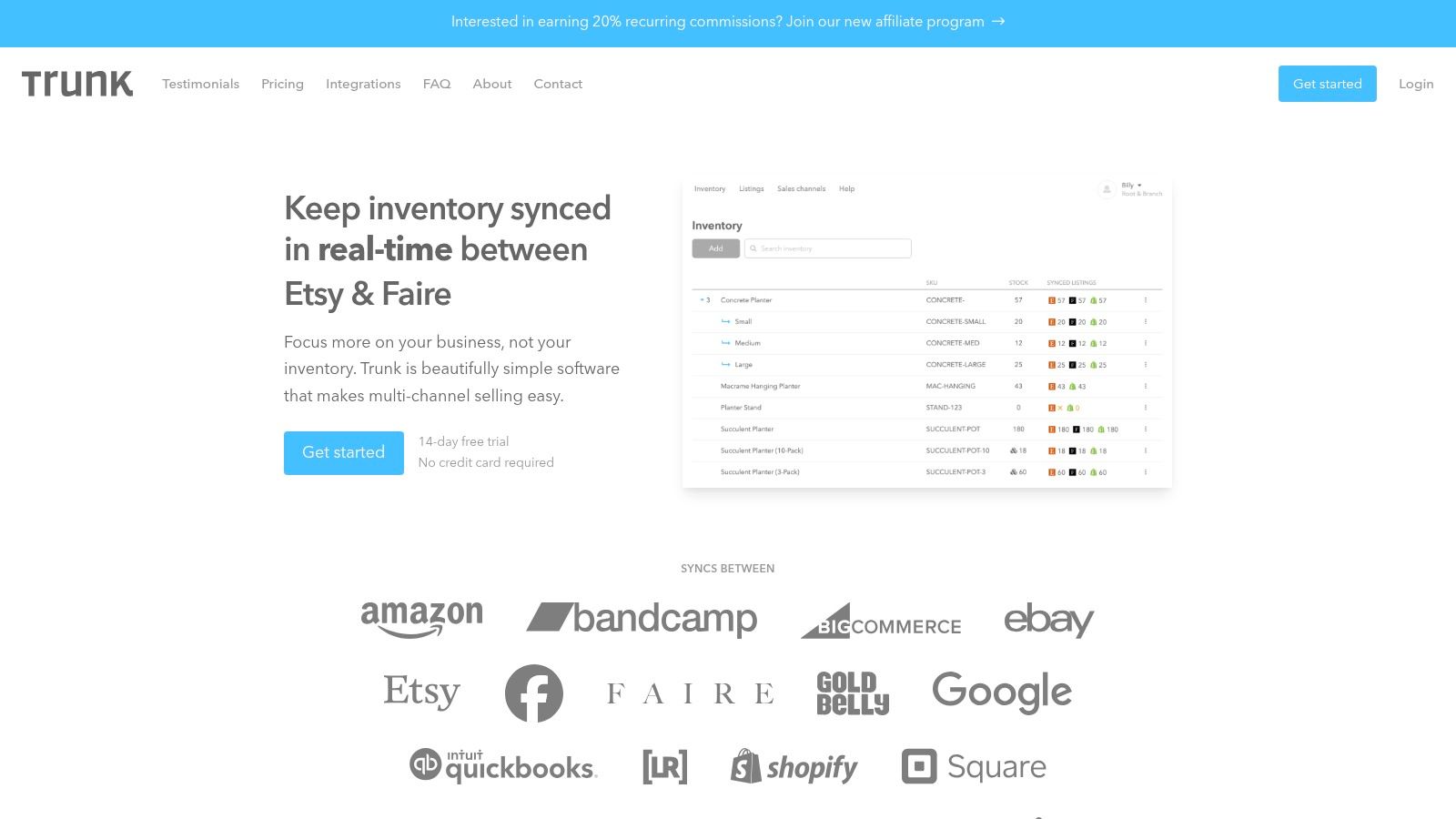
4. Trunk Stock Sync and Bundling
Trunk is a specialist tool. That's its advantage. It focuses on keeping stock aligned across channels and stores, especially where bundles, duplicate SKUs, and real-time updates matter more than deep planning.
Best fit
Trunk is a good answer when the business doesn't need a broad OMS. It needs fewer oversells. That usually means multiple Shopify stores, marketplaces, or bundle logic that causes stock errors if components aren't decremented correctly.
The trade-off is narrowness. Trunk solves sync well, but it won't replace planning, purchasing, or broader back-office workflows.
Strongest use case for multi-channel sellers dealing with bundle logic and duplicate SKU synchronization.
Best operator profile is a lean team that wants speed and clarity, not system sprawl.
Main drawback is that it often needs to sit beside another tool for purchasing or forecasting.
5. Brightpearl by Sage
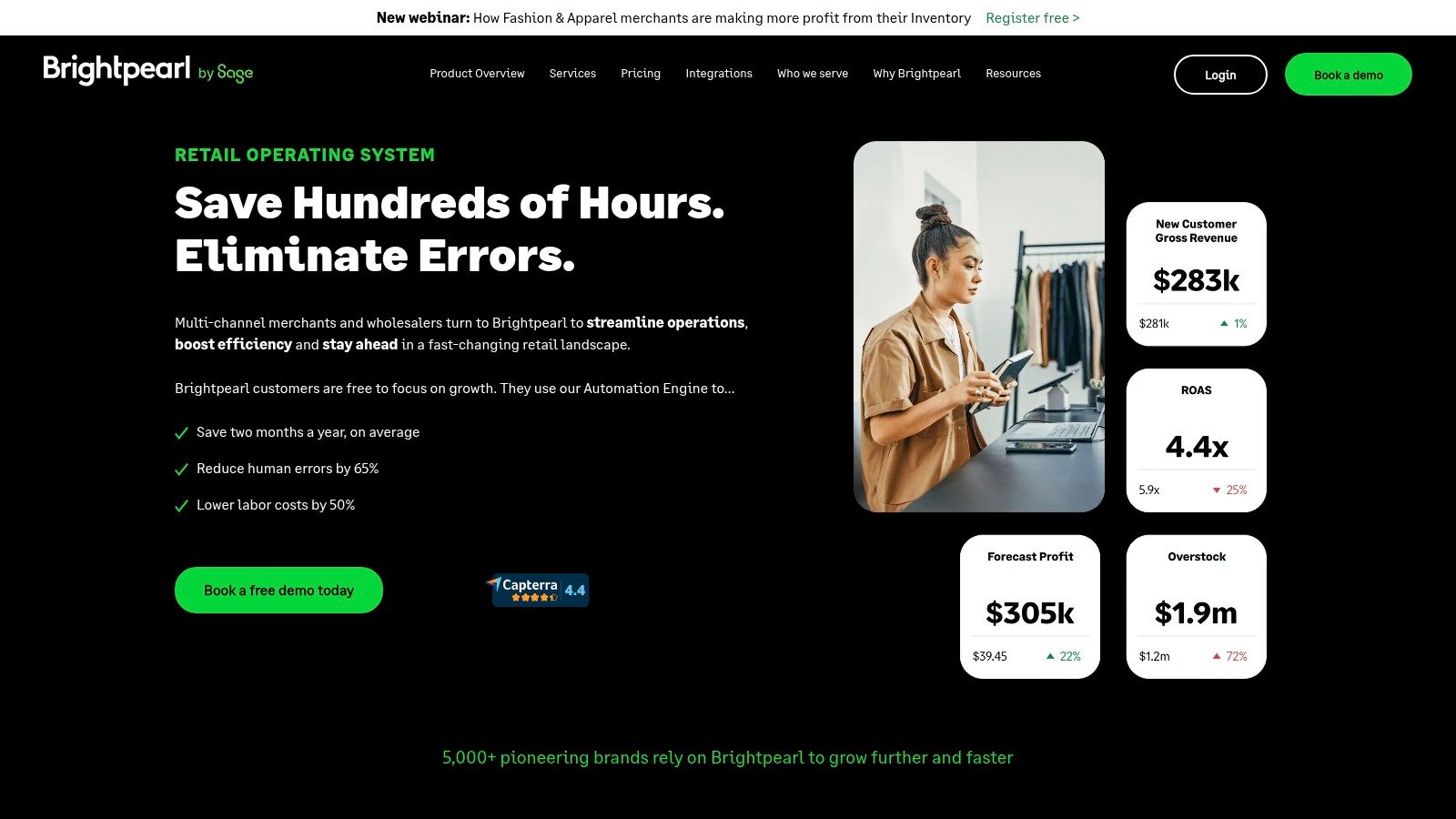
Brightpearl by Sage is for high-volume operators that need a retail operating platform, not just a Shopify stock app. It centralizes inventory, orders, purchasing, and accounting-style workflows across stores and channels.
Best fit
Brightpearl makes sense when operational friction comes from too many disconnected systems and too much manual intervention. High-order-volume teams often need one place to coordinate merchandising, purchasing, retail, and wholesale operations.
It's not the right answer for smaller catalogs or narrower workflows. The implementation lift is heavier, and the product only pays off when the business has enough complexity to justify that structure.
Brightpearl is bought for control at scale, not for convenience.
Strongest use case for larger Shopify and Shopify Plus operations with cross-channel retail complexity.
Best operator profile is a business with process maturity and a willingness to implement carefully.
Main drawback is that quote-based, heavier implementations can be excessive for simpler brands.
6. Extensiv Order Manager formerly Skubana
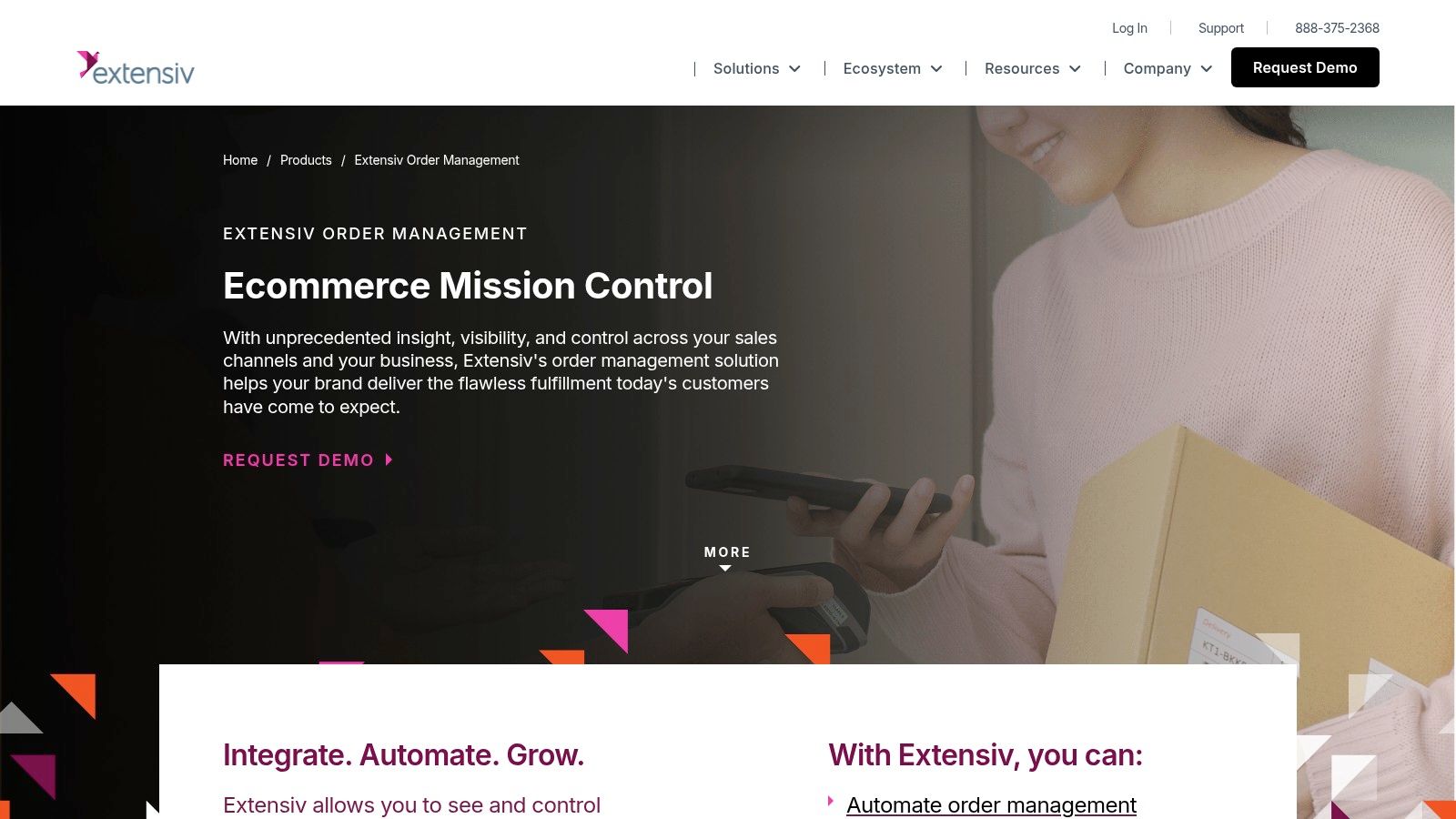
Extensiv Order Manager is designed for operations with multiple warehouses, marketplaces, fulfillment nodes, or routing rules that can't be managed cleanly inside lighter inventory tools.
Best fit
This is one of the better fits for multi-warehouse Shopify operations where order routing and inventory orchestration matter as much as stock accuracy. Brands often reach this stage around the same broader systems shift that leads them to evaluate platform readiness, which is why a piece on when to upgrade to Shopify Plus tends to come up in parallel.
Extensiv is powerful, but it asks for operational discipline. If a team doesn't have clear ownership over rules, integrations, and exception handling, the complexity won't stay contained.
Strongest use case for multi-node fulfillment, channel rules, and centralized order routing.
Best operator profile is a brand with several warehouses, 3PL relationships, or marketplace-heavy operations.
Main drawback is that implementation and ongoing administration are substantial.
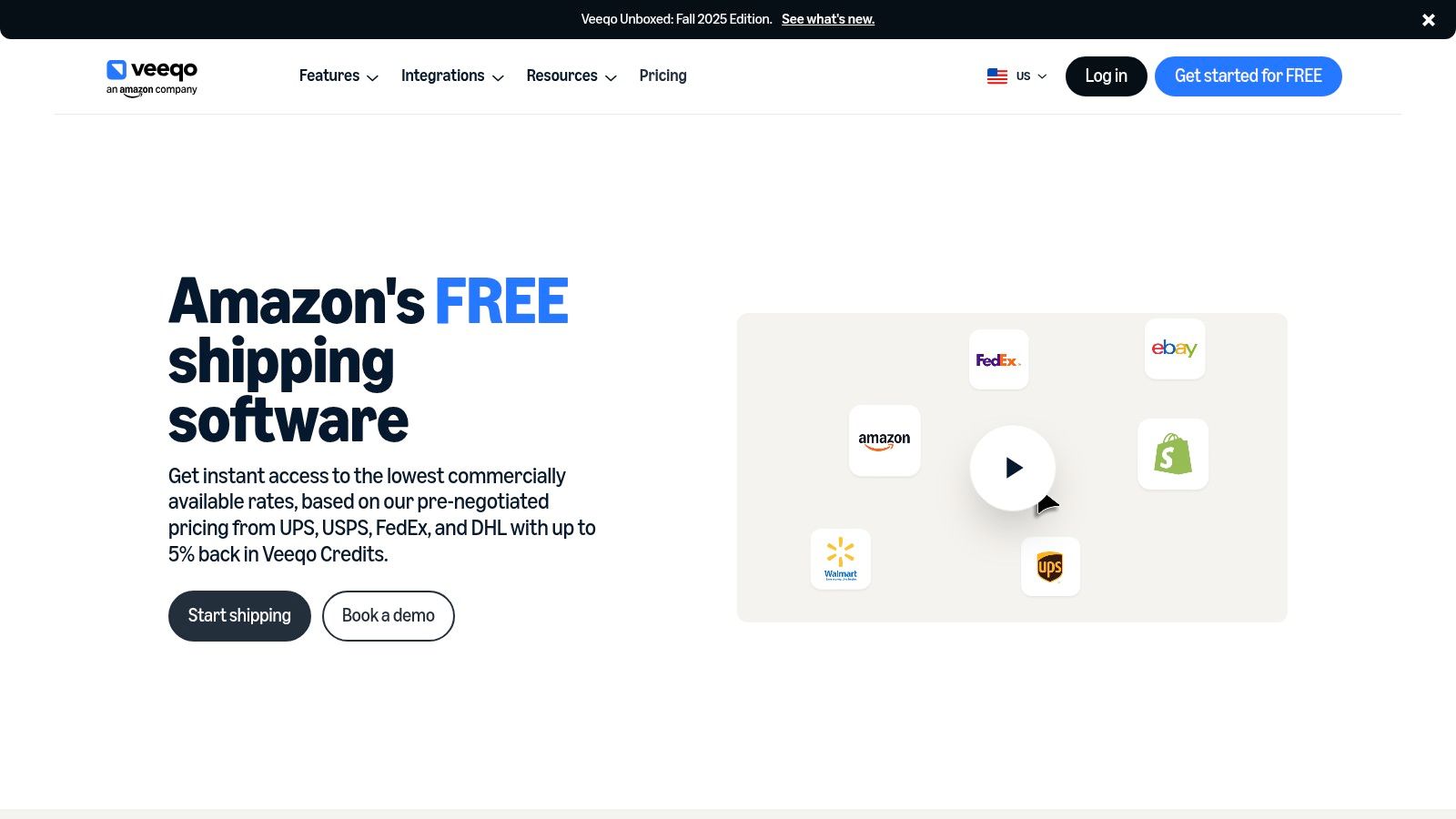
7. Veeqo
Veeqo is a practical option for brands that need shipping, order management, and basic inventory coordination without taking on another monthly software line item. That makes it appealing for operators who are cost-aware but already feeling strain from channel fragmentation.
Best fit
Veeqo is strongest when shipping operations and stock visibility are tightly connected. Teams using major carriers and managing warehouse pick-pack workflows can often get enough inventory value from it without buying a more expensive platform.
The limitation is depth. It won't replace forecasting software or an ERP-like operating layer for more complex businesses.
Strongest use case for multichannel order and warehouse workflows tied closely to shipping.
Best operator profile is a lean ops team that wants cost control and centralized fulfillment basics.
Main drawback is limited depth for advanced planning or broader operational orchestration.
8. Zoho Inventory
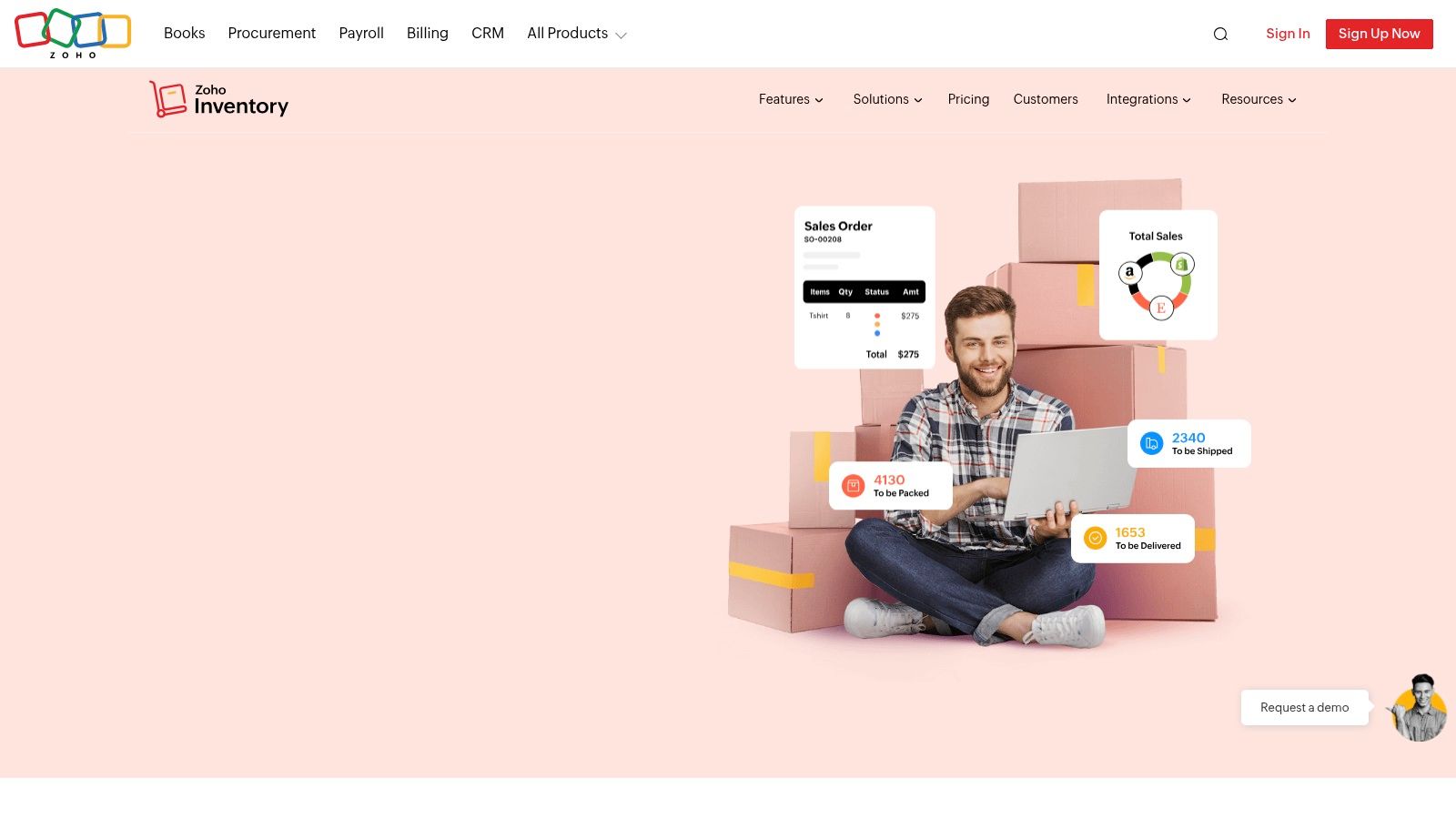
Zoho Inventory is one of the better SMB-to-mid-market options for merchants that need broader inventory and order control without stepping into a heavier platform too early.
Best fit
Zoho Inventory works well for brands that need multi-warehouse support, stock updates, shipping coordination, and access to a wider business software ecosystem. It tends to appeal to operators that value breadth and process coverage more than deep specialization.
That same ecosystem can create its own complexity. Once a team starts connecting Books, CRM, Flow, and other Zoho products, the software can feel less simple than it looked at the start.
Strongest use case for merchants that want balanced inventory, orders, shipping, and back-office connectivity.
Best operator profile is a growing team that needs more than native Shopify but less than a near-ERP.
Main drawback is that deeper bundle logic or manufacturing workflows may require workarounds.
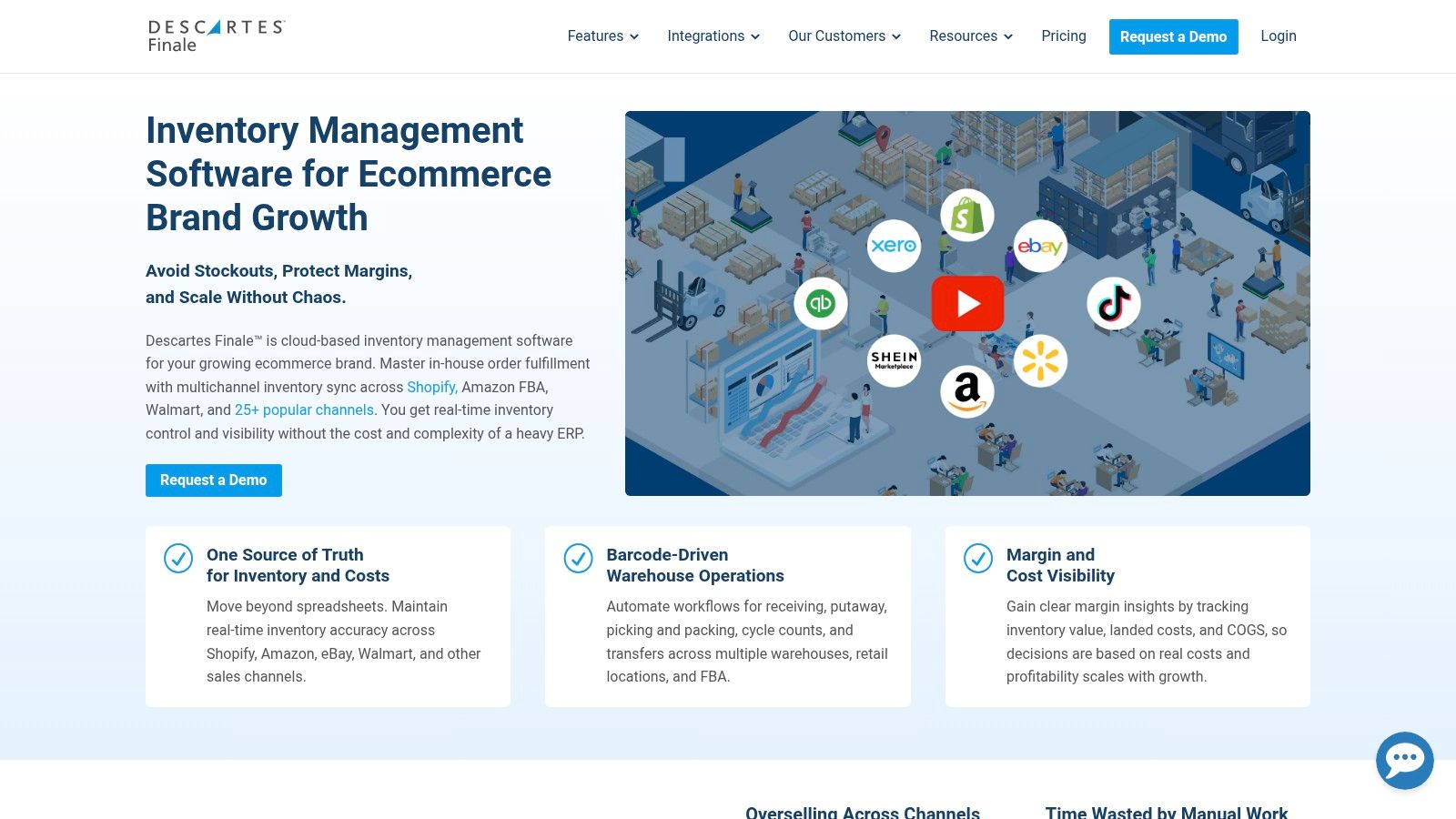
9. Finale Inventory Descartes Finale
Finale Inventory is a strong fit for brands that care about barcode workflows, lot tracking, serial control, and warehouse process discipline. It's less polished than some commerce-first tools, but often stronger in operational detail.
Best fit
Finale earns attention when inventory accuracy depends on scan-based workflows, serialized products, or traceability requirements. For teams working with 3PLs or warehouse operators, that can matter more than a cleaner interface.
The trade-off is usability. Some operators will find it more utilitarian than commerce-native tools, especially if reporting and setup need substantial configuration.
Strongest use case for lot, serial, barcode, and warehouse-scanning workflows.
Best operator profile is a business with traceability needs or stronger warehouse process demands.
Main drawback is that interface and reporting may require patience and setup effort.
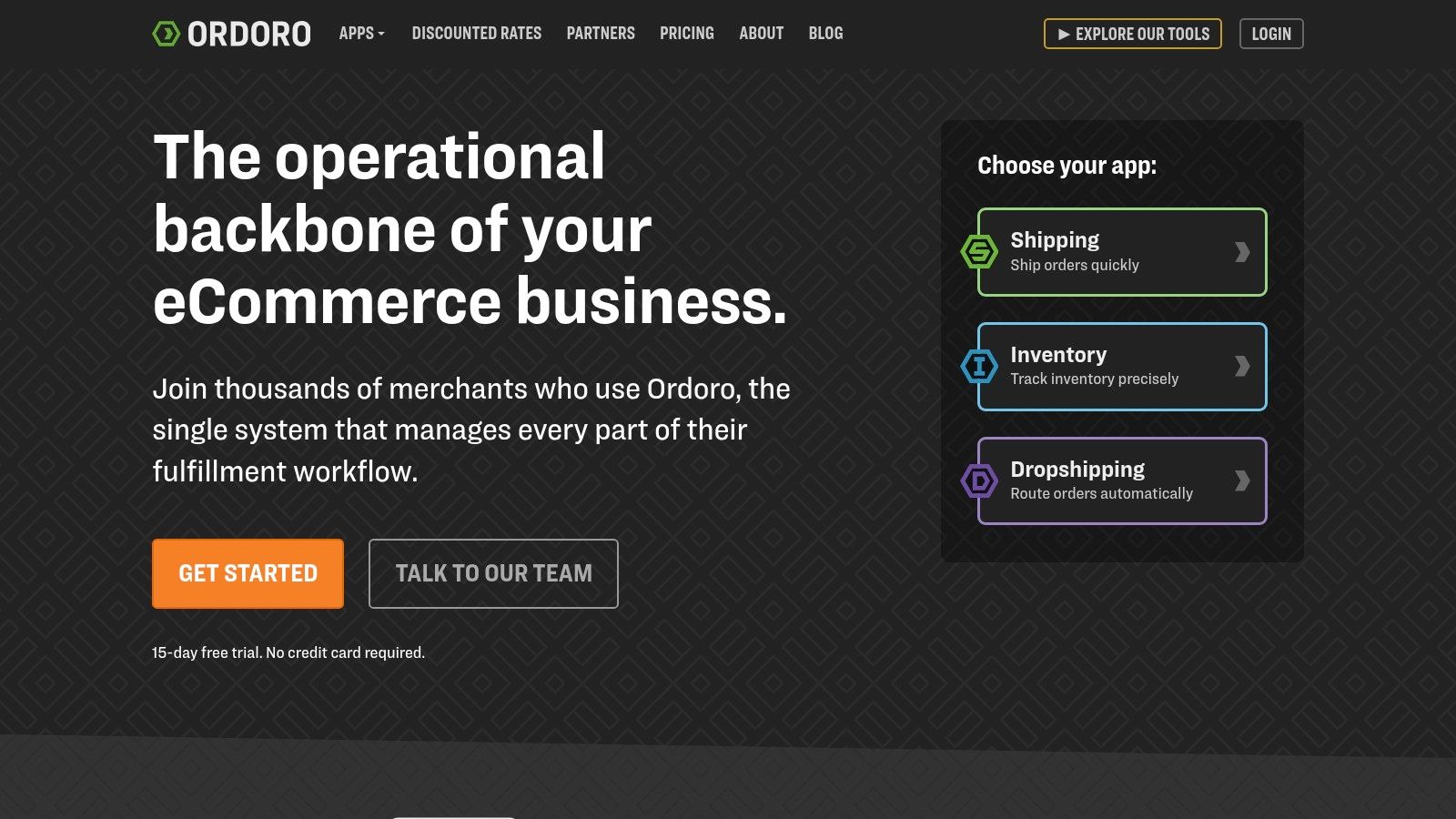
10. Ordoro
Ordoro is a good fit for brands that want inventory, shipping, and dropship automation in one operating layer. It's especially relevant where supplier routing and fulfillment coordination are part of the daily workload.
Best fit
Ordoro works best for teams trying to reduce operational handoffs between shipping, vendor routing, and inventory control. That's useful for DTC brands with dropship elements or hybrid fulfillment models.
It's less attractive if only one part of that stack is needed. A merchant that just wants a pure inventory tool may end up paying for a broader operating layer than necessary.
Strongest use case for mixed inventory, shipping, and vendor-routing workflows.
Best operator profile is a brand with dropship complexity or fulfillment automation needs.
Main drawback is that separate paid modules can make it less efficient than a single-purpose tool.
Top 10 Shopify Inventory Apps: Feature Comparison
App | Core capability | Best fit (target audience) | Pricing & scale (notes) | AppStoreResearch benefits & soft CTA |
|---|---|---|---|---|
Inventory Planner by Sage | SKU/variant demand forecasting, PO recommendations, open‑to‑buy | Multi‑location & multi‑channel brands needing deep forecasts | Usage/scale pricing; onboarding to tune forecasts | Talk with devs for paid sessions, request forecasting features, discover discounts, Join AppStoreResearch (3,000 operators; $1M paid in incentives) |
Katana Cloud Inventory | BOMs, production planning, WIP tracking, shop‑floor workflows | DTC manufacturers, assemblers, brands that make/kit products | Add‑ons and higher tiers increase cost | Meet founders/teams, influence manufacturing features, get early access and possible deals, Join AppStoreResearch (3k operators; $1M incentives) |
Cin7 Core (formerly DEAR) | Broad inventory/PO/sales sync with accounting integrations | Omni‑channel SMBs and mid‑market merchants | Setup learning curve; add‑ons and users raise total | Validate multi‑system workflows, get vendor consults and paid calls to test integrations, Join AppStoreResearch (3k ops; $1M paid) |
Trunk – Stock Sync & Bundling | Real‑time webhook stock sync; bundle/kit logic across stores | Multi‑Shopify sellers needing fast sync and bundle control | Not a full OMS; pricing scales with order volume | Discover lightweight sync tools, request bundle improvements, earn for feedback, Join AppStoreResearch (3k operators; $1M incentives) |
Brightpearl by Sage | Near‑ERP retail ops: centralized orders, purchasing, accounting | High‑volume Shopify/Plus merchants needing automation | Quote‑based pricing; heavier implementation | Run migration discovery calls, meet product teams, negotiate enterprise deals, Join AppStoreResearch (3k ops; $1M paid) |
Extensiv Order Manager (Skubana) | Order routing, multi‑node inventory, large connector catalog | Complex multi‑warehouse & marketplace merchants | Non‑trivial implementation; integration costs possible | Coordinate with connectors, get strategic sessions with vendors, influence roadmap, Join AppStoreResearch (3k ops; $1M incentives) |
Veeqo | Shipping + order + inventory (no monthly software fee) | Multi‑channel shippers using major carriers (US focus) | Cost controlled via carrier volume; Amazon‑owned considerations | Test shipping integrations, access carrier rebate insights, get paid feedback sessions, Join AppStoreResearch (3k ops; $1M paid) |
Zoho Inventory | SMB inventory + shipping; integrates with Zoho suite | Budget‑conscious SMBs wanting core inventory tools | Competitive pricing; multi‑product coordination can add complexity | Compare suite integrations, request connector improvements, earn for sessions, Join AppStoreResearch (3k ops; $1M incentives) |
Finale Inventory (Descartes Finale) | Multi‑warehouse, lot/serial, barcode workflows, 3PL friendly | Brands needing serialized inventory and scanner workflows | Interface/utilitarian feel; pricing via sales consultation | Validate scan/3PL workflows, meet engineers, influence features, Join AppStoreResearch (3k ops; $1M paid) |
Ordoro | Inventory + shipping + dropship automation; vendor routing | DTC brands using dropship or consolidated fulfillment | Modules sold separately; can be pricier if partial use | Evaluate dropship routing, get vendor discounts and founder consults via paid calls, Join AppStoreResearch (3k operators; $1M incentives) |
Get Direct Access to the Teams Building Your Tech Stack
Choosing among the best Shopify inventory apps is rarely just a feature comparison. It's a bet on workflow fit, vendor responsiveness, and whether the product team behind the software understands the pressure your operations team is under every day. The wrong tool creates recurring friction. The right one removes handoffs, reduces guesswork, and gives the business a cleaner path to scale.
That's one reason direct access to app founders and product teams matters more than ever. The Shopify app market is crowded, and operators are often comparing specialized tools across forecasting, sync, purchasing, and warehouse control. In that environment, real conversations with the people building the software can be more valuable than another roundup page.
App Store Research is a platform that connects Shopify merchants with paid product research interviews with app developers and UX teams. It's a private network with over 3,000 operators, and more than $1M has been paid out in incentives. For experienced operators, the bigger value isn't just compensation. It's access, influence over product roadmaps, direct feedback channels, and early visibility into tools that may solve problems before the broader market catches up.
That also helps with app-stack discipline. Operators don't need more vendor noise. They need better conversations, better advantage, and more honest visibility into what a tool will and won't do before implementation starts.
If the business depends on Shopify apps every day, there's real value in having a direct line to the people building them. Teams that join these conversations often get more than a transactional demo. They get context, roadmap visibility, and sometimes a stronger working relationship with the vendors shaping their stack.
Operators who want that level of access can join the network. App Store Research connects Shopify brands, agencies, and product teams for paid conversations with the app founders and UX teams building the tools they use every day. The incentive matters, but the bigger advantage is influence, direct access, and earlier visibility into what's coming next.

Author
Jonathan Kennedy
Jonathan Kennedy is the founder of app store research and shopexperts, platforms that connect operators, founders, and experts across the Shopify ecosystem to drive better decisions, product development, and growth.