The question of the best Shopify abandoned cart apps is slightly out of date.
Cart recovery now sits inside the broader retention stack. For many Shopify stores, the deciding factor is not which single app has the longest feature list. It is which platform already owns customer data, controls message timing, and can coordinate email, SMS, and onsite prompts without creating duplicate logic across tools.
That changes how operators should evaluate this category. A Klaviyo-heavy brand usually gets more from native recovery flows inside its email and SMS platform. An SMS-led brand may need a different stack, with faster text-first execution and tighter consent handling. Some stores still benefit from a focused recovery tool, but that is now the narrower case, not the default.
Abandoned checkout is a persistent ecommerce problem, which is why stack design matters so much. Stores that want a stronger baseline before picking software should review these practical ways to reduce cart abandonment first.
For operators that want a broader operating baseline before choosing software, BillionVerify's cart abandonment guide is a useful companion read.
Table of Contents
The shift from standalone cart recovery to email and SMS native
Why the stack changed
What usually fails
Klaviyo
Best fit
Trade-offs
Recart
Best fit
Trade-offs
Omnisend
Best fit
Trade-offs
Postscript
Best fit
Trade-offs
Attentive
Best fit
Trade-offs
Seguno
Best fit
Trade-offs
Top 6 Shopify Abandoned Cart Email & SMS Apps
Realistic recovery rate benchmarks
What the numbers actually support
Sequencing and touch order
What usually works better
What to avoid
Influence the tools you use every day
The shift from standalone cart recovery to email and SMS native
The old way of buying a dedicated abandoned cart app first and figuring out the rest later no longer fits how Shopify retention works. Recovery performs better when it sits inside the system that already owns customer data, consent state, campaign history, and segmentation.
Why the stack changed
The category shifted because cart recovery is no longer a single-message problem. A store needs to know who can receive email, who has opted into SMS, which shoppers ignored prior campaigns, and when a discount helps versus when it just trains bad behavior. Standalone tools can handle parts of that. Email and SMS platforms usually handle the full sequence with less duplication.
That changes the buying decision.
Operators are not really choosing a cart app in isolation. They are choosing between stack models. Klaviyo-native makes sense when email drives retention and the team wants deeper segmentation. SMS-first setups such as Postscript or Attentive make more sense when mobile capture is strong and speed matters more than complex branching. In WhatsApp-heavy markets, the right answer can be different again.
The practical question is not, “Which app has the most recovery features?” It is, “Which platform already has the data and channel access to recover this cart without creating another silo?”
For many stores, the larger win comes from fixing capture and checkout friction before adding another recovery tool. This guide to reducing cart abandonment across the full funnel is useful for that reason. Recovery software only works on shoppers you can reach.
What usually fails
I see four patterns behind weak recovery setups:
Email is treated as the whole strategy: The store sends a basic reminder flow, but has no second channel when email goes unopened.
Consent is an afterthought: SMS or WhatsApp gets added, but opt-in rules, quiet hours, and suppression logic are missing or inconsistent.
The stack is split across disconnected apps: One tool sends email, another sends texts, and neither has enough context to control timing well.
The channel mix does not match the market: Teams force SMS into regions where WhatsApp is stronger, or choose a WhatsApp-heavy tool for a store that really needs stronger email automation.
The trade-off is straightforward. A standalone app can be faster to install and cheaper at the start. A native email or SMS platform usually gives better sequencing, reporting, and audience control once volume grows.
That is why this category is harder than it looks. The best choice is often not the app with the flashiest abandoned cart feature set. It is the platform that fits the rest of your retention stack and the channels your customers already use.
Klaviyo
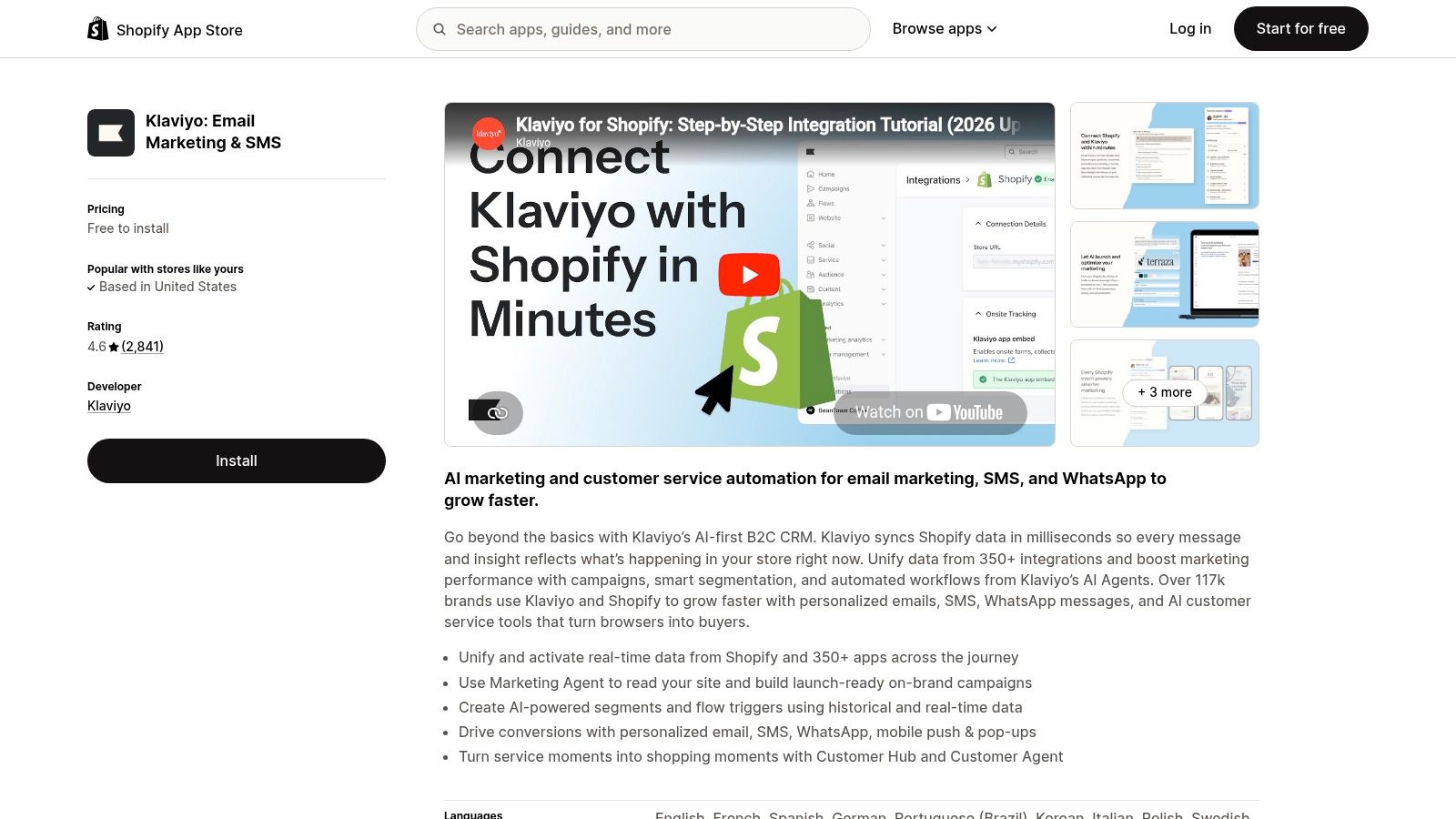
Klaviyo is usually the strongest choice when the store already runs on Klaviyo. In that situation, switching to a separate Shopify abandoned cart recovery app often adds more complexity than value.
Best fit
Klaviyo works best when recovery needs to sit inside a broader retention system. That means abandoned checkout, browse abandonment, win-back, product-based branching, and list-based suppression all live in one place. For teams already investing in flows and segmentation, this is the cleanest setup.
It also has the strongest benchmarked market signal in this group. In one comparative roundup, Klaviyo appears at 4.5★ from 2,570 reviews with a $20/month entry price. That doesn't make it the right fit for everyone, but it does confirm how integral it is to Shopify retention stacks.
A practical complement to that setup is tightening the actual checkout and recovery UX. The app store research guide to reducing cart abandonment is useful because software choice only solves part of the problem. Many losses still come from checkout friction, weak capture, or badly timed incentives.
Trade-offs
Klaviyo can become overbuilt fast. Smaller teams often install it for cart recovery and then inherit a much larger operating system than they planned for. That's fine if someone owns lifecycle marketing. It's a burden if no one does.
The other trade-off is channel realism. Klaviyo is strongest when the store has usable first-party data. If email capture is weak, phone capture is weak, and anonymous traffic is high, the best flow logic in the world won't solve the reach problem.
Klaviyo is usually the best answer when the question is really about lifecycle infrastructure, not just abandoned checkout recovery.
Direct app link: Klaviyo on the Shopify App Store
Recart
Recart makes the most sense when SMS is a primary revenue channel, not an add-on. That distinction matters because SMS-first recovery depends as much on list growth and opt-in quality as it does on the message itself.
Best fit
For mobile-heavy brands, Recart's strength is the path into consented reach. One-tap opt-ins and fast follow-up fit stores that want abandoned cart recovery to start earlier and closer to the initial session. That's especially useful when email capture lags behind traffic volume.
Recart is also relevant here because it actively engages merchants in product feedback loops. The Recart profile on app store research shows the kind of direct operator access that strong app teams increasingly use to refine onboarding, messaging, and recovery workflows.
Trade-offs
The obvious limitation is that Recart is SMS-centric. If the store needs a broad email and SMS operating layer with heavier segmentation, a platform like Klaviyo or Omnisend may be a better core system. Recart is strongest when SMS is treated as the lead channel, not the fallback.
It also requires consent discipline. Stores that haven't built a clean mobile opt-in path won't get enough benefit from SMS-first recovery.
A lot of generic “best Shopify abandoned cart apps” content skips that point. The better decision is usually not “which app recovers carts best,” but “which app fits the store's available channel permissions.”
Direct app link: Recart on the Shopify App Store
Omnisend
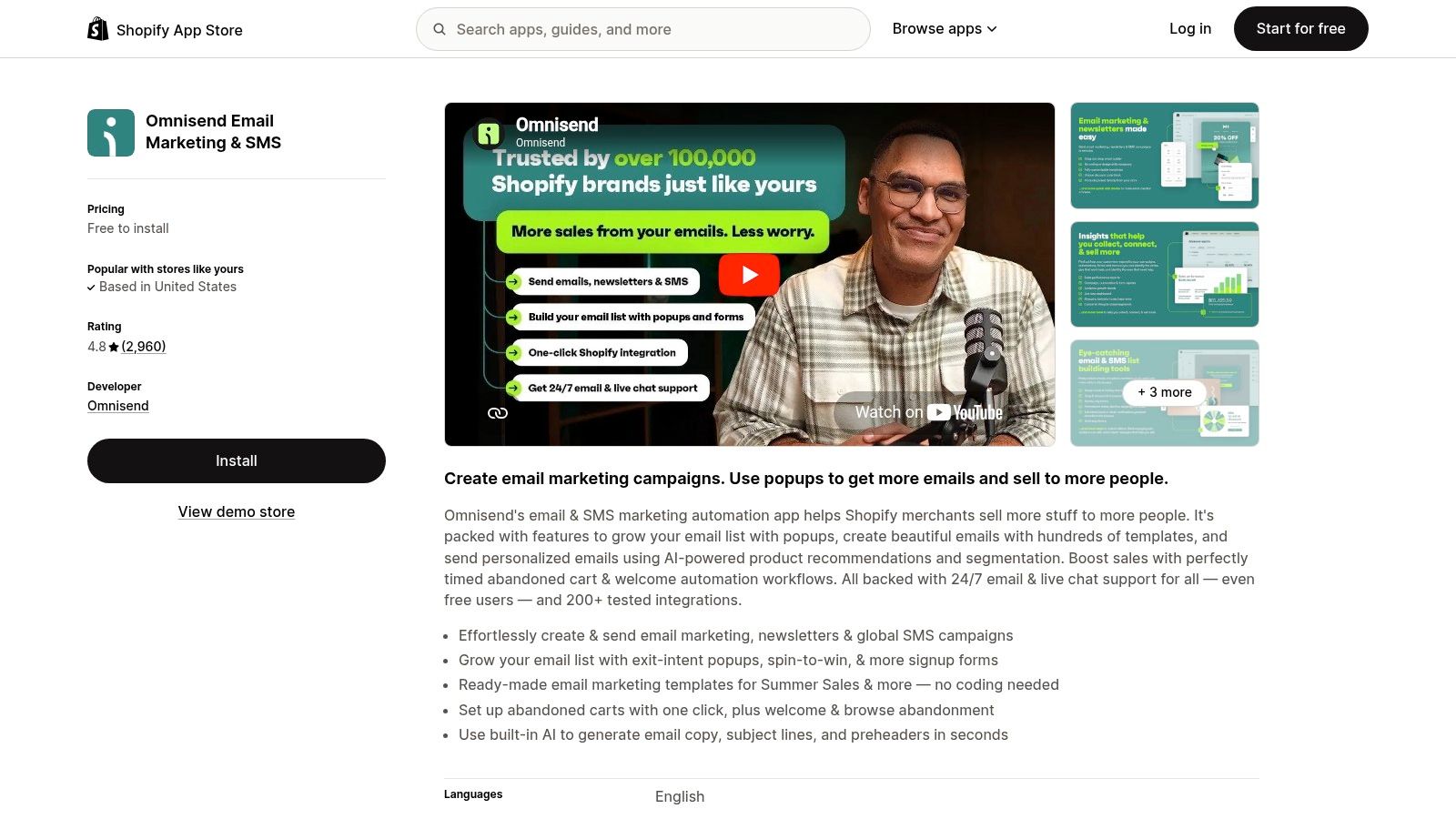
Omnisend is often the practical middle ground. It gives Shopify teams email, SMS, and cart recovery automation in one system, without the heavier setup load that comes with a more customized retention stack.
That matters because abandoned cart recovery is increasingly a stack decision, not an app-store category decision. Stores that do not need Klaviyo-level complexity, but still want coordinated email and SMS, usually get to value faster with Omnisend than with a split setup.
Best fit
Omnisend fits operators who want one team to own recovery across channels and keep the workflow manageable. The advantage is less about any single reminder and more about execution. A simpler system with clear ownership usually outperforms a more complex stack that no one maintains properly.
It is also a strong fit for brands that are still building lifecycle discipline. If the store needs browse abandonment, cart recovery, basic segmentation, campaigns, and SMS under one roof, Omnisend covers that operating layer well enough for a large share of Shopify brands.
For teams weighing that broader stack question, this guide to SMS marketing apps for Shopify is useful context because it shows where Omnisend sits relative to more SMS-first tools.
The existing app store research piece on Shopify abandoned cart recovery is also worth reading alongside this section. It frames recovery as a workflow and channel-permission problem, which is the right lens for evaluating Omnisend.
Trade-offs
Omnisend is broad, but there is a ceiling. Teams running highly customized lifecycle programs, complex branching logic, or deep cross-channel testing may eventually want more control than Omnisend is built to provide.
That trade-off is not a flaw. It is the point.
A lot of stores do not need an elaborate retention machine. They need recovery flows that launch quickly, coordinate email and SMS cleanly, and stay easy to manage as the team grows. Omnisend does that well, especially for brands that want one platform to cover most retention work instead of stitching together separate tools.
Direct app link: Omnisend on the Shopify App Store
Postscript
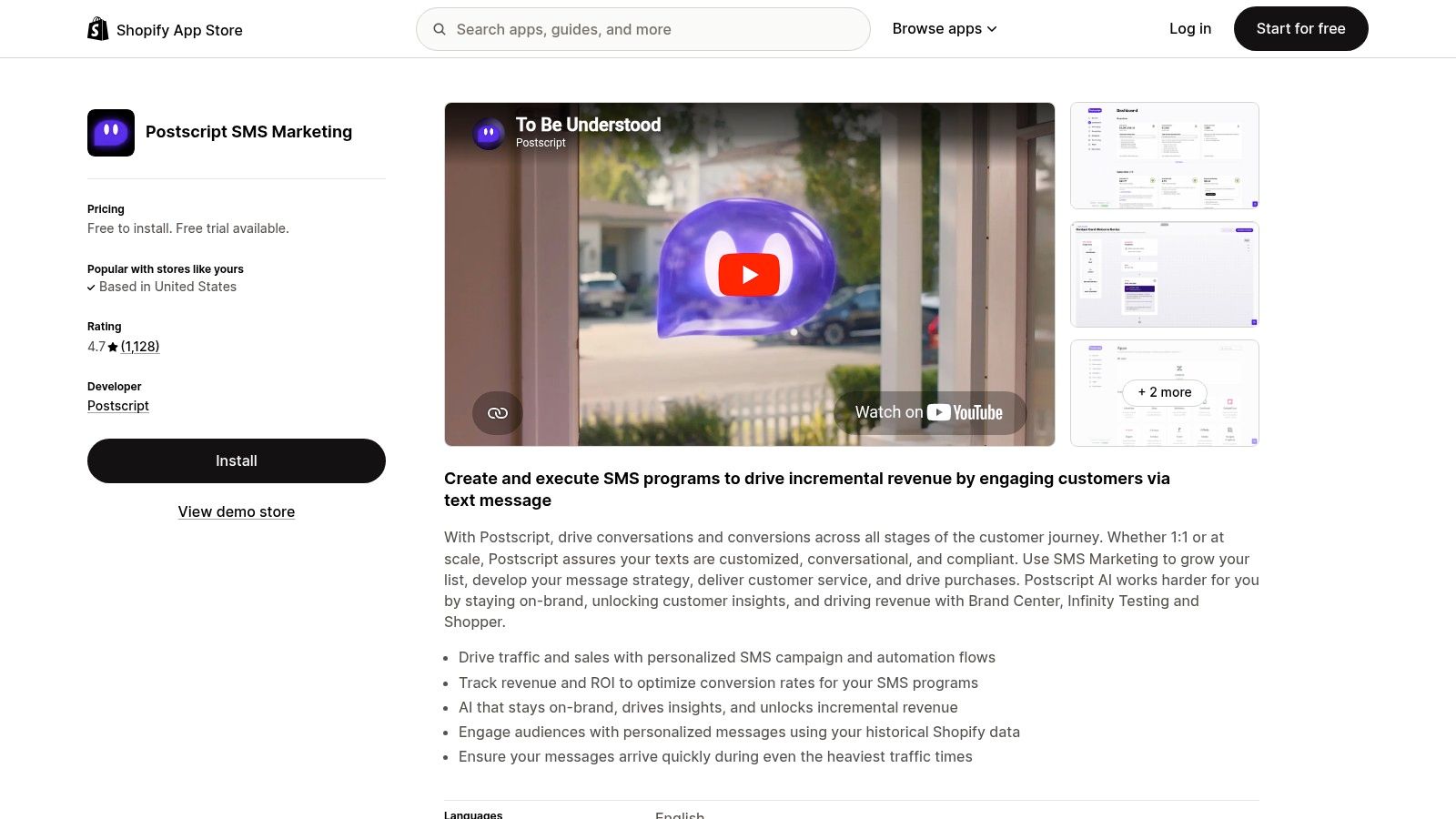
Postscript is what a lot of US-focused brands end up choosing when they want SMS to be a real recovery channel, but they don't want SMS buried as a secondary feature inside a larger platform.
Best fit
The appeal is focus. Postscript is built around Shopify data, compliant opt-ins, and two-way messaging. That makes it useful for teams that want a dedicated SMS layer for abandoned checkout recovery while keeping email in another system.
This split-stack approach can work well when the email platform is already settled, but SMS needs better ownership. It's common in stores where lifecycle email is mature, while SMS is still treated as a separate conversion lever.
Trade-offs
The risk is fragmentation. Once email and SMS are owned by separate tools, someone has to decide which system sends first, which discounts get offered where, and how overlap is prevented. Without that discipline, shoppers get duplicated reminders and mixed incentives.
Strong fit: US-heavy stores with a deliberate SMS program.
Weaker fit: Stores that want one app to own most retention and recovery logic.
Main watchout: Usage-based messaging costs can change the economics as volume grows.
Operators evaluating that trade-off should also look at the broader SMS category, not just cart tools. The app store research roundup of the best SMS marketing apps for Shopify is useful because abandoned-cart recovery is often only one part of the SMS decision.
Direct app link: Postscript on the Shopify App Store
Attentive
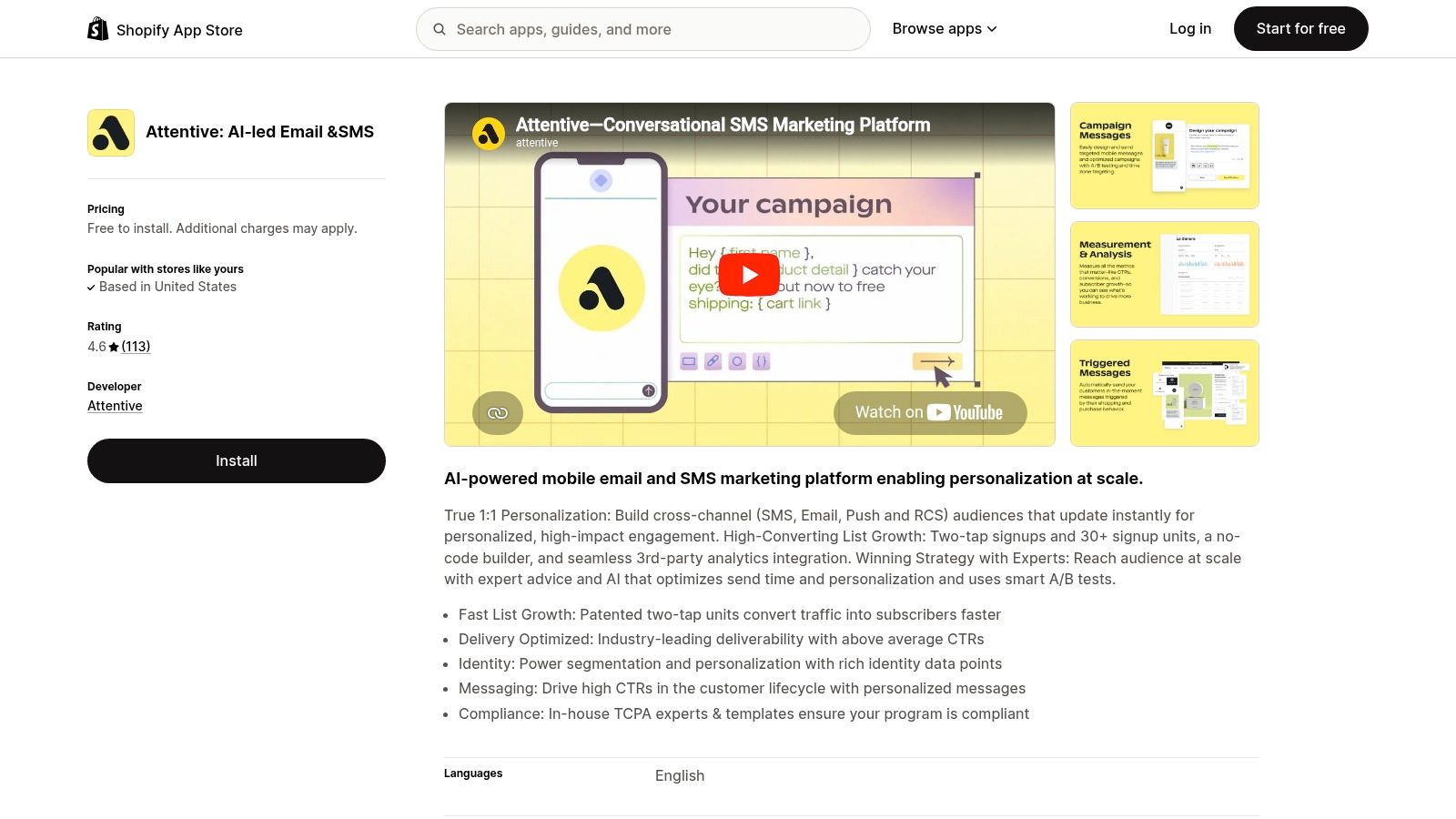
Attentive is usually the enterprise answer. It's built for brands that care about growth tactics, compliance, and cross-channel journeys at a more structured level than smaller teams usually need.
Best fit
This is a strong fit for Shopify Plus operators that want SMS and email orchestration with heavier controls and a more formal implementation process. In those environments, abandoned checkout recovery isn't an isolated flow. It's part of a larger customer journey system with audience syncing, suppression rules, and error handling.
Attentive also makes sense when SMS compliance risk and list-growth execution need more dedicated rigor. Larger teams often value that more than simplicity.
Trade-offs
It's usually too much for smaller stores. Not because the product isn't good, but because the store won't use enough of it to justify the complexity. Contract-based buying and deeper onboarding only pay off when the business has the team and traffic to support it.
A lot of operators don't need the most advanced tool. They need the tool their team will actually run well for the next year.
Direct app link: Attentive on the Shopify App Store
Seguno
Seguno is the opposite of a sprawling recovery stack. It stays close to Shopify, which is exactly why some operators prefer it.
Best fit
For smaller teams that want abandoned checkout recovery without adding another heavy operating layer, Seguno is attractive. It uses Shopify data directly, lives close to the admin, and keeps the workflow understandable.
That simplicity matters when no one on the team is a full-time retention specialist. A simpler tool can be the better operator choice if it means the flow gets built, reviewed, and kept current.
The same practical lens applies to onsite recovery. For stores where in-session nudges matter as much as post-abandonment messaging, the ConvertWise profile on app store research is worth reviewing. It's a useful reminder that recovery doesn't start only after the customer leaves.
Trade-offs
Seguno is email-first and more limited across channels. If the store needs stronger SMS, push, WhatsApp, or deeper branching logic, it will hit the ceiling earlier than broader platforms.
Still, that's not a flaw for every merchant. Some stores don't need the maximum-featured Shopify abandoned cart recovery app. They need one that can be owned by a lean team and run consistently.
Direct app link: Seguno on the Shopify App Store
Top 6 Shopify Abandoned Cart Email & SMS Apps
App | Core features | Target audience | Strengths (unique selling points) | Limitations (quick cons) | How AppStoreResearch helps (soft CTA) |
|---|---|---|---|---|---|
Klaviyo: Email Marketing & SMS | Real-time Shopify sync; drag-and-drop flow builder; email + SMS orchestration; abandoned cart templates | Brands needing advanced segmentation & scale | Deepest Shopify data sync; highly customizable multi-step automations | Pricing scales with contacts; higher setup complexity | Call founders for incentives; request features; join 3,000 operators, $1M paid out; try AppStoreResearch |
Recart: SMS & List Growth | One-tap mobile opt-ins; automated abandoned cart reminders; compliance & managed service options | SMS-first stores focused on list growth & recoveries | Strong SMS acquisition; hands-on managed support & consulting | Limited email features; variable SMS pricing | Discover new apps and deals via dev calls; get paid for sessions; join 3,000 operators, $1M paid out |
Omnisend Email Marketing & SMS | Multi-channel (email, SMS, web push); one-click Shopify connect; prebuilt automations & popups | SMB to mid-market merchants wanting speed + capability | Fast to implement; strong templates; generous free tier | Limited reporting depth on lower tiers | Meet app teams, share product feedback, earn incentives; join 3,000 operators, $1M paid out |
Postscript SMS Marketing | Abandoned cart automations; two-way SMS; Shopify-driven segmentation; integrations | US-centric brands using SMS as primary recovery channel | Shopify-focused; clear per-SMS/MMS usage pricing; two-way texting | SMS costs scale with volume; plan minimums possible | Call developers for special offers and consulting; influence features; join 3,000 operators, $1M paid out |
Attentive: AI-led Email & SMS | Enterprise SMS+email journeys; audience syncing; compliance tooling | Shopify Plus & enterprise brands needing compliance & scale | Strong compliance & growth tactics; Plus ecosystem partner | Contract-based, custom pricing; overkill for small stores | Engage founders in high-level calls; get early access & incentives; join 3,000 operators, $1M paid out |
Seguno: Email Marketing | Shopify-native email; in-admin abandoned cart flows; templates with Canva integration | Small teams wanting native Shopify UI and simplicity | Very fast to implement; budget-friendly; feels native to Shopify | Email-only; fewer advanced automations/segments | Discover tidy solutions without spam; earn paid session incentives; join 3,000 operators, $1M paid out |
Realistic recovery rate benchmarks
Recovery benchmarks get distorted for a simple reason. Vendors often report channel-level wins, while operators live with the full stack: weak email capture, partial SMS consent, uneven deliverability, and shoppers who switch devices before they buy.
What the numbers actually support
A realistic benchmark starts with channel access, not app claims. If a store only captures email on a fraction of abandoning sessions, email recovery has a hard ceiling no matter how polished the flow looks. The same logic applies to SMS, push, and WhatsApp.
I usually treat recovery rate claims as directional until I know three things: how the store captures contact details, whether consent is usable at scale, and which platform owns the customer data. That last point matters more now because cart recovery is often a feature inside Klaviyo, Omnisend, Attentive, or Postscript, not a standalone app making independent gains.
One practical benchmark from merchant discussions is that abandoned cart email can recover a modest share of lost checkouts in real operations, especially when the list is thin or the traffic is low intent. That does not make email a weak channel. It means email performance is constrained by list quality, inbox competition, send timing, and whether the brand trains customers to wait for a discount.
Channel fit matters as much as raw automation quality. Recent market roundups increasingly sort tools by region and consent behavior, especially noting that WhatsApp-heavy markets like India and the UAE often favor WhatsApp-first tools, while push-first tools fit stores that don't want to depend on email or phone capture. That framing is more useful than asking for a universal "best recovery app."
Email usually carries recovery when the brand already runs lifecycle well and captures addresses early.
SMS earns its keep when mobile consent rates are healthy and the team can handle replies, compliance, and rising message costs.
Push makes sense when anonymous traffic is large and browser opt-in is realistic.
WhatsApp fits specific markets where customers already treat it as a normal buying channel.
The practical takeaway is simple. Judge recovery as a stack decision, not a widget decision. A Klaviyo-native setup, an SMS-first setup with Postscript or Attentive, and a WhatsApp-first setup can all work. The right benchmark depends on which channels you can reach, what your customers respond to, and whether the platform can coordinate those touches without creating channel conflict.
Sequencing and touch order
Sequencing decides whether your recovery stack feels coordinated or desperate. I have seen brands buy the right platform, then lose recoverable carts because every channel fired too soon, with no logic for customer value, consent, or channel priority.
The better approach is to treat abandoned cart as an orchestration problem inside your broader lifecycle stack. Klaviyo-heavy brands usually let email carry the first reminder and reserve SMS for non-buyers or higher-intent segments. SMS-first brands often reverse that logic, but only when consent quality is strong and reply handling is already part of operations.
What usually works better
A staged sequence beats an aggressive one.
The first message should do one job: remind the shopper they left with intent. That usually means a fast touch on the strongest available channel, with no discount and no inflated urgency. The second touch can add context, such as low stock, product benefits, or support. The third touch is where an offer may make sense, but only for carts worth protecting and only if margin allows it.
A practical sequence often looks like this:
First touch: Send a prompt reminder on the highest-reach channel available.
Second touch: Follow up later if the shopper has not purchased, using the same channel or a second channel that adds reach without creating noise.
Third touch: Escalate only for qualified carts, returning customers, or higher-value checkouts.
Channel layering: Use push, SMS, or WhatsApp only when capture rates, consent, and market behavior justify them.
Template timing is a starting point, not a strategy.
What to avoid
The common failure mode is channel collision. Email, SMS, and push sent within the same window can raise exposure, but they can also make the brand look uncoordinated and push unsubscribes higher. This is one reason standalone cart apps lost ground. Broader lifecycle platforms are better at suppression rules, send priority, and cross-channel timing.
Discounting too early creates a different problem. It can recover some orders in the short term, but it also trains price-sensitive shoppers to abandon on purpose. That trade-off matters more for brands with frequent repeat purchases.
Segmentation matters here. A returning customer with a high-value cart deserves different treatment than a first-session browser who typed an email only to get the shipping estimate. Anonymous traffic, known subscribers, and SMS-consented customers should not share the same flow. The stack should reflect what the brand knows, then choose touch order accordingly.
Influence the tools you use every day
Choosing from the best Shopify abandoned cart apps is only part of the job. Strong operators don't just install tools. They influence the people building them.
That matters more now because the Shopify app market is crowded, noisy, and hard to track. Even inside abandoned-cart recovery, merchants are choosing between broad lifecycle platforms, SMS specialists, WhatsApp-first tools, push-led tools, and onsite recovery layers. In that kind of market, direct access becomes a strong advantage. Operators who speak with app founders and product teams get earlier visibility into what's being built, a better read on where products are going, and more room to push for changes that solve real workflow problems.
app store research is built around that access model. It's a platform that connects Shopify merchants with paid product research interviews with app developers and UX teams. That gives merchants and agency operators a way to influence roadmaps, request features, and build direct relationships with vendors instead of getting lost in a crowded marketplace.
The financial incentive is part of the offer, but it isn't the main reason serious operators participate. The stronger value is access. Operators can surface friction before it becomes churn, give feedback that improves the tools they depend on, and sometimes build relationships that lead to better support, sharper implementation conversations, or a clearer understanding of upcoming changes.
app store research has over 3,000 operators in the network and has paid out over $1M for participant insights. That scale matters because it signals an active channel for direct product conversations, not a passive list.
For operators who care about abandoned checkout recovery, lifecycle tools, and the quality of the Shopify stack more broadly, this is one of the few ways to move from buyer to informed participant. For teams also thinking about email infrastructure beyond recovery, Top email warmup tools is another useful operational read.
If direct access to app founders, early visibility into new tools, and paid conversations with product teams sound useful, join the network at app store research. It's where Shopify operators get paid to share informed feedback with the companies building the tools they use every day.

Author
Jonathan Kennedy
Jonathan Kennedy is the founder of app store research and shopexperts, platforms that connect operators, founders, and experts across the Shopify ecosystem to drive better decisions, product development, and growth.