Popups fail when they fire too early, show the wrong offer, or keep showing after the shopper has already said no. A first-pageview discount modal still hurts more stores than it helps, especially on mobile, where it interrupts product discovery and adds friction before intent is clear.
The useful question is not which Shopify popup app has the nicest templates. The useful question is which one gives you enough control over trigger timing, page-level targeting, suppression rules, and attribution to grow the list without dragging down conversion quality.
That matters because serious operators do not use popups as decoration. They use them as part of a retention and conversion system. The same targeting discipline that improves signup rates also supports downstream outcomes like recovering more lost checkouts and reducing drop-off in the cart flow. If that is part of your brief, this guide pairs well with our breakdown of how to reduce cart abandonment.
This guide evaluates popup apps through that lens. Not as a feature spreadsheet, but as a playbook for list growth and conversion lift. The apps that deserve attention are the ones that let you control cadence, segment by intent, suppress aggressively for existing subscribers and purchasers, and measure whether the popup is driving incremental revenue or just collecting low-value emails.
Table of Contents
1. OptiMonk
Why it works
Where it breaks
2. Justuno
Best fit
Main caution
3. Wisepops
Why operators pick it
What to watch
4. Poptin
Where it fits
Trade-off
5. Getsitecontrol
Good choice for lean stacks
Limits
6. Popupsmart
Where it fits
Trade-offs
7. OptinMonster
When it makes sense
Where it loses ground
8. Seguno Popups & Forms
Who should use it
Who should skip it
9. Shopify Forms
Where it fits best
Where operators hit the ceiling
10. Wheelio
Best use case
Where it helps, and where it hurts
Top 10 Shopify Popup Apps: Features & Pricing
Get Paid to Influence the Tools You Use Daily
1. OptiMonk
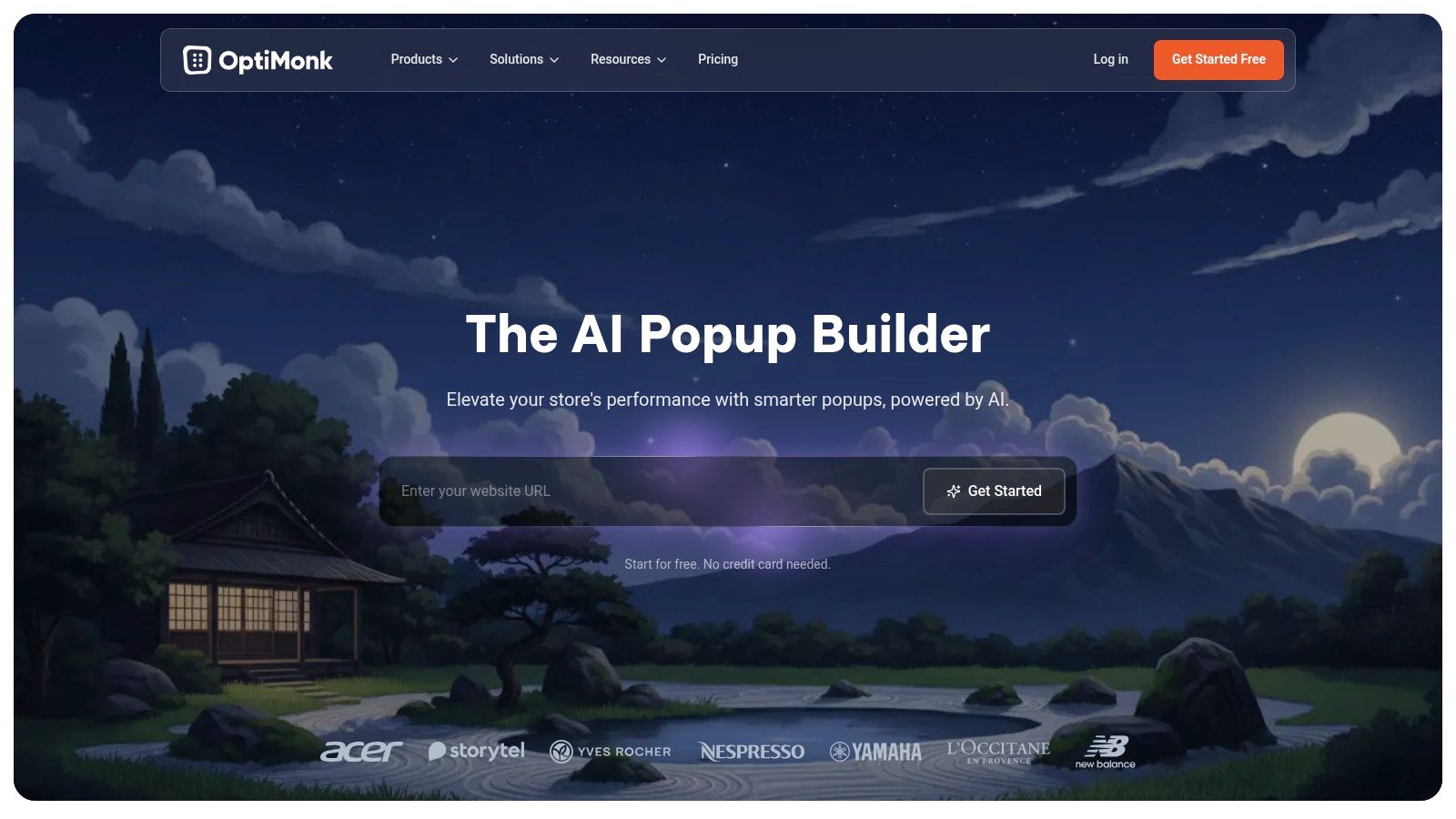
OptiMonk is one of the strongest all-around picks for operators who want a real Shopify popup system, not a simple email gate. It covers the usual use cases well, including welcome capture, cart recovery, upsell prompts, and survey-style flows. The main appeal is balance. It's powerful enough for segmentation work, but it usually doesn't feel as heavy as enterprise-first tools.
Why it works
OptiMonk is a good fit when the team needs more than a single email signup popup Shopify campaign. It supports behavioral triggers, product and cart-aware logic, testing, and broad ESP connectivity. For stores trying to tighten abandonment flows, that matters more than flashy design.
A popup tool earns its place when it can support a larger cart abandonment reduction workflow, not just collect emails that never convert.
Practical rule: If a popup app can't suppress existing subscribers, adapt by page type, and isolate cart-stage users from first-time browsers, it isn't advanced enough for serious list growth.
Where it breaks
The trade-off is feature depth. Operators with only one or two campaigns may find OptiMonk heavier than necessary. As traffic grows, pageview-based pricing can also force harder ROI scrutiny.
That isn't a flaw. It's just the cost of using a platform built for ongoing testing instead of static forms.
2. Justuno
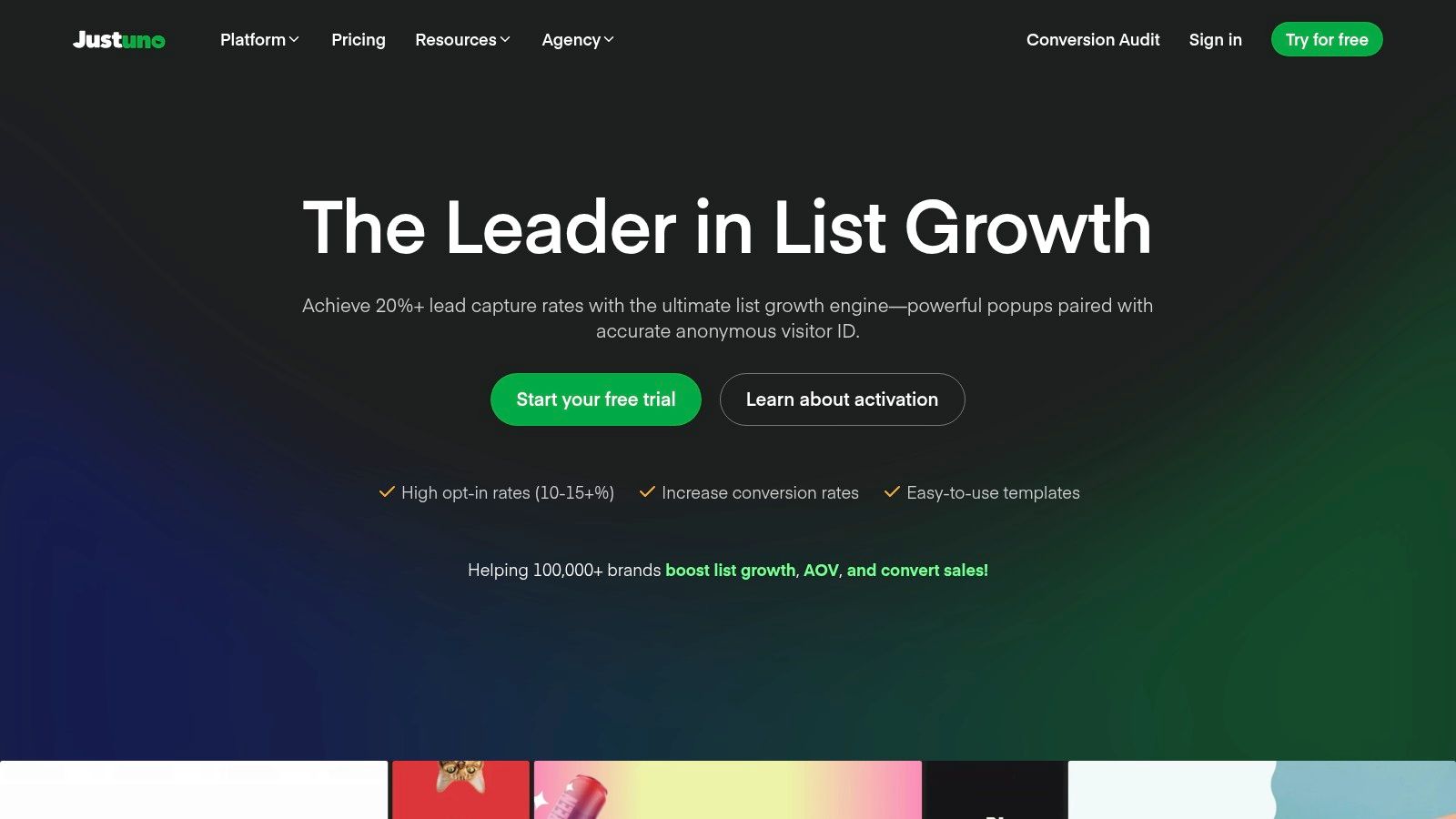
Justuno is for operators who think in segments first. It's less “launch a popup” and more “build onsite targeting logic that happens to include popups.” That distinction matters on Shopify Plus stores and larger DTC brands where traffic sources, customer states, and product interest all need different treatment.
Best fit
Justuno makes sense when list growth is tied to personalization at scale. It supports quizzes, banners, surveys, and multi-condition targeting, plus integrations with established email and SMS stacks. If the brand already runs a layered retention system, Justuno can act like an onsite orchestration layer rather than a standalone widget.
For teams focused on Shopify conversion rate optimization, that flexibility is the product.
Use it for segmented capture: Different offers for paid social traffic, product viewers, and cart-stage users.
Use it for message control: Banners, overlays, and teasers can be coordinated instead of competing.
Use it for larger stacks: It plays better when Klaviyo, Attentive, or Omnisend are already part of the flow.
Main caution
It's not the app for merchants who just want a fast email signup popup Shopify setup. The pricing starts higher than many SMB-focused options, and the complexity is real. If the team won't actively maintain audience rules and test cadence, Justuno becomes expensive shelfware.
3. Wisepops
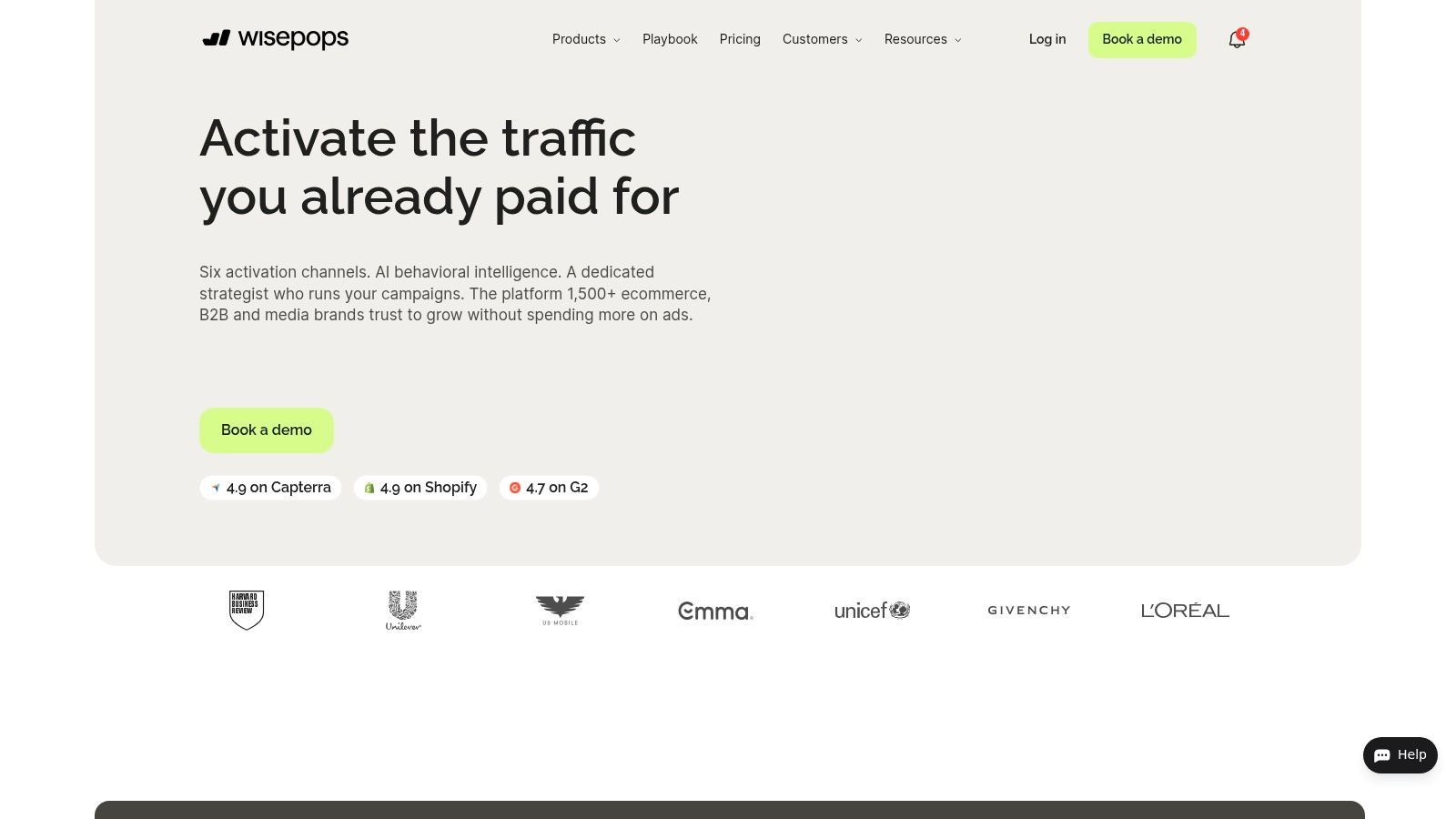
Wisepops fits teams that judge popup software by incrementality, not by how fast they can publish a form. It combines popups, bars, embeds, quizzes, and web push, but its main appeal is how those campaigns tie back to revenue and audience behavior.
Why operators pick it
Wisepops is strongest when popup strategy goes beyond email capture. Brands can set tighter targeting and cadence rules, test campaigns against controls, and track which onsite messages add value instead of just collecting more opt-ins. That matters if you care about list quality, not just list size.
I'd put it in the bucket for teams running serious experimentation. If a brand already has a retention stack in place, Wisepops can feed that system cleanly and support a broader Shopify email marketing app stack without reducing onsite messaging to one generic welcome offer.
A popup that adds subscribers but hurts session quality is still a bad trade. Control-group testing is one of the few reliable ways to measure lift instead of taking raw submission rate at face value.
What to watch
The trade-off is complexity and cost visibility. Wisepops makes more sense for operators who will maintain targeting logic, suppression rules, and test structure across campaigns. If the job is just a basic discount popup, there are cheaper tools with less setup overhead.
For stores with multiple offers, multiple traffic sources, and a real testing cadence, that extra depth can pay for itself. For everyone else, it risks becoming a bigger system than the popup program needs.
4. Poptin
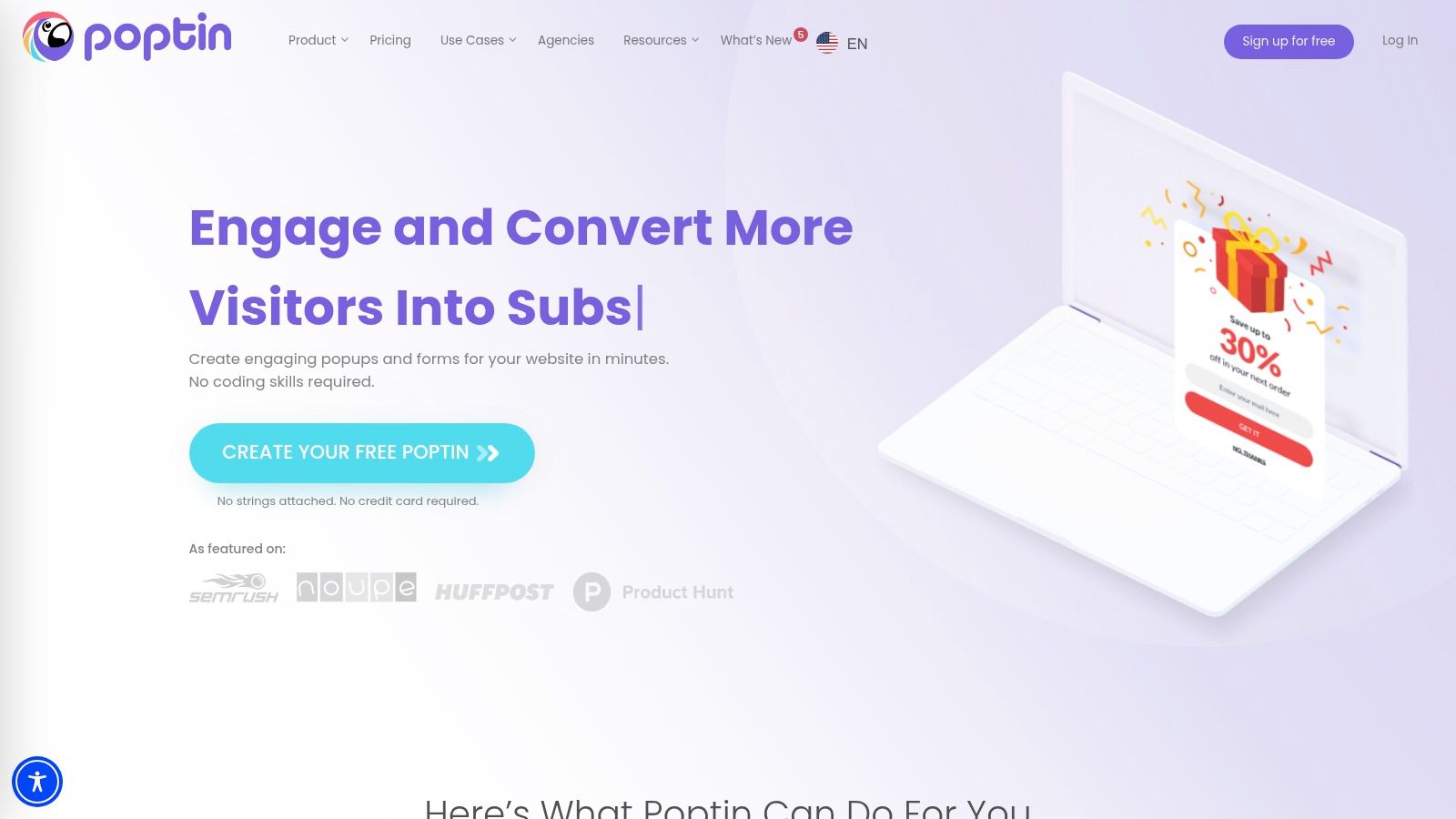
Poptin is a practical middle-market choice. It gives smaller and mid-sized teams enough capability to run exit-intent, timed, and gamified campaigns without forcing them into an enterprise workflow. That's useful for operators who need testing and templates, but don't want to manage a CRO platform full time.
Where it fits
Poptin works best when speed matters more than deep orchestration. Teams can launch standard lead capture and promotional campaigns quickly, then improve from there. It's also one of the easier tools to hand off across marketing roles without much training.
Popup buying often sits with day-to-day marketing operators. In the app store research network, marketing managers are the typical popup buyers, which matches how these tools are usually evaluated in practice. The buyer is often the person accountable for list growth this quarter, not a dedicated research team.
Trade-off
Poptin's limits show up in attribution and deeper personalization. It can run solid campaigns, but it isn't the strongest option for operators who need rigorous revenue analysis or advanced segmentation across many customer states.
That's fine if the stack is still fairly lean. It's less fine if the popup layer is expected to behave like a full onsite decision engine.
5. Getsitecontrol
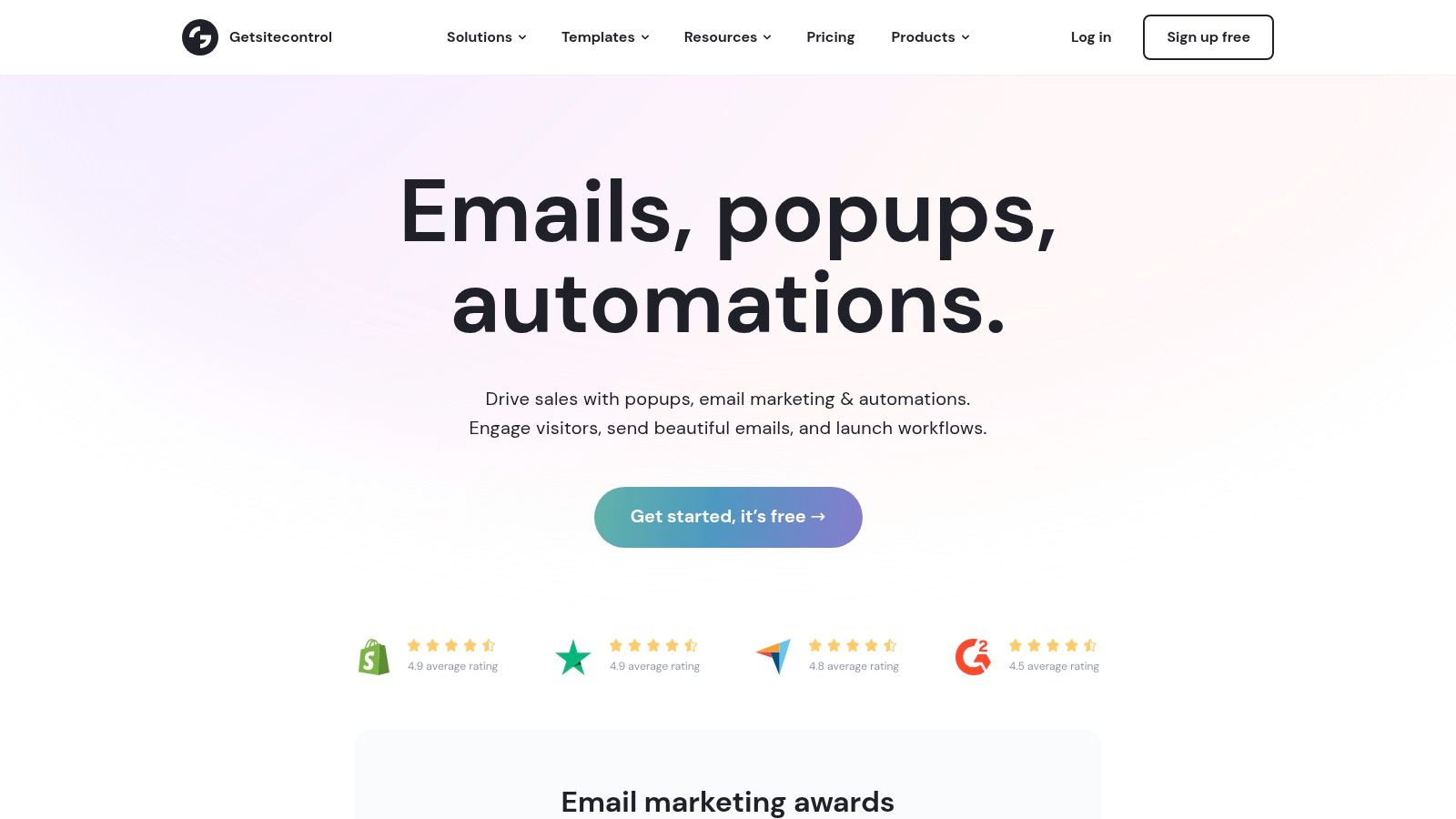
Getsitecontrol is a good example of a tool that knows what it is. It focuses on popups, bars, slide-ins, and product-aware widgets without pretending to replace the rest of the stack. For lean teams, that's a plus.
Good choice for lean stacks
Getsitecontrol is best when the operator wants predictable setup and low maintenance. Stores can run list growth, coupon capture, announcements, and basic cross-sell messaging without introducing another heavy system. If email and CRM already live elsewhere, it can stay in its lane.
Best for simple capture: Welcome offers, newsletter forms, and lightweight promotional overlays.
Best for low operational drag: Fast setup and straightforward campaign management.
Best for focused stacks: Useful when onsite messaging doesn't need deep experimentation.
Limits
It's not one of the best Shopify popup apps for advanced targeting programs. Operators looking for high-granularity personalization or advanced testing controls will outgrow it faster than they'd outgrow OptiMonk or Justuno.
Still, not every store needs maximum sophistication. Some need fewer moving parts.
6. Popupsmart
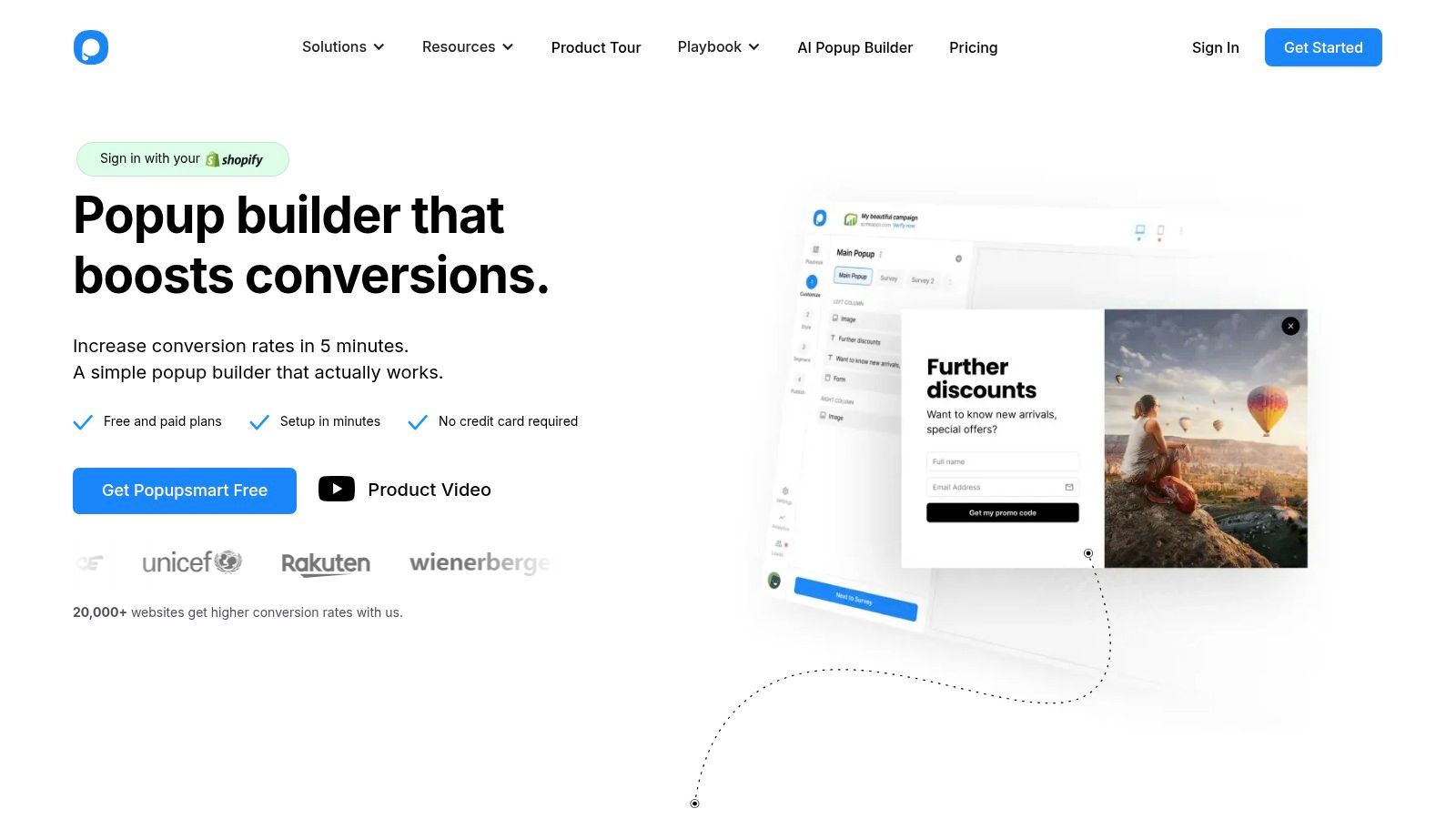
Popupsmart fits stores that have moved past basic email capture and need tighter control without buying into a full enterprise stack. The appeal is practical. You get behavioral targeting, A/B testing, AI-assisted build flows, and revenue attribution inside a tool that still feels manageable for a lean ecommerce team.
Where it fits
Popupsmart is a good match for operators who care less about having every possible rule and more about running clean campaigns with clear intent. That usually means welcome offers, exit-intent saves, cart-stage nudges, and list-growth forms tied to a real conversion goal instead of raw signup volume.
The important question is cadence. A popup app only helps if the targeting logic is disciplined enough to protect the session. Popupsmart gives you enough control to run that playbook well. Suppress after signup. Limit repeat views. Change the offer by device or behavior. Those choices matter more than piling on extra campaigns.
Trade-offs
Popupsmart has range, but it still depends on operator quality. Teams that test headline, incentive, trigger timing, and audience all at once usually learn nothing. Teams that show the same modal to first-time visitors and returning cart abandoners usually hurt conversion more than they help it.
Used well, the app can connect list growth to revenue. Used loosely, it becomes another onsite interruption layer.
That makes Popupsmart a solid middle-tier option. It is stronger than lightweight popup tools that stop at form collection, but it is not the first pick for brands running highly segmented onsite programs with heavy testing volume.
7. OptinMonster
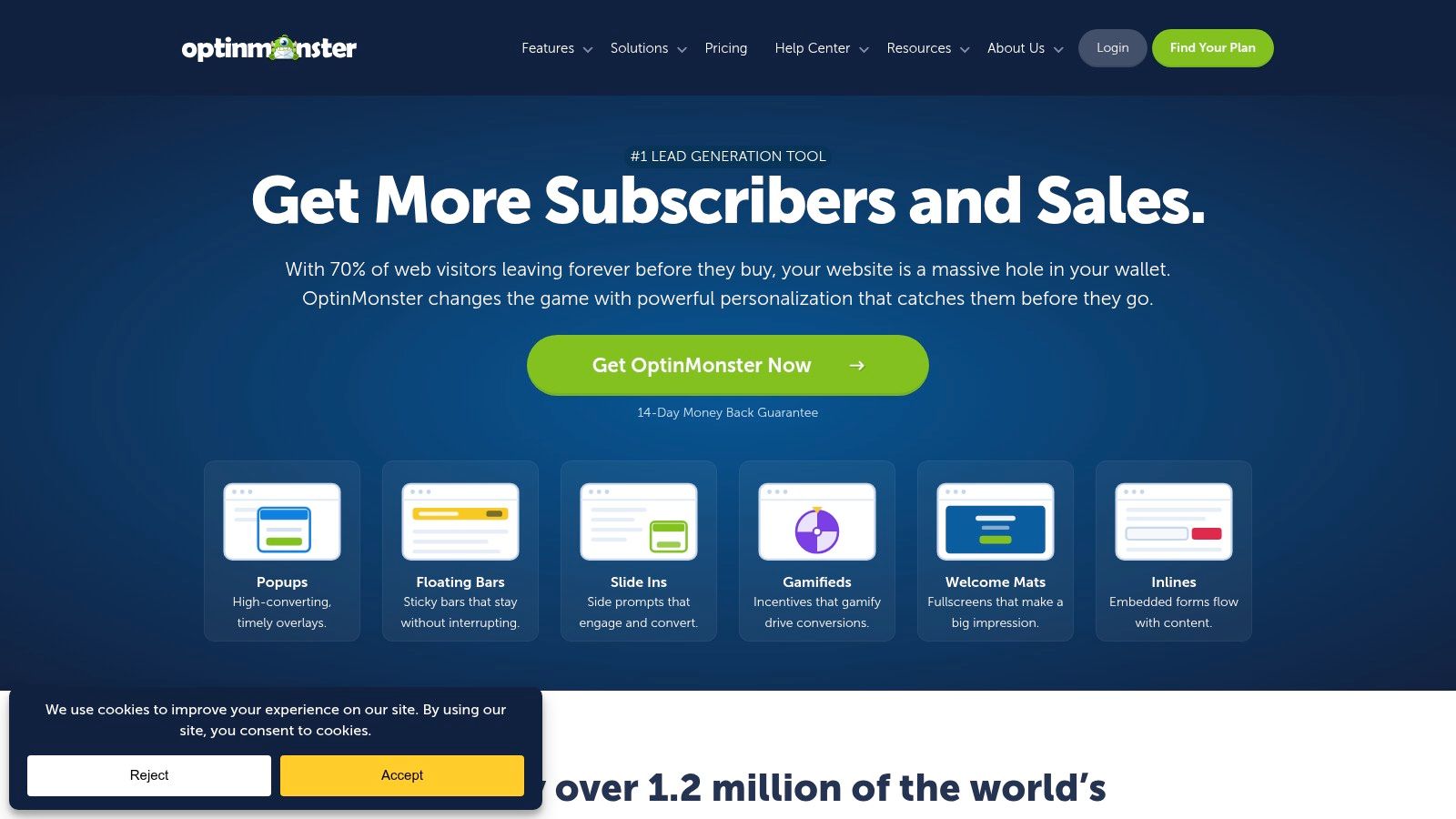
OptinMonster is the pick for teams that don't operate only on Shopify. It's a broader lead-generation platform, and that can be an advantage if the brand also runs content sites, landing pages, or non-Shopify properties that need the same campaign logic.
When it makes sense
OptinMonster is strong when cross-property consistency matters more than native Shopify depth. The rule engine is mature, and the platform has been around long enough that most operators already know what it does well. It's especially useful for brands that want one campaign layer across multiple web properties.
That maturity matters in a category where merchant trust is concentrated in a few leaders. Dreamgrow reports that Privy has 23,000 total reviews on Shopify, a reminder that familiar brands already dominate list-building mindshare. Competing tools need a clear positioning edge. For OptinMonster, the edge is breadth across ecosystems.
Where it loses ground
The compromise is Shopify specificity. Some features feel less native than apps designed around Shopify first, and pricing follows SaaS-style tiers rather than a Shopify-centric packaging model.
For operators who only care about store-level onsite capture, that can feel slightly detached from the rest of the stack.
8. Seguno Popups & Forms
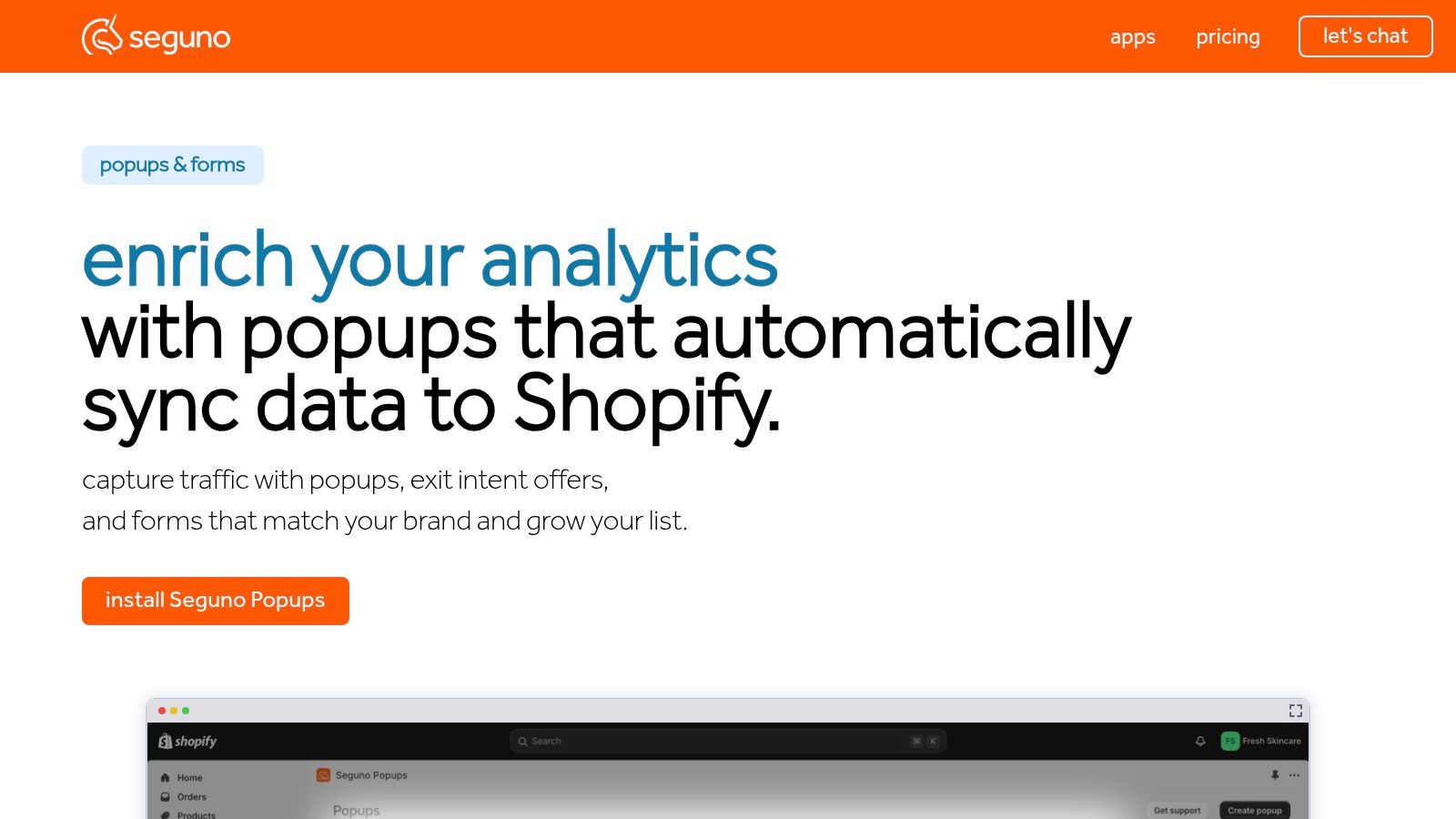
Seguno Popups & Forms is a useful Shopify-native option for operators who want simplicity and low overhead. It works well when the goal is controlled list growth without adding another complex system.
Who should use it
Seguno is a smart fit for stores that prefer native-feeling tools and straightforward deployment through Shopify. It supports core use cases like popups, teasers, scheduling, and exit intent, while staying relatively easy to enable or disable.
This is the type of app that suits teams running a small number of clean campaigns instead of constant experimentation.
Who should skip it
Operators who want deeper testing, richer personalization, or wider template flexibility will probably hit the ceiling. Seguno is strong because it's focused. That same focus limits it for more aggressive CRO programs.
The app makes more sense for brands that value operational cleanliness over experimentation depth.
9. Shopify Forms
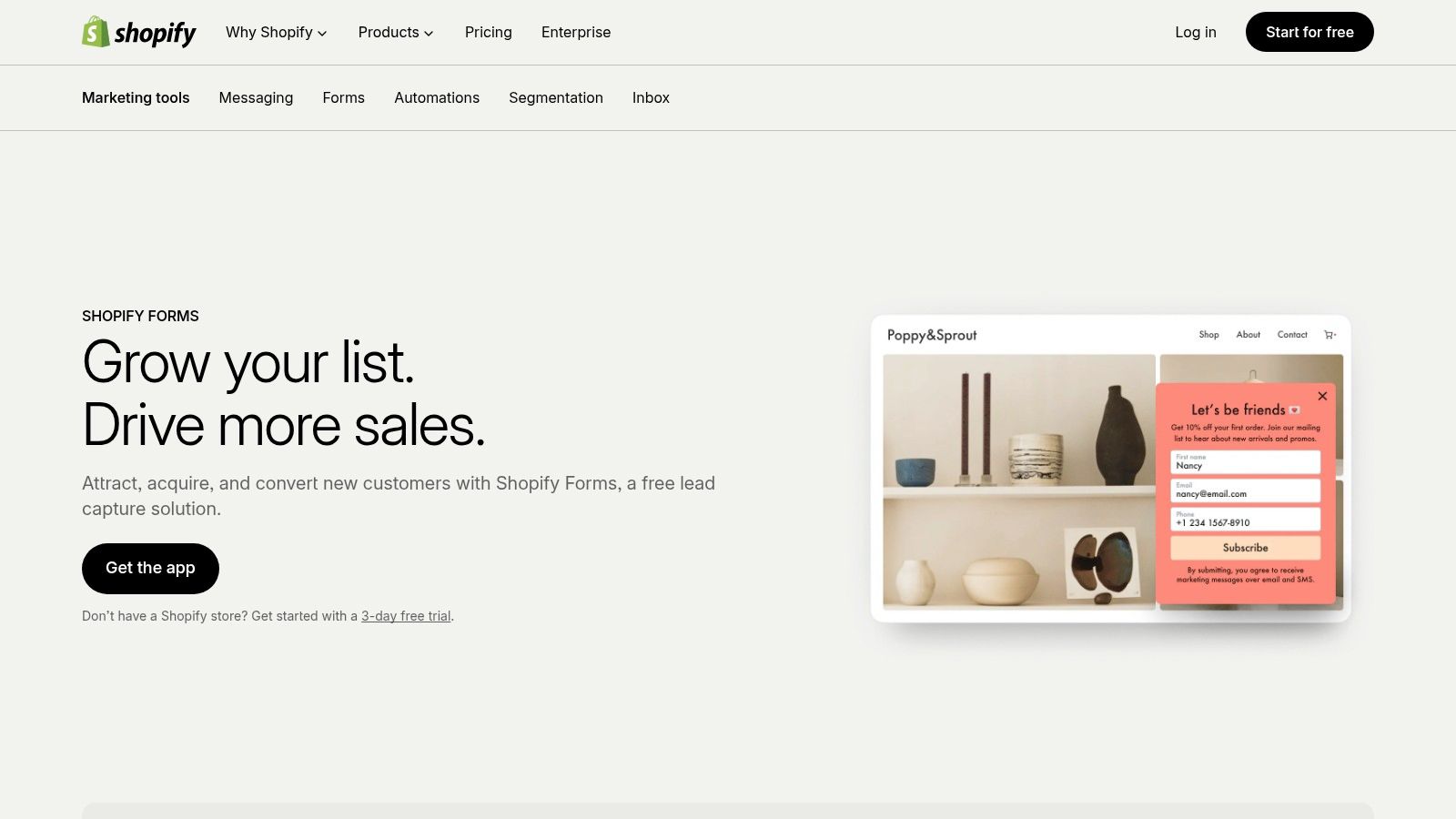
Shopify Forms is the practical baseline. If the job is capturing email or SMS inside Shopify without another vendor, it does that well.
The appeal is operational, not strategic. Setup is fast, customer data stays in Shopify, and there is little extra tooling to maintain. For lean teams, that matters more than having every targeting option on day one.
Where it fits best
Shopify Forms works for straightforward list growth programs with tight cadence rules. A welcome popup, a teaser tied to first visit, or an inline form on high-intent collection pages are the kinds of use cases where native often wins. You can get the form live, connect it to Shopify data, and avoid adding more scripts just to collect a first-party lead.
It also makes sense as a control. If a store has never disciplined its popup timing, frequency, or offer structure, adding a more advanced platform usually creates more noise before it creates lift.
Where operators hit the ceiling
The ceiling shows up once you want to run popups like a serious conversion program instead of a site add-on. Shopify Forms is limited for operators who need tighter audience logic, more testing control, or more nuanced campaign rules by traffic source, cart state, or visitor behavior.
That trade-off is the whole story.
If your team is already segmenting acquisition traffic, suppressing forms for existing subscribers, and tuning impression frequency to protect conversion rate, native tools start to feel narrow. You can capture leads. You will have less control over how aggressively, how selectively, and how measurably you do it.
The broader popup app category in Shopify is crowded for a reason. Mature operators often want more than a form. They want targeting and cadence controls that raise signups without turning the site into a discount machine.
10. Wheelio
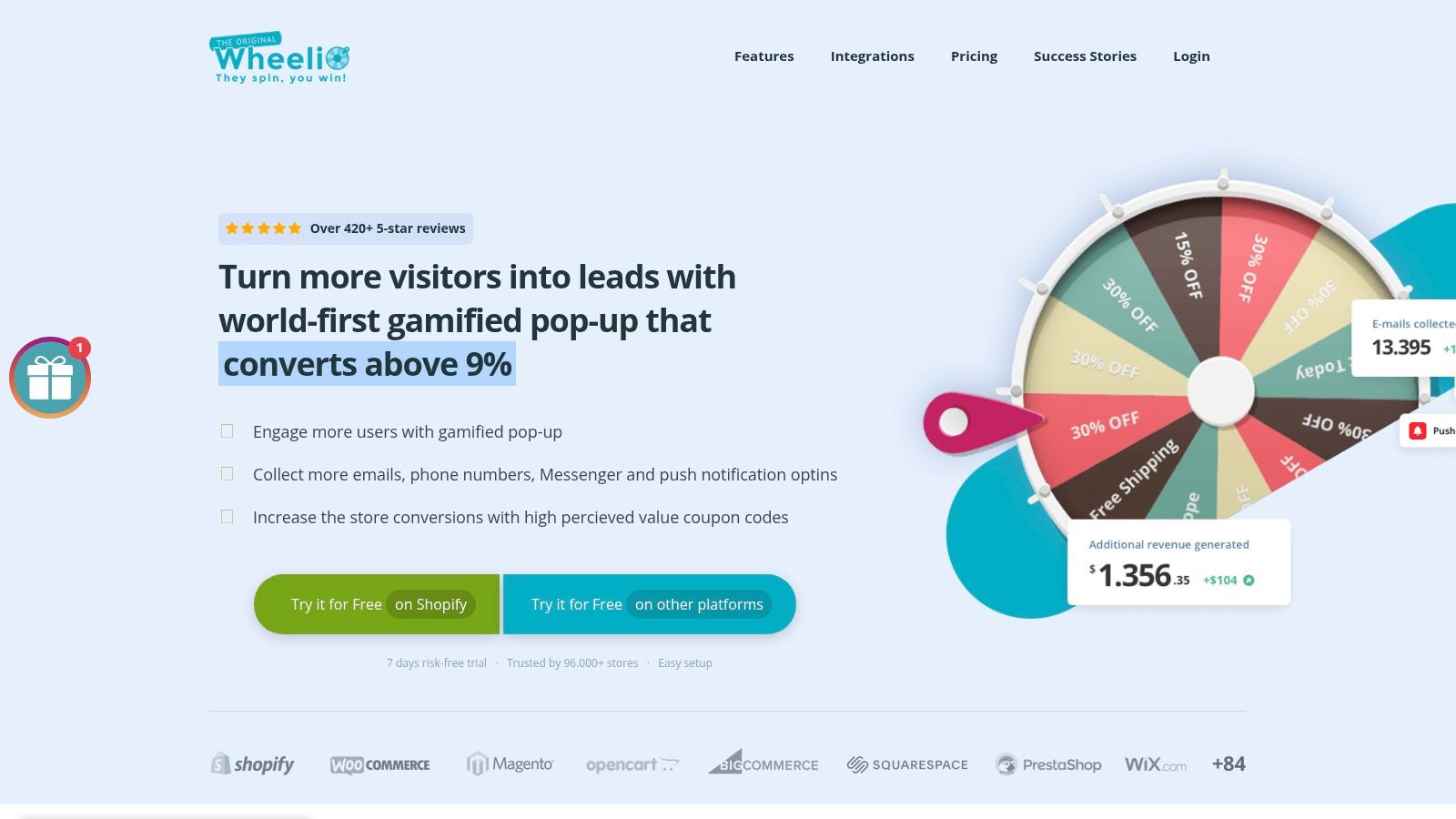
Wheelio is a narrow tool with a clear job. It runs spin-to-win popups for stores that want list growth tied to an immediate offer.
That focus is both the appeal and the limitation.
Best use case
Wheelio fits operators who already know a discount-led email capture flow works for their traffic mix and margin structure. If paid social traffic is cold, the offer is straightforward, and the brand can tolerate a louder first-touch experience, a wheel can pull more emails than a standard welcome popup.
The key is cadence. Show it to first-time visitors, cap repeat impressions aggressively, and suppress it for existing subscribers and recent purchasers. Without those rules, Wheelio stops being a conversion tool and starts training visitors to wait for a coupon.
It also works better as a campaign layer than a sitewide default. Holiday pushes, list-building sprints, liquidation periods, and traffic from promotion-heavy channels are the cleaner fits.
Where it helps, and where it hurts
Gamified popups get attention. That part is not hard. The harder question is whether the extra engagement produces profitable subscribers or just more discount-seeking leads.
For value brands, impulse products, and stores with strong repeat purchase economics, that trade-off can be acceptable. For premium brands, high-AOV catalogs, or merchants trying to protect brand perception, the wheel often feels expensive in ways the dashboard will not show clearly. You may get more signups while lowering perceived value on the first visit.
Operators should evaluate Wheelio on list quality, offer dependency, and downstream conversion rate, not just opt-in rate.
A spin wheel can lift capture rate for the right offer and audience. It rarely deserves permanent placement across the whole site.
Top 10 Shopify Popup Apps: Features & Pricing
App | Core features | Best for | Tradeoffs | Price & setup | AppStoreResearch benefit (soft CTA) |
|---|---|---|---|---|---|
OptiMonk | AI popup builder, advanced triggers, A/B testing, ESP sync | DTC brands at any stage, Shopify-focused | Pageview pricing scales, moderate learning curve | Tiered plans with free entry, moderate setup | Talk to devs for incentives, influence features, early access, join AppStoreResearch (3,000 operators, $1M paid) |
Justuno | Workflow targeting, quizzes, banners, deep ESP integrations | Enterprise & Shopify Plus, multi-app stacks | Higher starting price, can be complex | Premium tiers, white‑glove onboarding available | Get white‑glove vendor access, possible deals/consulting, join AppStoreResearch (paid sessions available) |
Wisepops | Popups, bars, quizzes, web push, 50+ integrations | Mid-market & enterprise needing lead sync | Custom pricing (contact sales), feature-heavy | Sales‑quoted plans, one‑click Shopify app | Test deep Shopify targeting with founders, earn incentives, join AppStoreResearch (3k operators, $1M paid) |
Poptin | Templates, exit‑intent, spin‑to‑win, A/B testing | SMBs & mid-size stores wanting fast setup | Less design flexibility, simpler reporting | Low‑cost plans, quick setup | Discover upcoming apps, get paid calls with devs and occasional deals, join AppStoreResearch |
Getsitecontrol | Lightweight popups, announcement bars, product-aware upsells | Lean tech stacks, small stores | Fewer advanced CRO features, basic email module | Clear low pricing, free plan option, easy install | Reduce app bloat and costs, test simple solutions with incentives, join AppStoreResearch |
Popupsmart | AI popup creation, A/B testing, revenue tracking | Growing stores seeking Shopify revenue insights | Smaller ecosystem, fewer case studies | Balanced pricing for growth, quick Shopify install | Talk to app teams, measure revenue impact, get paid sessions, join AppStoreResearch |
OptinMonster | Wide campaign types, deep segmentation, cross‑platform | Stores operating beyond Shopify or multi‑site setups | Some Shopify features gated to higher plans | SaaS tiers (site‑wide), non‑Shopify native | Compare cross‑platform vs native options, meet founders for incentives, join AppStoreResearch |
Seguno Popups & Forms | Shopify‑native popups, theme embed, customer data flow | Stores keeping data in Shopify, simple stacks | Limited testing/personalization, smaller template set | Simple native pricing, easy theme embed | Try native workflows, influence product direction via paid calls, join AppStoreResearch |
Shopify Forms (native) | First‑party popups/inline forms, Shop/Shop Pay integration | Brands wanting free, native lead capture | Lighter targeting and analytics | Free, fastest deploy, no extra scripts | Fast baseline for testing, discover third‑party options via paid sessions, join AppStoreResearch |
Wheelio | Gamified spin‑to‑win wheel, instant rewards, opt‑ins | Promo-driven growth, list building campaigns | Not suited for all brands, limited CRO features | Simple pricing, quick deploy | Find gamified capture strategies, talk to founders for deals/incentives, join AppStoreResearch (3k operators, $1M paid) |
Get Paid to Influence the Tools You Use Daily
Pricing pages do not tell you whether a popup app will protect conversion rate once it is live. The key difference shows up in the operating details: how suppression rules work, whether targeting can exclude existing subscribers cleanly, how often a campaign can reappear, and where the captured data lands.
That is why experienced Shopify teams pressure-test popup tools before rolling them out widely. A polished demo can hide weak page-level targeting, blunt audience logic, or limited control over mobile behavior. Those gaps matter fast when your list growth target is tied to revenue, not just form fills.
Talking directly to product teams helps you get answers that comparison tables usually miss. Ask how the app handles session frequency, campaign priority conflicts, Shopify customer sync, and audience exclusions across email and SMS flows. Ask what happens when multiple offers compete on the same visit. Ask how quickly the team ships fixes when those rules break in production.
App store research gives merchants access to paid product research interviews with app developers and UX teams. The practical upside is straightforward. You get a closer look at how these tools are built, a chance to influence product decisions, and better information before committing to another install.
Popup software deserves that level of scrutiny because execution decides the outcome. A high-converting popup setup is rarely about having more templates. It comes from tighter trigger timing, sensible offer cadence, clean segmentation, and suppression rules that keep the experience from turning into noise.
The teams that usually catch these issues first are marketing managers, ecommerce leads, and retention operators. They own list growth targets, they see where signup quality drops, and they deal with the fallout when an aggressive popup strategy starts hurting the session.
The payment is a nice extra. The more useful benefit is earlier access, sharper feedback loops, and better judgment on which tools can support the way your store acquires and retains customers. Operators who want that access can join the network, as noted earlier.

Author
Jonathan Kennedy
Jonathan Kennedy is the founder of app store research and shopexperts, platforms that connect operators, founders, and experts across the Shopify ecosystem to drive better decisions, product development, and growth.