10 Best Shopify Loyalty Apps: A 2026 Operator's Guide
/
Loyalty apps don't fix retention. Good programs do.
Most Shopify brands don't fail at loyalty because the software is weak. They fail because the rewards are forgettable, the rules are annoying, or the program never gets proper promotion across email, onsite, and checkout. Shopify community advice says the same thing plainly: merchants lose customers when programs make shoppers jump through hoops for tiny rewards and when the program isn't marketed well across core touchpoints (Shopify community discussion on loyalty program pitfalls).
That matters because loyalty software has become a real operating decision, not a novelty plugin. Shopify's ecosystem points to points, referrals, and VIP tiers as the best-known app types, with names like Smile.io, LoyaltyLion, and Yotpo Loyalty & Referrals showing up repeatedly in merchant discussions and comparisons. The business case is obvious enough that vendors now publish meaningful performance claims, including ReferralCandy's view that the right loyalty apps can boost repeat purchases by 40% and reduce acquisition costs by nearly 20% (Shopify community thread on popular loyalty apps).
The best Shopify loyalty apps are worth evaluating. But the app is still the container. The program is the lever.
Merchants looking beyond feature grids may also want a practical guide for retail analytics, because loyalty only earns its keep when it ties back to repeat purchase behavior and contribution margin.
Table of Contents
What loyalty actually drives and doesn't
What loyalty is good at
What loyalty won't fix
1. Smile.io
Why Smile.io is the default pick for SMB teams
Where Smile.io gets expensive
2. Yotpo Loyalty & Referrals
Best fit for brands already in Yotpo
When Yotpo is the wrong choice
3. LoyaltyLion
Best fit for mid-market operators who want control
Where LoyaltyLion needs a stronger operator
4. Stamped Loyalty & Rewards
Best fit when reviews and loyalty should work together
Where Stamped can get messy
5. Rivo
Best fit for Shopify-first teams
Where Rivo makes the most sense
6. Rise.ai
Best fit for store-credit led retention
Where Rise.ai isn't the right loyalty layer
7. Growave
Best fit for vendor consolidation
Where Growave trades depth for simplicity
8. Marsello
Best fit for omnichannel retail operators
When Marsello is too much platform
9. BON Loyalty
Best fit for early-stage stores watching cost
Where BON needs caution
10. Joy
Best fit for lightweight Online Store 2.0 builds
Where Joy should be pressure-tested
Top 10 Shopify Loyalty Apps - Feature Comparison
How to Choose Program Design Over App Features
What loyalty actually drives and doesn't
Loyalty works best when a brand already has product-market fit, healthy reorder behavior, and enough customer volume to learn from. It's a retention layer. It isn't a substitute for merch, offer quality, or post-purchase experience.
Rivo cites broader industry findings that loyalty programs can drive a 10 to 15 percent revenue lift, with some implementations ranging from 5 to 25 percent depending on sector and execution (Rivo-cited loyalty app comparison via Froonze). The key phrase is "depending on execution." That is where most programs break.
What loyalty is good at
A strong Shopify loyalty program can do three jobs at once. It can give repeat customers a reason to come back, create a structure for referrals, and give a brand a cleaner way to segment top customers than broad discounting does.
The best versions also sit close to the account experience, POS, and analytics. That shift matters. Froonze describes the category's evolution as moving toward deeper retention infrastructure, including native Shopify store credit support and loyalty digital cards for POS checkout, rather than acting like a thin coupon widget layered on top of the storefront (Froonze view of loyalty category evolution).
Practical rule: If the program isn't visible in accounts, lifecycle messaging, and checkout-adjacent moments, it will behave like a side project.
What loyalty won't fix
Loyalty won't rescue weak replenishment logic. It won't make a low-frequency category suddenly behave like consumables. And it won't overcome customer fatigue if the rewards feel tiny relative to the effort.
The most useful way to think about the best Shopify loyalty apps is this: each tool changes the ease of execution, the level of customization, and the integration burden. None of them change the basic truth that customers respond to clear value, low friction, and consistent promotion.
1. Smile.io
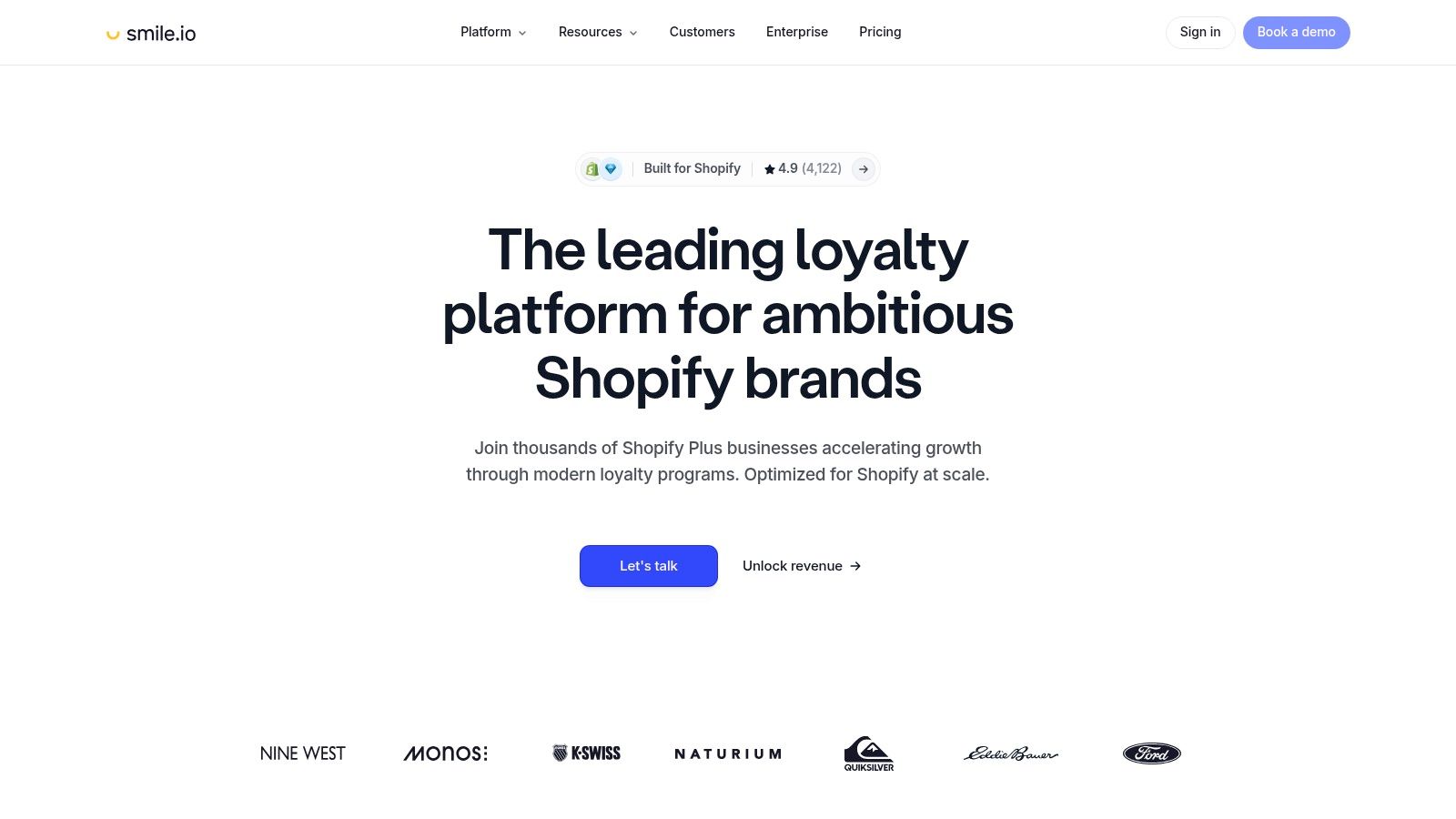
Smile.io is the safest recommendation for small and lower mid-market Shopify teams that want to launch fast and keep the loyalty stack focused. It's the cleanest answer for operators searching for Smile.io alternatives but who still want the familiar points, referrals, and VIP model that most customers already understand.
Why Smile.io is the default pick for SMB teams
Smile is positioned around points, referrals, and VIP programs in Shopify's ecosystem, which is exactly why it remains such a common short-list app for a standard Shopify rewards app rollout. The setup is straightforward, the model is familiar, and the customer-facing mechanics don't require heavy education.
For Shopify Plus operators, Smile gets an extra edge. Smile.io is positioned as the strongest enterprise-grade loyalty option because it's the only app highlighted as both Built for Shopify and a Shopify Technology Partner, which Shopify treats as a signal around integration quality, security, and performance (Smile.io overview of loyalty app qualifications).
That matters more than feature count suggests. Loyalty touches accounts, checkout-adjacent logic, and theme implementation. A stronger technical qualification lowers the odds of friction later, especially during redesigns or extensibility work. Teams that need a tighter evaluation process should use this framework for how to evaluate Shopify apps.
Where Smile.io gets expensive
Smile is best when the team wants speed, proven UX, and low internal debate. It is not the best fit when the brand needs unusual reward logic, deep bundling with reviews and SMS, or aggressive cost control at higher scale.
Smile is the app to choose when the business needs a loyalty program live soon and doesn't want to babysit the setup.
2. Yotpo Loyalty & Referrals
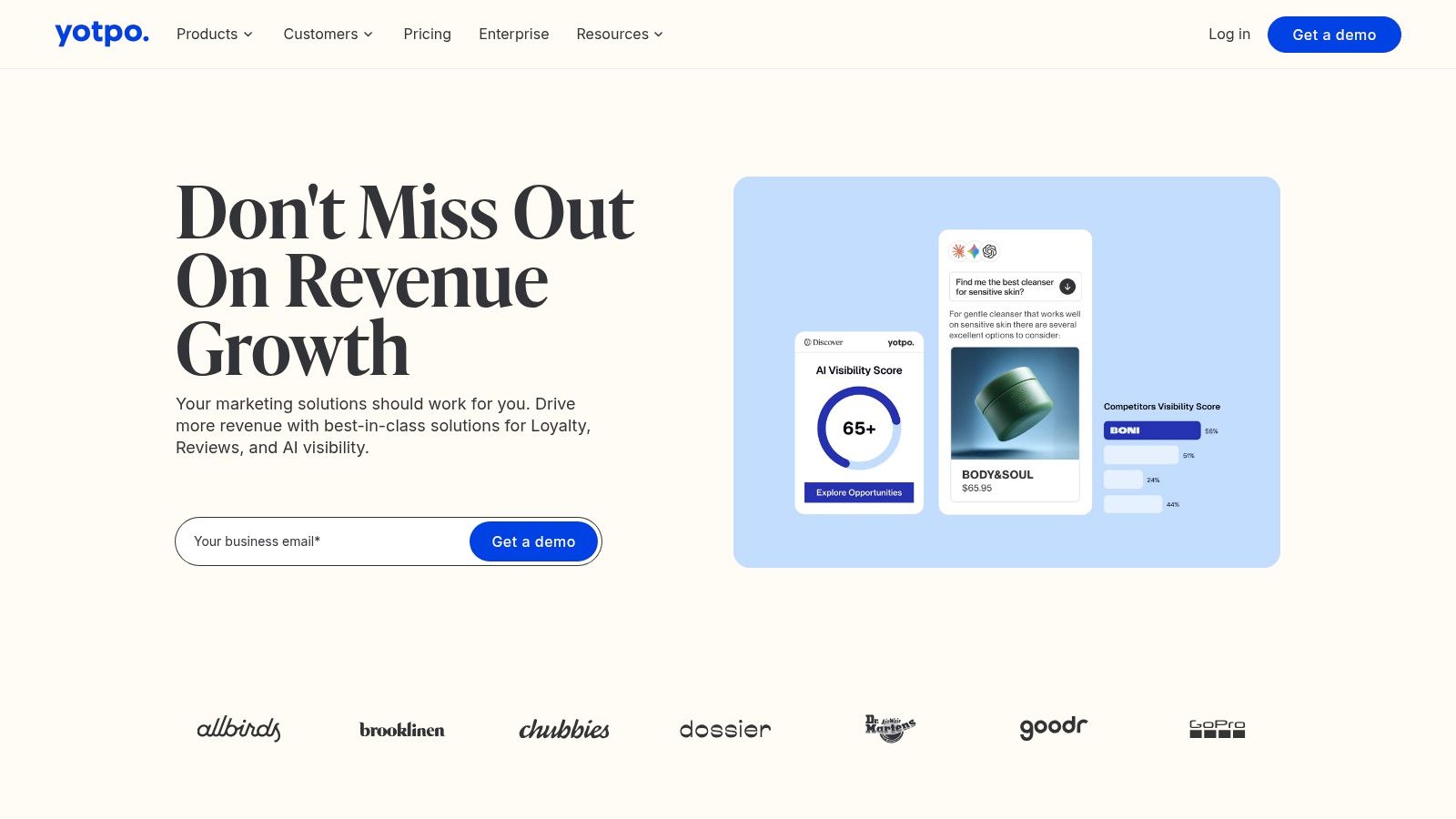
Yotpo Loyalty makes the most sense when loyalty isn't being bought as a standalone tool. It wins when the brand already runs Yotpo Reviews or plans to connect loyalty tightly to UGC, segmentation, and lifecycle marketing.
Best fit for brands already in Yotpo
This isn't the cleanest option for a simple points program. It is a strong option for brands that want loyalty to behave like part of a broader retention operating system.
Yotpo emphasizes tracking loyalty performance, including points earned and VIP tier growth, which is useful for teams trying to connect loyalty behavior back to customer progression instead of treating rewards as a static widget. That framing also fits Yotpo's broader position in larger retention stacks, where loyalty, reviews, and messaging often need to work together rather than in isolation.
A practical advantage here is vendor consolidation. Merchants evaluating loyalty under rising app and implementation costs often care as much about reducing vendor sprawl and switching risk as they do about the feature checklist (Shopify loyalty category page reflects a crowded evaluation landscape).
When Yotpo is the wrong choice
Yotpo is too much software for brands that only want a lightweight loyalty layer. If reviews, SMS, and retention orchestration already live elsewhere, this can create overlap instead of advantage.
The right buyer for Yotpo is already thinking in systems. The wrong buyer just wants to add points.
3. LoyaltyLion
LoyaltyLion is the strongest recommendation for mid-market teams that want more control over program architecture and performance tracking. It sits in the sweet spot between a plug-and-play loyalty layer and a more operational retention system.
Best fit for mid-market operators who want control
LoyaltyLion keeps showing up in Shopify merchant discussions for a reason. It is one of the most recognized options in the category, alongside Smile.io and Yotpo Loyalty & Referrals (Shopify merchant discussion of popular loyalty options). That doesn't make it automatic. It makes it worth serious evaluation.
The appeal is simple. LoyaltyLion tends to fit operators who don't want to stop at basic points and referrals. They want stronger rules, cleaner analytics, and better control over how different customer segments earn and redeem.
Where LoyaltyLion needs a stronger operator
LoyaltyLion usually works best when someone on the team owns retention mechanics. Without that ownership, customization becomes unused optionality.
A brand that can't answer these questions probably isn't ready for LoyaltyLion's deeper setup:
Who is the program for: top customers, first-to-second purchase conversion, or referral generation.
What behavior matters most: reorder speed, order frequency, channel migration, or omnichannel usage.
What reward feels valuable: discount, free product, access, or a more account-native credit model.
LoyaltyLion is not hard to justify. It is hard to justify if the team hasn't defined the job of the loyalty program first.
4. Stamped Loyalty & Rewards
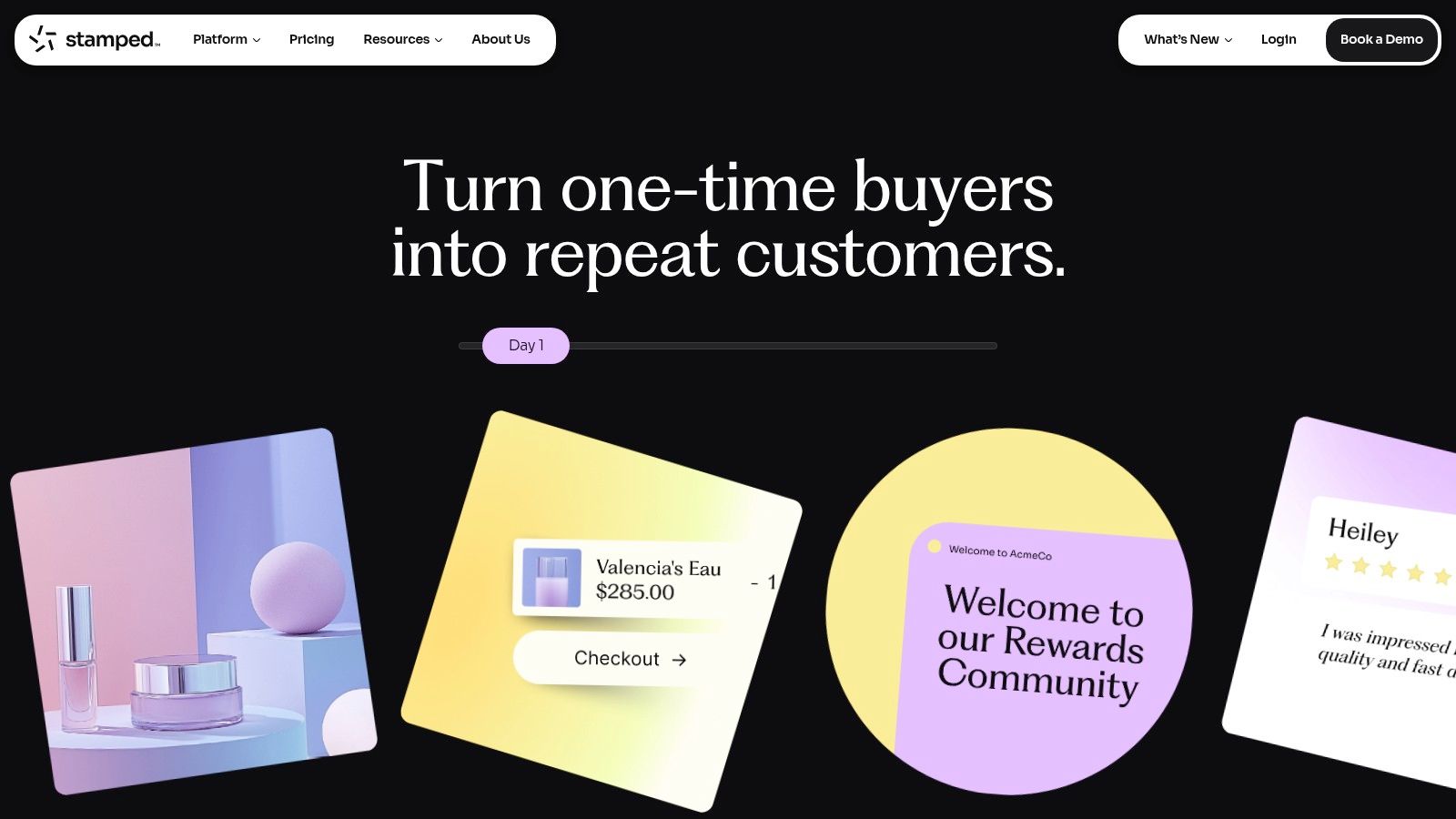
Stamped is a practical choice for brands that want loyalty tied closely to social proof and post-purchase engagement. It becomes more compelling when the team already thinks reviews, UGC, and rewards should reinforce each other.
Best fit when reviews and loyalty should work together
This is the overlooked use case in many best Shopify loyalty apps lists. A lot of brands don't need a standalone loyalty platform. They need a retention stack where customer proof and customer rewards work together.
That makes Stamped especially relevant for merchants also comparing review tools. Teams evaluating the overlap should look at this breakdown of the best Shopify reviews apps in 2026, because loyalty economics often improve when review collection and repeat purchase incentives support the same journey.
Where Stamped can get messy
Stamped is less attractive when the business wants absolute clarity on packaging, single-purpose tooling, or the deepest loyalty analytics in the stack. Bundled platforms can save time, but they can also make it harder to isolate what is driving retention.
The right question isn't whether Stamped has enough features. It's whether bundling reviews and loyalty reduces enough operational drag to justify the trade.
5. Rivo
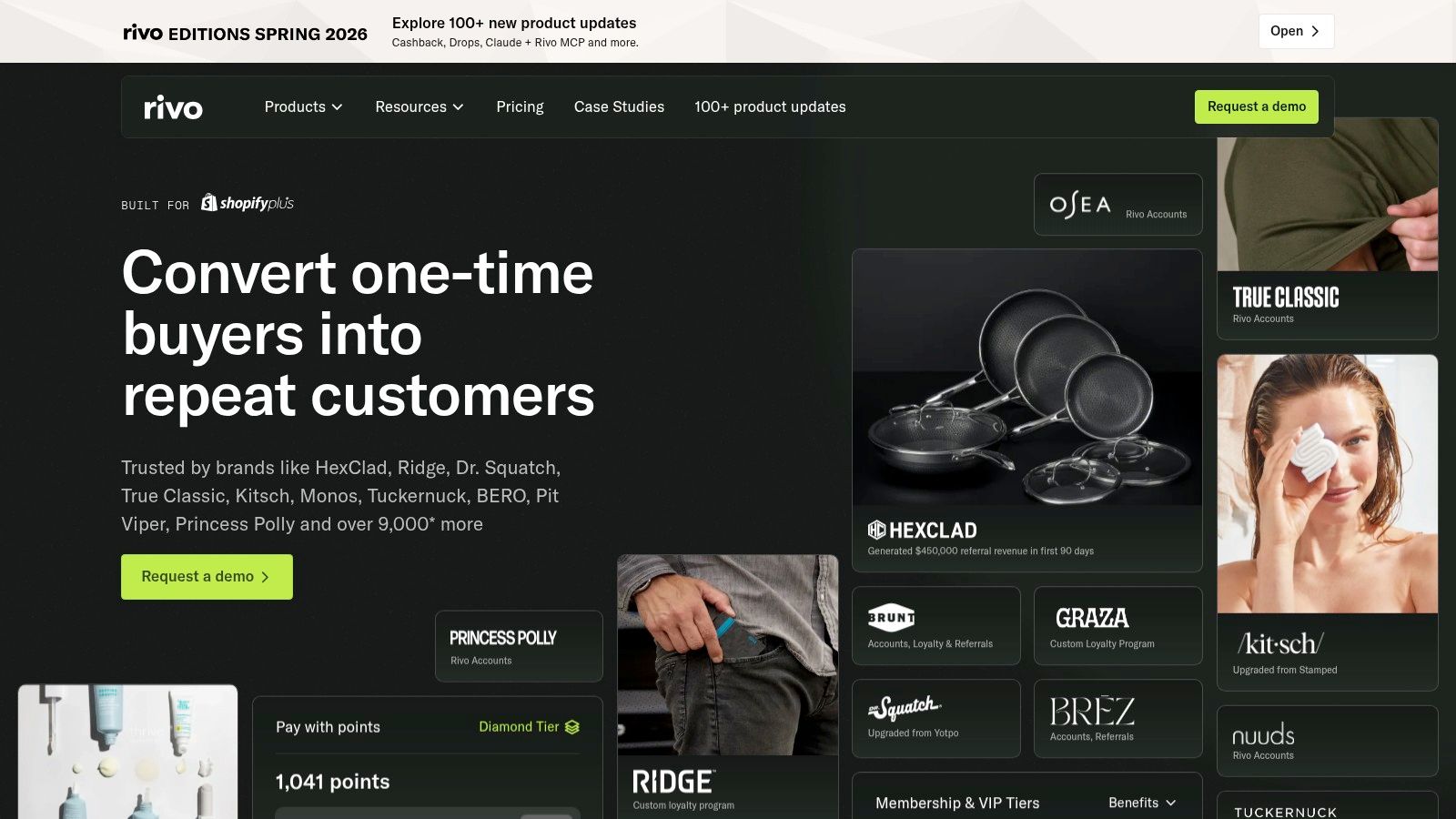
Rivo is the strongest Shopify-first option for teams that care about native feel, checkout extensibility, and deeper platform alignment. It is one of the clearest smile.io alternatives for brands that want a more modern Shopify-native posture.
Best fit for Shopify-first teams
Rivo puts its emphasis in the right places for serious Shopify operators. It highlights checkout extensions, developer APIs, and fraud prevention for Shopify Plus use cases, which signals a product designed for more customized reward logic and tighter operational control (Rivo comparison of rewards program options).
That positioning matters because the loyalty category has shifted beyond basic points widgets. Newer comparison content increasingly points toward native store credit, POS workflows, and account-level integration as the next layer of maturity, rather than just adding another promotional module on top of the storefront.
Where Rivo makes the most sense
Rivo is best for a brand that has already committed to Shopify as the long-term operating system and wants loyalty software built around that choice. It's less compelling for teams that want portability beyond Shopify or that just need a simple loyalty launch with minimal configuration.
Rivo also cites industry estimates for 2026 that loyalty members generate 12 to 18 percent more revenue than non-members, make 67 percent more purchases, and have 2.5x higher repeat purchase rates (Rivo-cited loyalty member revenue projections via Froonze). Those are projection-style figures and should be read as directional. The key takeaway is that Rivo is built for operators who want loyalty connected to broader retention economics, not just coupon logic.
6. Rise.ai
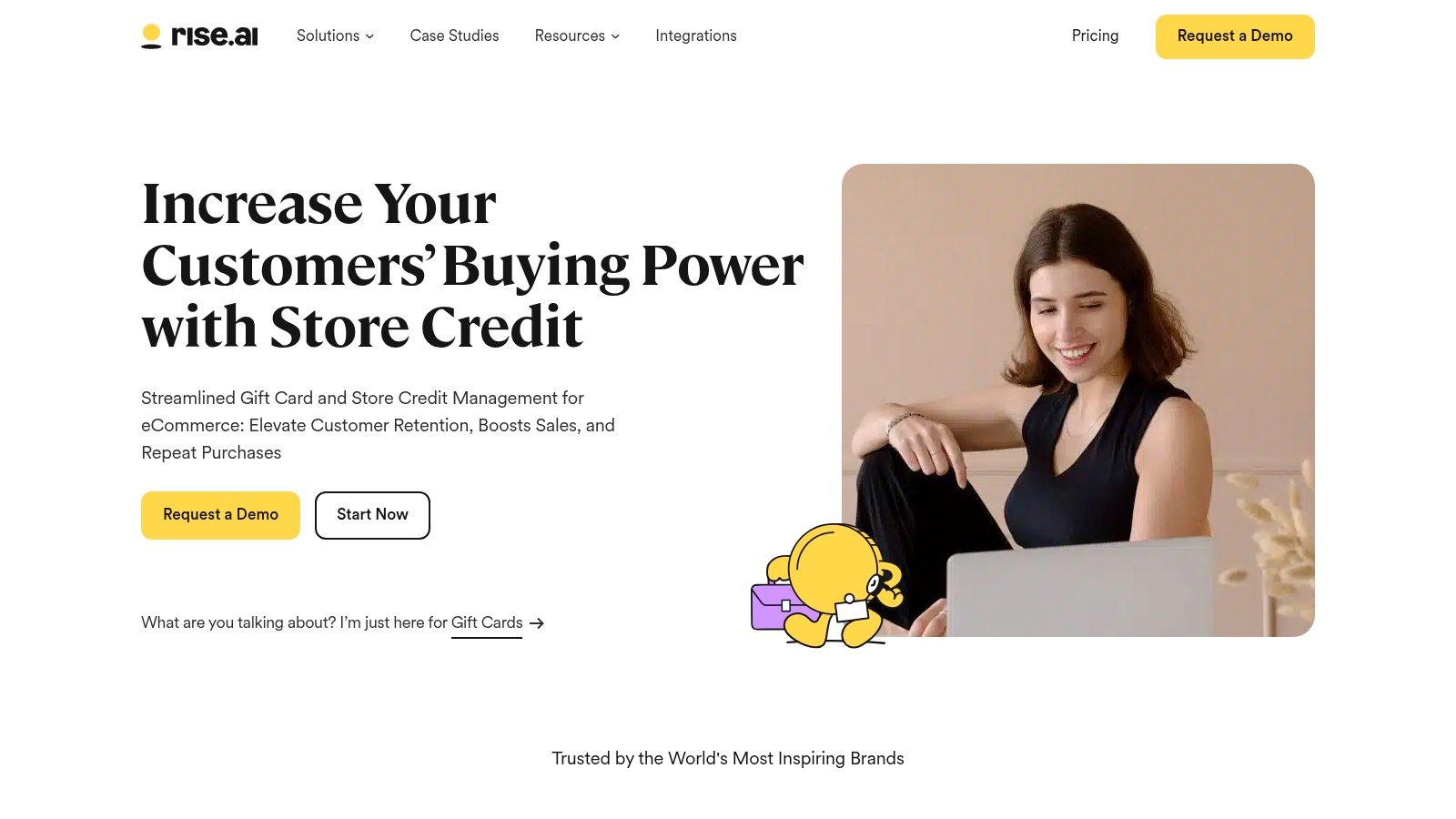
Rise.ai is the best pick when points aren't the right loyalty currency. Some brands need store credit, refund retention, and wallet-style value more than they need traditional earn-and-burn mechanics.
Best fit for store-credit led retention
This is especially relevant for higher AOV stores, less frequent purchase cycles, and omnichannel operations where a more direct value model can outperform abstract points. Store credit is easier for many customers to understand. It also tends to fit better with exchange-heavy workflows and post-purchase recovery.
The broader market is moving this direction. Comparison content in the category increasingly highlights native Shopify store credit and loyalty digital cards for POS, which shows how merchants are moving beyond coupon-style rewards and into more embedded retention infrastructure.
Where Rise.ai isn't the right loyalty layer
Rise.ai is not the first recommendation for a brand whose loyalty strategy depends on gamification, tiers, and referral-led growth. It's better when the business wants retained value, cleaner redemption behavior, and less discount framing.
That usually means the program design starts with economics, not novelty. A customer doesn't need to learn what a point is worth if the brand can issue value in a simpler form.
7. Growave
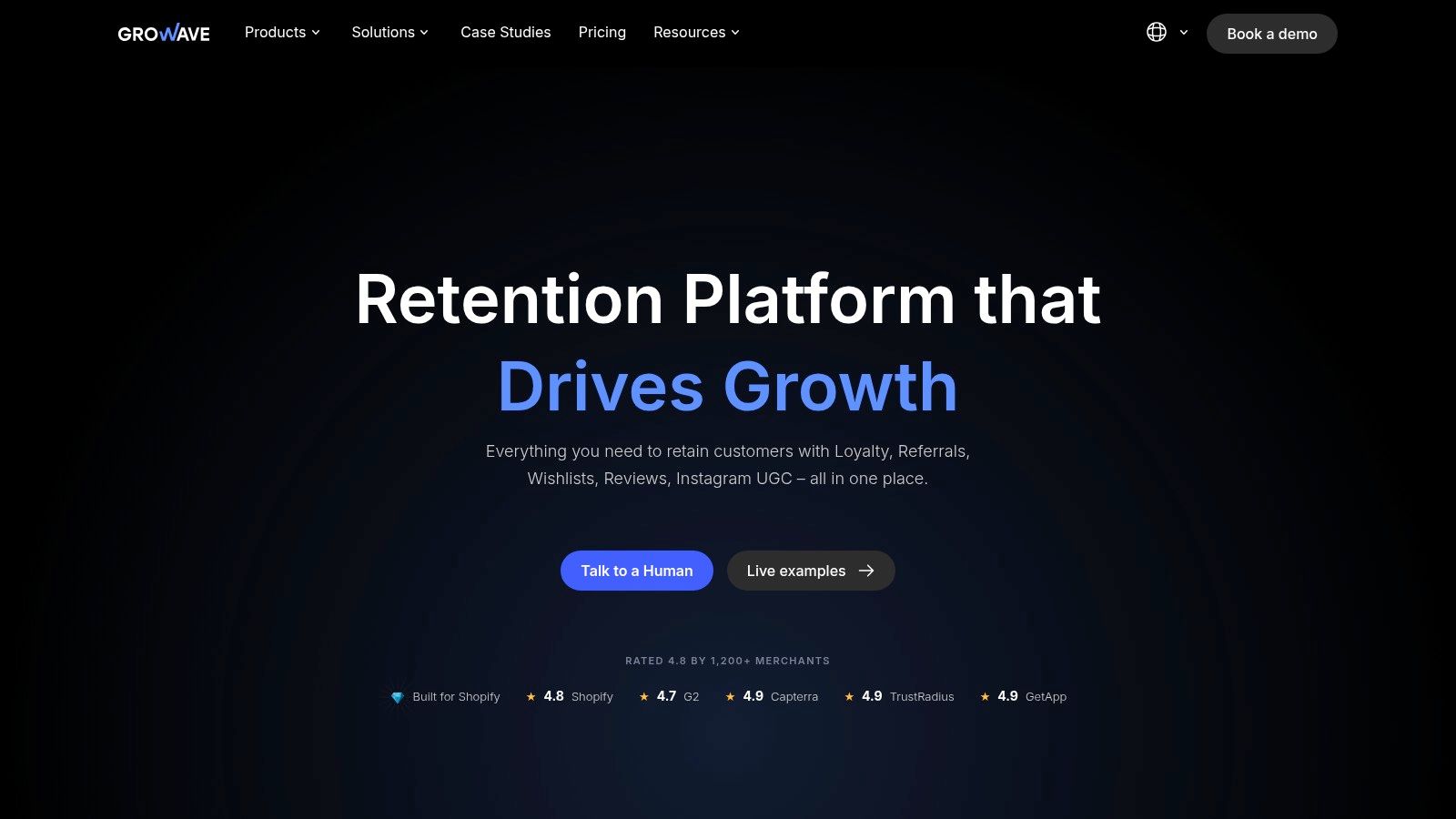
Growave is a vendor-consolidation play. It's a strong choice for smaller teams that would rather manage one lighter all-in-one platform than several specialized apps.
Best fit for vendor consolidation
The best reason to buy Growave isn't feature superiority. It's stack simplification. If the team wants loyalty, wishlist, and reviews under one roof, Growave can reduce implementation overhead and decision fatigue.
That makes sense in a crowded app market where many merchants are less worried about feature gaps than about app sprawl, switching risk, and the ongoing burden of managing too many vendors. In that context, breadth can be the feature.
Where Growave trades depth for simplicity
The trade-off is predictable. Broad platforms rarely match the strongest specialist in every category they touch.
For a team that wants highly specific loyalty logic or deeper analytics, Growave may feel limiting. For a lean team trying to keep retention tooling under control, those limits may be acceptable.
8. Marsello
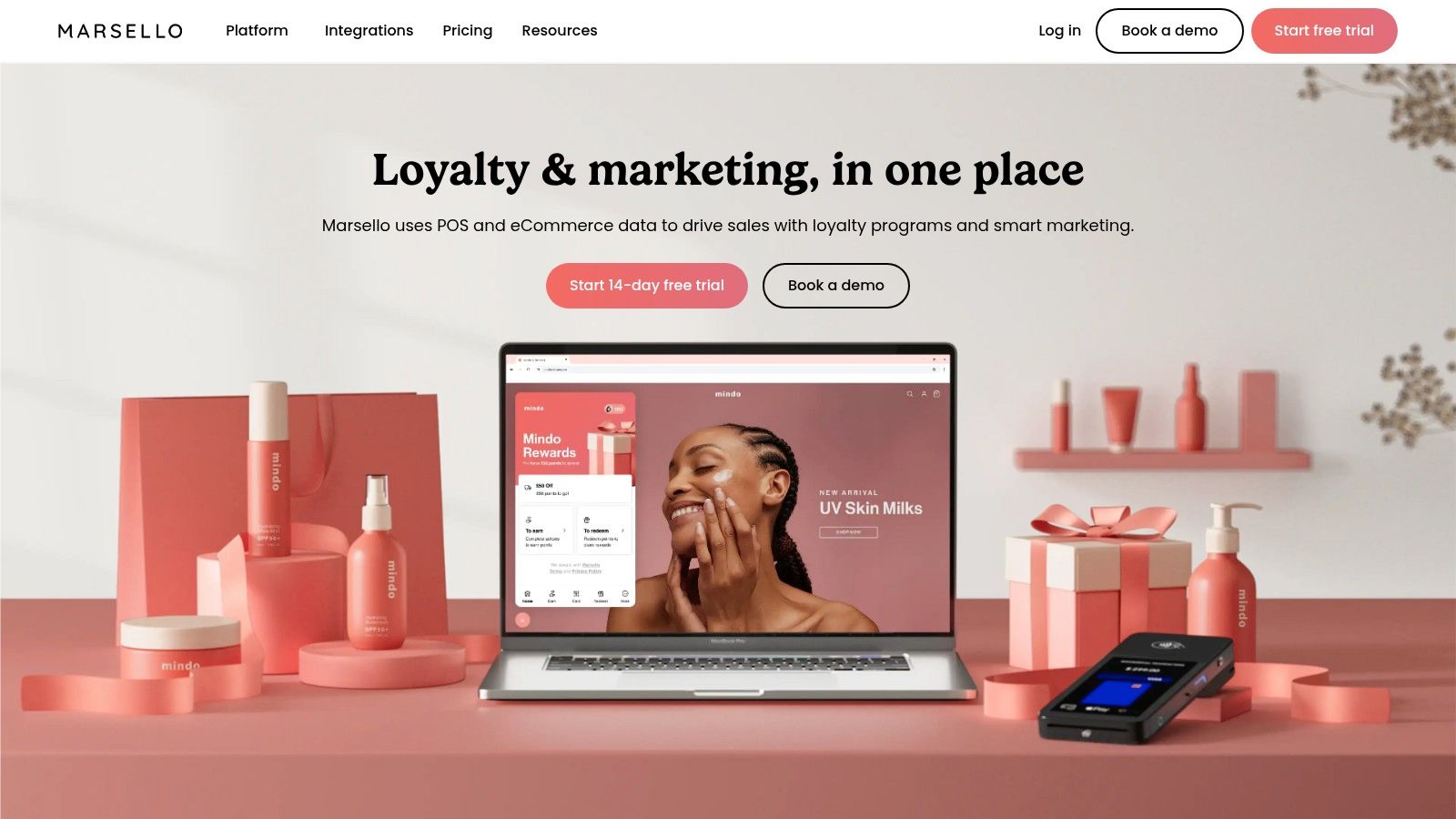
Marsello is built for omnichannel retail teams that want loyalty connected directly to messaging and in-store workflows. It is less a loyalty app than a retail retention system with loyalty at the center.
Best fit for omnichannel retail operators
Many standard loyalty app reviews often fall short. They evaluate widgets and reward rules, but they don't spend enough time on staff workflows, POS friction, or how loyalty gets marketed after signup.
Marsello matters when in-store redemption, email, SMS, and loyalty triggers need to work together. That aligns with the broader shift in the category toward more operationally embedded loyalty, especially for omnichannel merchants that need the program visible in more than one channel.
A loyalty program that only exists on the storefront isn't an omnichannel program. It's a web widget with ambition.
When Marsello is too much platform
Marsello can be more platform than a pure DTC brand needs. If email and SMS already live in a preferred stack, adding another bundled system can create overlap and migration headaches.
It is strongest for retailers who want one operating layer for loyalty plus customer messaging, especially where Shopify POS matters.
9. BON Loyalty
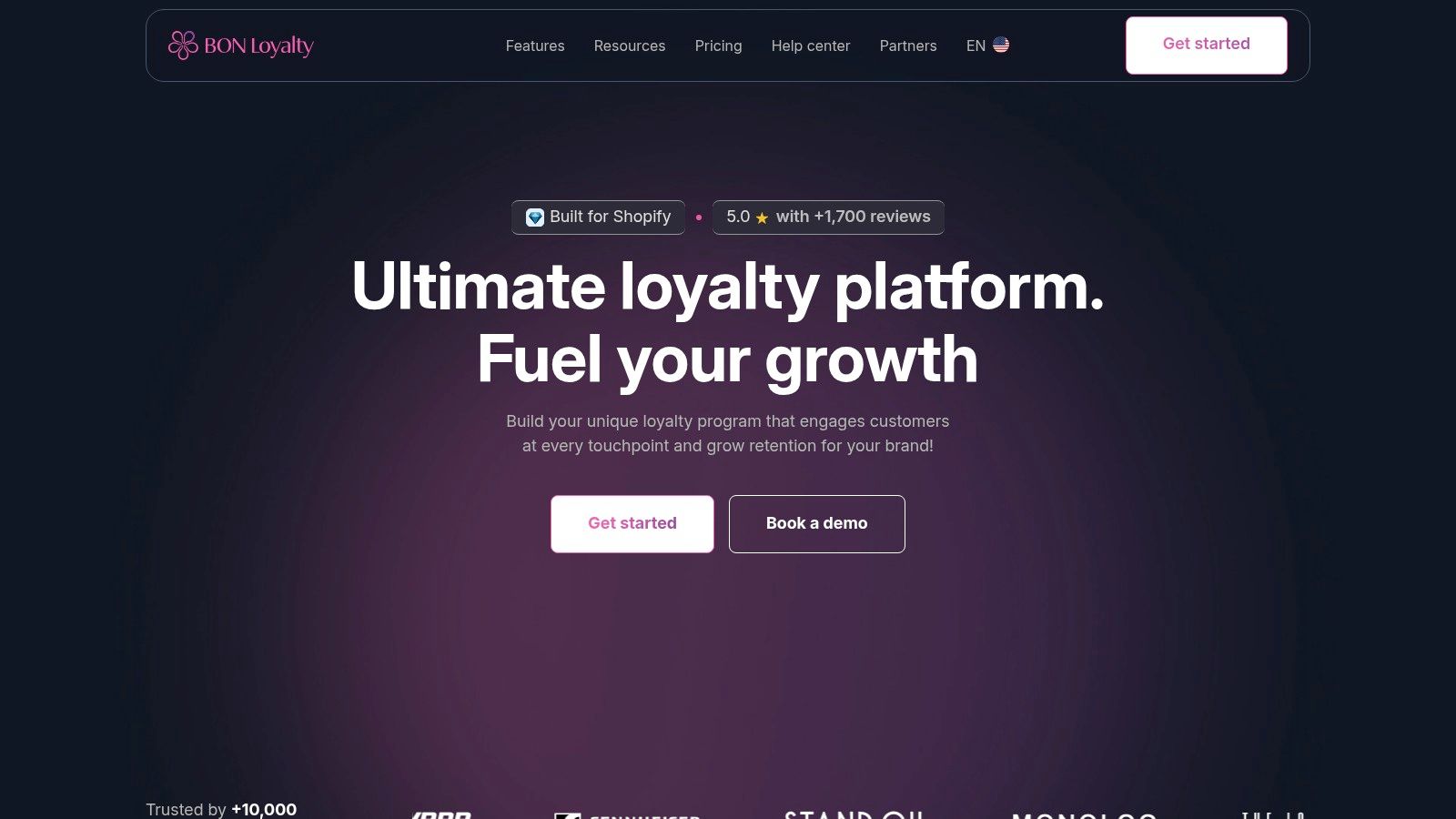
BON Loyalty is the cost-conscious option that still has real market proof. It isn't the most advanced tool on this list, but it has enough traction to deserve inclusion for merchants who need core functionality without jumping straight into a heavier platform.
Best fit for early-stage stores watching cost
BON Loyalty is reported as having 1,400+ reviews with a 4.9 out of 5 rating, which is meaningful social proof in the Shopify ecosystem (Rivo's overview of leading rewards program options). That review volume matters because it tells buyers the app has already crossed a meaningful trust threshold with merchants.
BON is a reasonable fit when the store needs points, VIP tiers, referrals, and broad language support without turning loyalty into a major implementation project. For many early-stage stores, that is enough.
Where BON needs caution
BON should be evaluated more carefully by brands expecting rapid complexity. A program that looks fine at launch can start feeling thin when the brand needs deeper logic, more account integration, or more extensive control over scale behavior.
BON is a solid budget pick. It shouldn't be mistaken for a long-term enterprise answer.
10. Joy
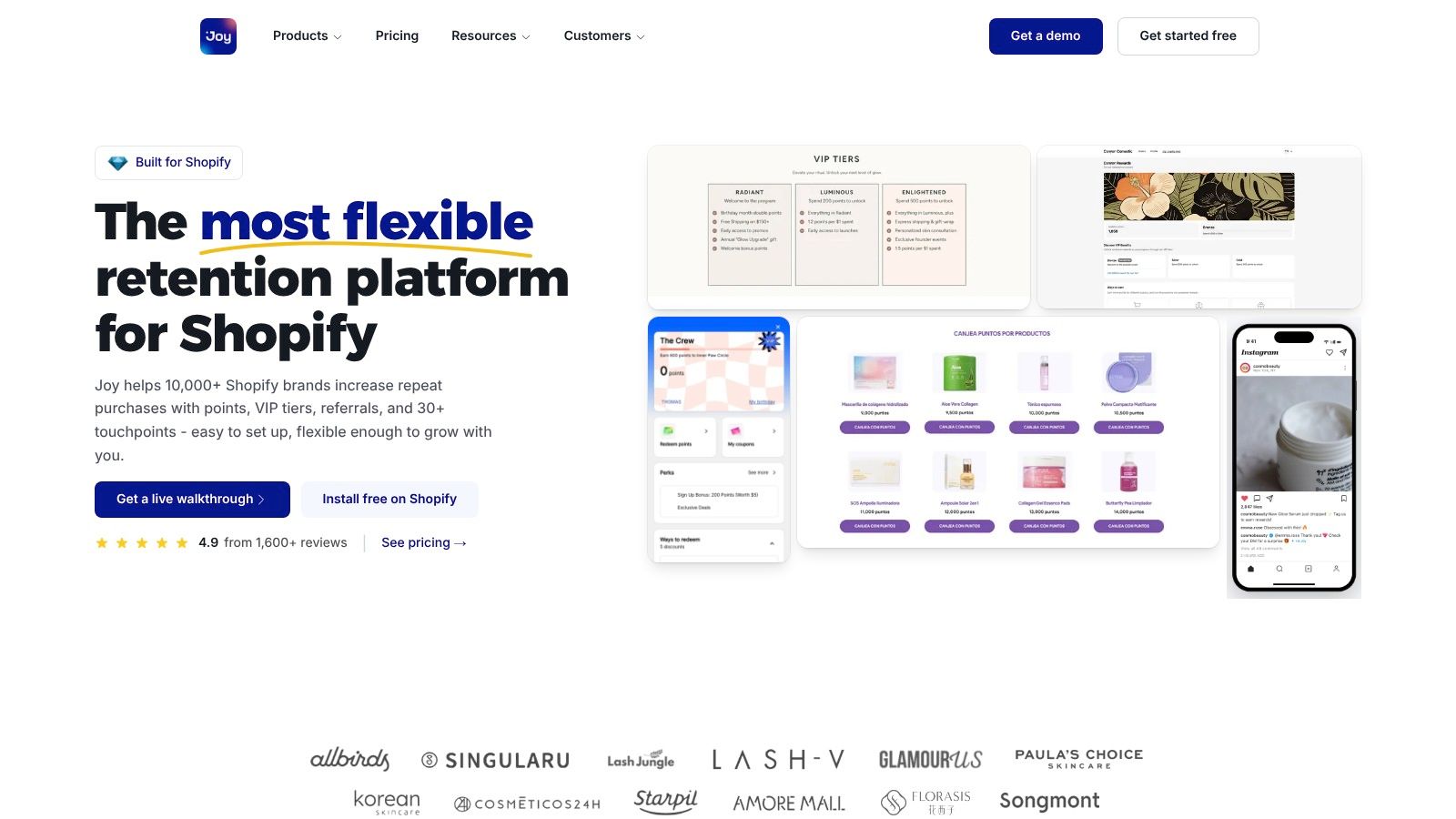
Joy is a smart option for brands that want a lighter-weight loyalty build with a more native storefront feel. It fits teams that care about clean Online Store 2.0 implementation and don't want the loyalty UI to feel bolted on.
Best fit for lightweight Online Store 2.0 builds
Joy is most interesting when design cleanliness matters as much as reward mechanics. Some brands don't want another floating widget and another heavily branded portal. They want loyalty blocks and pages that sit more naturally inside the theme.
That makes Joy a relevant option for merchants focused on cleaner retention UX and broader Shopify customer retention, especially when loyalty is just one part of a more disciplined post-purchase experience.
Where Joy should be pressure-tested
Joy still needs stronger vetting for edge cases before a larger team commits. Memberships, tier logic, and native-feeling theme implementation can look great in a demo and still create issues once real customer behavior hits the system.
For a straightforward store with clear reward logic, Joy can be a good fit. For a more complex operator, a proper sandbox test matters before rollout.
Top 10 Shopify Loyalty Apps - Feature Comparison
App | Core features | Best for / Target audience | UX & value highlights | Pricing notes | AppStoreResearch benefits (soft CTA) |
|---|---|---|---|---|---|
Smile.io, Loyalty, Referrals, VIP | Points, referrals, VIP tiers, widgets, POS, automations | Merchants who want a quick, purpose-built loyalty layer | Mature UX, fast setup, clear docs; advanced features gated | Tiered plans; costs rise with order volume | Join 3,000+ operators, get paid calls with devs, request features, and earn incentives |
Yotpo Loyalty & Referrals | Points, VIP, referrals, advanced segmentation; pairs with Reviews/SMS | Enterprise teams wanting UGC + lifecycle orchestration | All‑in‑one ecosystem, strong integrations; can feel bloated | Enterprise pricing; sales contact often required | Speak to founders and product teams via paid calls; influence roadmap and access possible deals |
LoyaltyLion, Rewards & Loyalty | Points, referrals, VIP, deep analytics, POS support | Brands needing robust reporting and custom program design | Strong analytics and customization; proven for Plus | Tiered pricing; can become pricey at scale | Paid merchant sessions to shape features, reduce app cost impact, and form vendor relationships |
Stamped Loyalty & Rewards | Points, VIP, referrals, checkout widgets, multi-store sync | Merchants who want loyalty tied to reviews and checkout UX | Tight reviews + loyalty integration; useful checkout visibility | Bundled pricing varies by product | Earn for calls; discuss checkout integrations with devs and discover vetted apps without spam |
Rivo, Loyalty & Referrals (Shopify-only) | Points, referrals, store credit, checkout extensions, fast widgets | Shopify-native stores prioritizing performance and checkout UX | Modern UI, fast loading, strong checkout redemption | Shopify-only; pricing jumps at higher tiers | Paid sessions with founders, early access, and opportunities to request product changes |
Rise.ai, Gift Cards, Store Credit & Loyalty | Gift cards, store credit, cashback, wallet-style credit, POS | Higher AOV / omnichannel merchants needing real-currency wallets | Simple for customers, good for exchanges/refunds; migration support | Usage- and volume-influenced pricing | Discuss wallet flows with teams via paid calls; influence credit/refund features and get incentives |
Growave, Loyalty, Wishlist, Reviews (All‑in‑one) | Points, tiers, referrals, wishlist, reviews, POS QR | Small teams wanting a single vendor to reduce tool sprawl | One UI for multiple retention jobs; competitive pricing | Cheaper than buying separate tools; depth trade-offs | Discover consolidated options, join paid calls to evaluate fit, and earn incentives from developers |
Marsello, Loyalty + Email/SMS + POS | Points, VIP, behavior-driven email/SMS, POS scanning, reporting | Omnichannel retailers needing loyalty-driven marketing automation | Strong POS tools and automation; higher price floor | Higher than loyalty-only apps due to bundled features | Get paid research sessions to test marketing+loyalty workflows and sometimes access founder consulting |
BON Loyalty, Points, VIP, Referrals | Points, VIP tiers, referrals, POS, multi-language, 24/7 support | Early-stage stores on tight budgets | Free plan option, many app store reviews; reliability checks advised | Free tier available; watch for scale-related issues | Earn paid calls, test reliability with devs, and request cost-conscious features |
Joy: Loyalty Program & Rewards | Points, VIP, paid memberships, native OS 2.0 loyalty pages | Stores wanting native theme integration and simple builds | Low-lift implementation, clean native pages; newer features need vetting | Simple, likely affordable tiers | Join paid sessions to trial memberships, suggest roadmap ideas, and get early access |
How to Choose Program Design Over App Features
The right app won't save a weak loyalty strategy. That's the point most comparison posts miss.
A serious operator starts with the business model, not the app store. What behavior needs to change. First-to-second order conversion. Replenishment speed. Omnichannel usage. Referral volume. If that answer isn't clear, all the points rules and VIP labels in the world won't help.
The next step is payback. ReferralCandy says the right loyalty apps can reduce acquisition costs by nearly 20 percent while lifting repeat purchases by 40 percent (Shopify community summary of loyalty app outcomes). That's useful directional evidence, not a guarantee. A key question is whether the brand's reward economics and reorder behavior can support the monthly software cost and internal operating time.
App choice is pivotal. Smile.io is the safest SMB recommendation when speed and familiarity matter most. Yotpo Loyalty is the strongest bundle play when loyalty should sit beside reviews and lifecycle messaging. LoyaltyLion is best for mid-market teams that want more control. Rivo is the cleanest Shopify-first option for technical teams that want deeper platform alignment. The rest of the field mostly comes down to whether the brand values store credit, omnichannel workflows, or stack consolidation.
Merchants should also be realistic about implementation burden. A loyalty app is rarely just an install. It touches customer accounts, onsite merchandising, lifecycle campaigns, support scripts, and sometimes POS training. The more apps involved, the greater the drag. That is why total cost of ownership matters as much as feature depth, especially in a category where merchants are already dealing with rising app costs and a crowded vendor environment.
That operating pressure is one reason experienced merchants increasingly want direct access to the teams building their stack. Product founders want feedback before they ship. Merchants want influence before they commit. App Store Research sits in that middle. It's a platform that connects Shopify merchants with paid product research interviews with app developers and UX teams.
For serious operators, the value isn't just the incentive. It's access, influence, and early visibility into what app founders are building next. Merchants can pressure-test new tools, push for feature requests, build stronger vendor relationships, and sometimes reduce the impact of growing app costs by getting involved earlier. Some also use those conversations to spot better-fit tools before the wider market catches up.
Operators who want that kind of access can Apply to join the network. App Store Research says the network includes over 3,000 operators who have been paid from a $1M+ pool for their expertise. For many of the strongest Shopify teams, the money is secondary. The primary value is getting in the room before roadmap decisions are locked.
A broader systems view also helps. Loyalty doesn't live in isolation from integrations, checkout, and vendor architecture, which is why this piece on Ecommerce API is worth a read for teams thinking beyond one app category.
App Store Research is where serious Shopify operators get paid to speak directly with the founders and product teams building the apps they use every day. The conversations create access, influence over roadmaps, and early visibility into new tools in a crowded ecosystem. The incentive is a byproduct. Merchants, agencies, and Shopify teams who want that kind of advantage can explore app store research.

Author
Jonathan Kennedy
Jonathan Kennedy is the founder of app store research and shopexperts, platforms that connect operators, founders, and experts across the Shopify ecosystem to drive better decisions, product development, and growth.