Paid Research Participation: Get Paid to Shape Shopify Apps
/


Author
Jonathan Kennedy
Founder at appstoreresearch
Jonathan Kennedy is the founder of app store research and shopexperts, platforms that connect operators, founders, and experts across the Shopify ecosystem to drive better decisions, product development, and growth.
Most Shopify operators know the loop. A problem shows up in the store, someone starts searching the App Store, five tabs turn into twenty, demo requests start landing in the inbox, and a “simple fix” becomes a week of evaluation. Then the app gets installed, touches theme code or checkout-adjacent workflows, adds another monthly charge, and still doesn't quite fit how the business runs.
The direct cost is easy to spot. The hidden cost is harder. It sits in missed merchandising time, extra QA, support tickets caused by clunky UX, slower storefronts, and the constant distraction of sorting serious tools from noisy outreach. That's why paid research participation is worth looking at differently inside the Shopify ecosystem.
For merchants, agencies, and in-house operators, it isn't just a way to make extra money. It's a way to get in front of app founders and product teams before a tool is fully baked, influence what gets built, discover better-fit products without cold outreach, and get compensated for expertise the market already wants.
Table of Contents
The Hidden Cost of Choosing the Wrong Shopify App
Where the real cost shows up
A better route than trial and error
What Paid Research Participation Is for Shopify Operators
Not a survey panel
Why teams are willing to pay for merchant input
Six Strategic Benefits Beyond the Payout
Better influence over the tools already in the stack
Earlier visibility into new apps and features
Cleaner discovery in a noisy market
Stronger vendor relationships
Better pricing and packaging pressure
The payout is still real
The Participant Journey on a Vetted Platform
Step one is profile quality
Matching works best when the study is narrow
Why vetted systems beat ad hoc outreach
How to Maximize Your Value as a Participant
Build a profile that shows decision proximity
Bring honest feedback, not polite feedback
Respect the economics of attention
Turn Your Expertise into an Asset
The Hidden Cost of Choosing the Wrong Shopify App
A brand operator wants to lift conversion rate, tighten upsells, or fix post-purchase friction. The search starts with “best Shopify app for…” and quickly runs into the same problems: crowded listings, overlapping claims, aggressive follow-up, and very little clarity on how the tool behaves in a real store with real constraints.
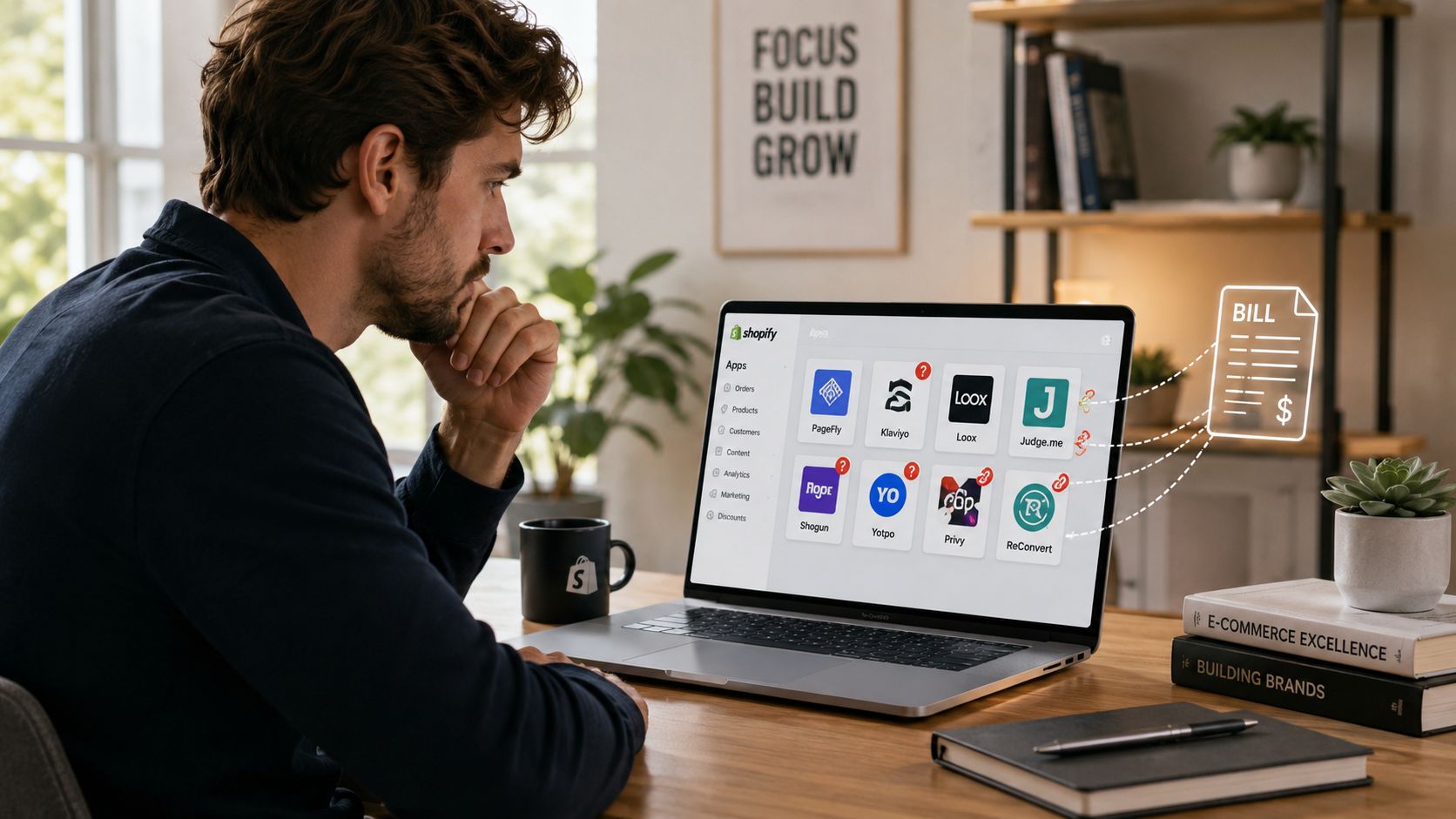
The wrong app rarely fails in an obvious way. More often, it almost works. It creates edge cases in the theme, adds one more dashboard to check, pushes the team into a workflow built for someone else, and slowly raises the cost of running the store. That's especially frustrating when the team was only trying to solve one narrow problem like bundle presentation, subscriptions, reviews, search, or merchandising rules.
Where the real cost shows up
A weak app decision tends to hit four places first:
Operator time: The team spends hours on demos, setup, internal testing, and support conversations that never turn into durable value.
Customer experience: Added friction shows up in the storefront, account area, cart, or post-purchase flow.
Technical overhead: Developers or agency partners get pulled into cleanup work instead of shipping improvements.
Tool sprawl: One more subscription lands on the P&L without becoming mission-critical.
Good app decisions usually come from better conversations, not better listing pages.
That's why many experienced teams now prefer direct product conversations over generic outreach. In practice, paid calls can be a cleaner discovery channel than being added to another sales sequence. They create a setting where the merchant sees what's coming, the product team gets sharper feedback, and both sides know the conversation has value.
For operators also cleaning up lead capture or qualification on their own storefronts, Orbit AI's guide to converting leads is a useful reference because it focuses on practical form decisions instead of generic CRO advice.
A better route than trial and error
Instead of installing first and learning later, operators can enter the process earlier. They can talk to the team building the app, explain the workflow that breaks in practical use, and see whether the product is moving in a useful direction.
That makes paid research participation more than a side activity. It becomes part of smarter app discovery and better vendor selection. For teams that want a more structured way to assess fit before adopting another tool, this guide on how to evaluate Shopify apps is a practical starting point.
What Paid Research Participation Is for Shopify Operators
For a Shopify operator, paid research participation usually means a structured conversation with an app founder, product manager, UX researcher, or go-to-market team. It's not the classic low-value internet survey. It's a professional exchange where the merchant's operating knowledge is the thing being bought.
A retention lead at a Plus brand knows where subscription UX breaks. An agency strategist knows why merchants churn from bloated page builder setups. An ecommerce manager knows which analytics views are useful and which are just decoration. Those details matter because product teams can't get them from app reviews alone.
Not a survey panel
The simplest way to frame it is this:
Format | What it usually looks like | Why it matters to Shopify operators |
|---|---|---|
Generic survey | Multiple-choice questions with little context | Often too shallow to capture workflow pain |
Paid research interview | Live conversation, walkthrough, or task-based feedback | Lets operators explain real constraints and trade-offs |
Usability session | Researcher observes how someone uses a prototype or tool | Surfaces friction before an app reaches the wider market |
The payment side also isn't unusual or experimental. An academic review found participants were paid about $9.50 per hour of active participation, plus an average additional amount of more than $12 in earlier research settings, which helps show that compensation has long been treated as a time-cost rather than a random perk in research practice, as outlined in this academic review of compensation practices. That model has matured in professional research markets, where participant-facing platforms describe typical studies in the $100 to $300 range.
Why teams are willing to pay for merchant input
Shopify operators sit close to revenue. They see the drop-offs, support patterns, merchandising bottlenecks, reporting gaps, and app conflicts that shape actual buying decisions. That makes their feedback more valuable than broad consumer feedback when a team is building for commerce operators.
Practical rule: If a tool affects conversion, retention, AOV, merchandising, support load, or developer time, the people running those workflows have insights worth paying for.
For product teams, a paid interview is cheaper than building the wrong feature set. For merchants, it's a chance to turn daily operational knowledge into a paid asset. Useful background on how these sessions are run can also be found in this overview of user research methods, especially for operators who want to understand why teams ask certain questions or run prototype tests.
A vetted network matters here because it filters for fit instead of volume. For operators who want the practical side of that process, the participant flow is easier to understand through this guide on how to become a participant.
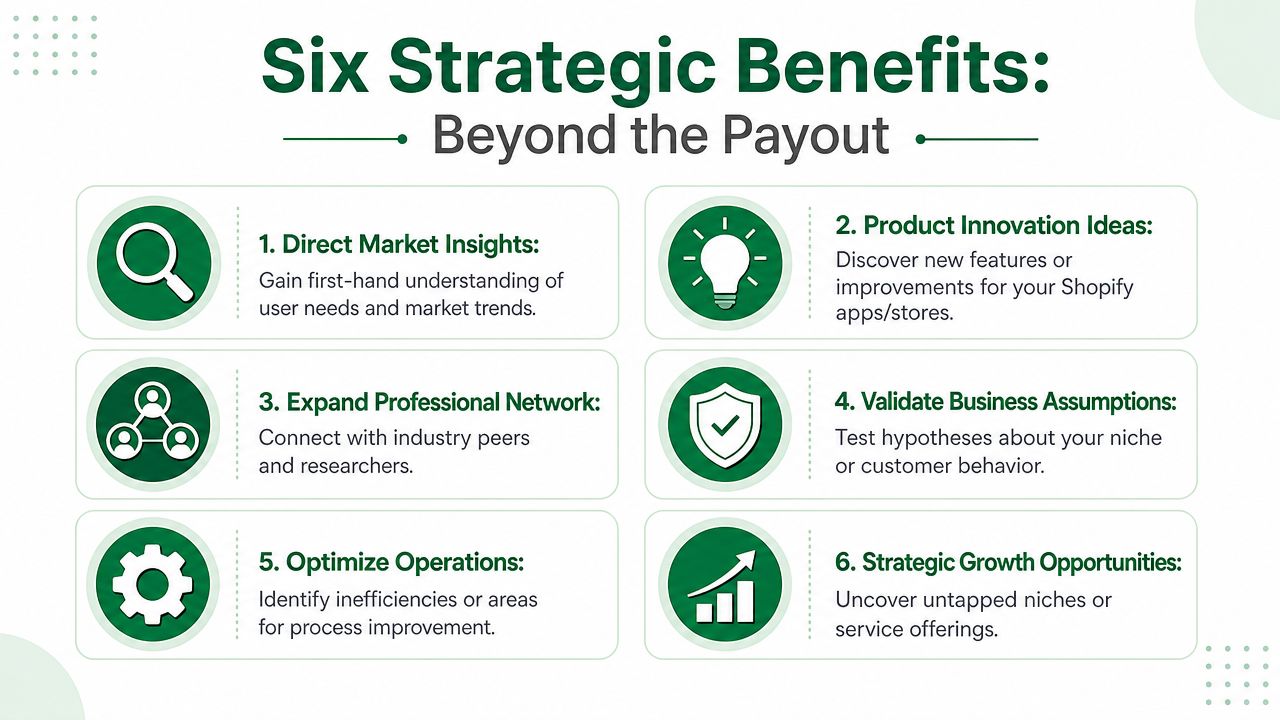
Six Strategic Benefits Beyond the Payout
A Shopify operator can spend an hour in a paid research session and get more influence over a product than months of support tickets usually buy. That is the upside. The payout is useful, but the bigger return is better tools, earlier signal, and stronger access to the people shaping the apps your store depends on.
Better influence over the tools already in the stack
Support queues collect complaints. Research sessions expose decision-making context.
That difference matters. A merchant can explain why a returns workflow increases ticket volume, why a subscription setting creates edge cases for support, or why a dashboard reports activity without helping anyone act on it. Product teams can do more with that level of detail, especially when the feedback comes from someone who owns revenue, operations, or implementation.
Earlier visibility into new apps and features
Research participants often see concepts before they hit the app store, LinkedIn, or partner channels. For Shopify brands, that changes how evaluation happens.
Instead of finding a tool after the market has already formed an opinion, operators get an early read on what is coming and where it may fit. Sometimes that leads to adoption. Sometimes it saves the team from wasting time on another test account, onboarding cycle, and migration discussion that was never going to pay back.
Cleaner discovery in a noisy market
Shopify operators are flooded with pitches. Cold email, partner outreach, founder DMs, community posts, and affiliate-driven app recommendations all compete for attention. A vetted research invitation is different because the topic is specific, the fit is screened, and the conversation is tied to a known workflow.
A similar trust pattern shows up in clinical research, where outreach improves when organizations work through channels participants already trust, as discussed in this piece on how trusted channels improve research discovery. The parallel is useful here. Merchant attention is limited, and trusted context filters out a lot of noise.
Stronger vendor relationships
Some of the best conversations with app companies happen before procurement gets formal.
A sharp research session can put a merchant in direct contact with a founder, product manager, or design lead. That does not guarantee special treatment, and it should not be the reason to participate. It does tend to improve later conversations because the team already knows the operator gives concrete, credible feedback grounded in store reality.
For merchants running complex stacks, that relationship value is real. Better context from a vendor can shorten evaluation time, reduce misunderstandings during implementation, and make roadmap conversations more productive.
Better pricing and packaging pressure
Operators influence product direction. They also influence how products are sold.
When merchants explain where pricing breaks trust, where usage thresholds feel arbitrary, or where feature gating creates friction during rollout, product teams get cleaner signals about commercial fit. That matters in the Shopify ecosystem, where app spend can creep up fast across subscriptions, reviews, loyalty, returns, search, merchandising, and analytics.
One merchant complaint is easy to dismiss. Repeated research feedback from qualified operators is harder to ignore.
The payout is still real
The compensation still matters because it prices your time like expertise, not like a favor. As noted earlier, participant-facing research platforms commonly position these studies as paid opportunities, with higher rewards tied to niche experience and stronger fit.
For Shopify operators, that creates a useful trade. You get paid to explain the workflows, constraints, and buying logic you already deal with every week. If the session also helps shape a product your team may use later, the return is better than the fee alone.
The Participant Journey on a Vetted Platform
You finish a day spent inside Shopify, fixing a theme issue, reviewing app spend, and chasing down why a promotion is not syncing correctly across markets. Then a research invite comes in from a product team building for merchants like you. On a vetted platform, that does not turn into back-and-forth emails, unclear expectations, or a vague promise of payment. It runs like a defined process.
Step one is profile quality
The first pass usually happens at the profile level, revealing a merchant's or operator's actual decision proximity. Role title matters less than scope. The useful details are the ones a researcher can match to a real Shopify problem: app selection, merchandising ownership, retention work, subscription setup, international storefront complexity, agency implementation experience, or responsibility for rollout after purchase.
Specificity changes outcomes.
“Runs ecommerce” gives a researcher very little to work with. “Owns app evaluation, promotions, and merchandising for a Plus store with subscriptions and multiple markets” gives them a reason to shortlist you.
Matching works best when the study is narrow
Good studies are selective by design. Researchers use screeners to find the operator who has dealt with the exact workflow they need to examine, whether that is returns logic, search relevance, post-purchase upsells, B2B catalogs, or subscription churn.
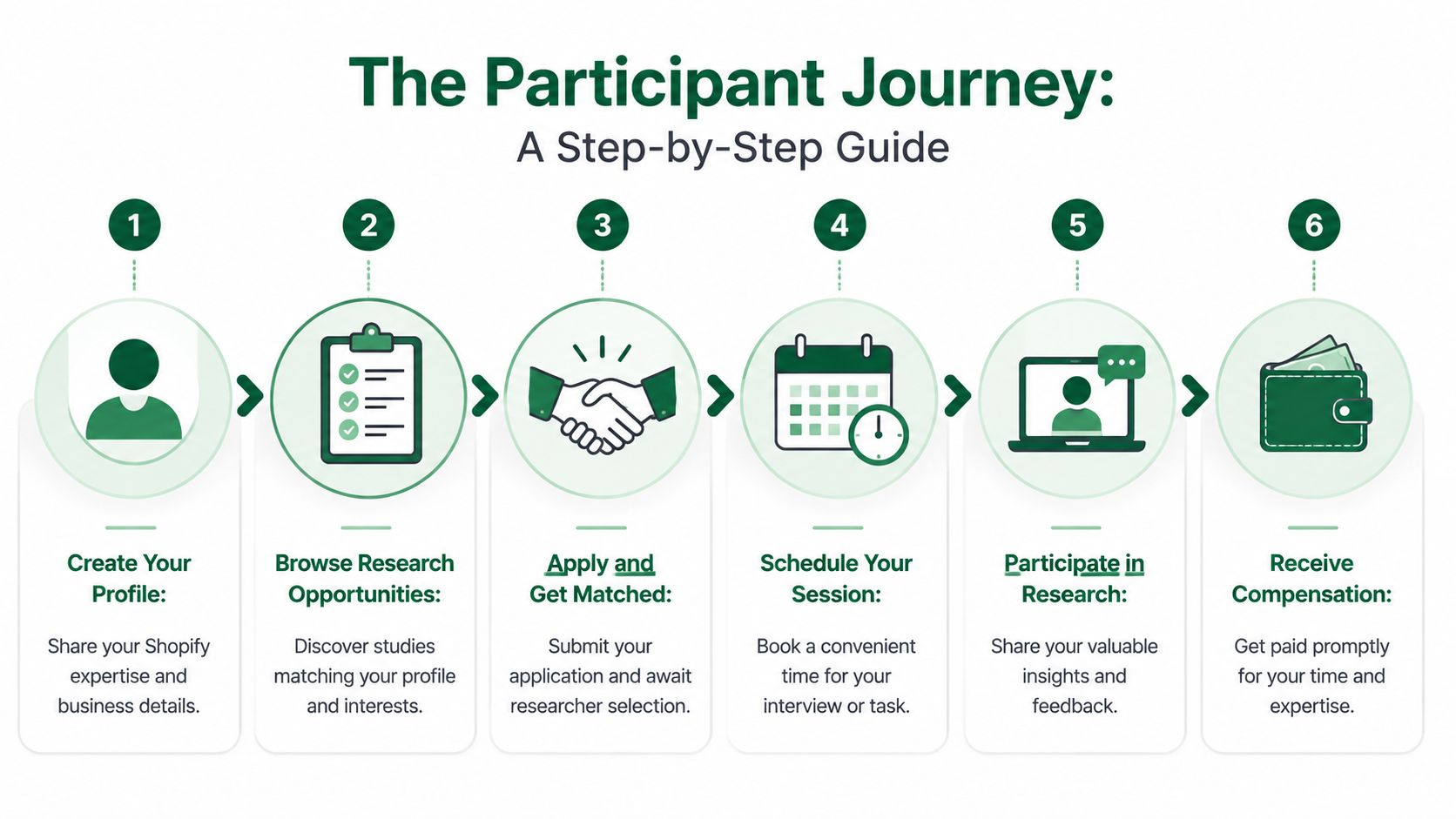
A typical flow looks like this:
Create a detailed profile: List the tools, workflows, and decisions tied to your role.
Review relevant studies: Apply to sessions that match your actual store experience.
Answer screener questions carefully: This is usually where fit is confirmed or ruled out.
Book the session: Choose a time you can keep.
Show up prepared: Expect a live interview, concept test, or walkthrough of how your team handles a task in Shopify.
Get paid after completion: Payment follows the session based on the study terms.
The trade-off is straightforward. Better platforms ask for more detail up front, but that extra filtering leads to fewer wasted calls.
Why vetted systems beat ad hoc outreach
A structured platform sets expectations early. The operator knows the topic, format, time commitment, and compensation before joining. The researcher knows the participant cleared a screening process and has relevant operating context.
That matters more in the Shopify ecosystem than in generic consumer research. Product teams are often testing tools that affect merchandising, conversion, fulfillment, retention, or reporting. Weak feedback wastes their budget. Weak matching wastes your time.
As noted earlier, payouts can be meaningful, especially for niche operator experience. A key advantage here is quality control. Payment gets attention. Screening protects the conversation.
A good research platform filters for operators whose feedback can change a product decision, not just fill a calendar.
One example in the Shopify space is app store research, a platform that connects Shopify merchants with paid product research interviews with app developers and UX teams. The practical advantage of a specialized network is focus. The studies, participant pool, and product context are already tied to Shopify workflows, so merchants spend less time explaining basics and more time giving feedback that matters.
How to Maximize Your Value as a Participant
The best participants don't try to sound impressive. They try to be precise. That's what gets repeat invitations.
A researcher wants detail that changes decisions. “The onboarding was confusing” is weak. “The setup assumes a single catalog structure, but this brand runs multiple merchandising rules across markets” is useful. Better participants talk in operating terms, not vague opinions.
Build a profile that shows decision proximity
The profile should make one thing obvious. What does this person own?
Strong signals include app selection, CRO responsibility, retention work, theme coordination, analytics usage, merchandising, support workflow ownership, or agency implementation experience. If the operator evaluates tools but doesn't sign the contract, that's still valuable. If the operator signs the contract and manages rollout, that's even better.
Bring honest feedback, not polite feedback
Many founders and product teams don't need encouragement. They need signal.
That means saying when a feature won't be adopted, when pricing creates friction, when the interface is overbuilt, or when the app solves a problem the team doesn't prioritize. Constructive criticism is often the most valuable part of the session if it's specific and tied to real store operations.
The strongest participants explain trade-offs clearly. They don't just react. They show why a choice will or won't work inside an actual Shopify workflow.
Respect the economics of attention
Companies pay because relevant participants are hard to recruit. Incentives directly affect both turnout and who shows up. In one study covered by STAT, participation was 6% with no incentive, increased to 17% with a $100 offer, and reached nearly 30% with a $500 incentive. The same study found the larger incentive nearly eliminated participation gaps across income and race, as reported in this STAT article on research incentives and diversity.
For Shopify operators, the practical read is straightforward. Relevant expertise is scarce, schedules are tight, and researchers know it. Showing up prepared protects that value.
A few habits help:
Read the prompt carefully: Good sessions often reward context more than speed.
Use real examples: Mention actual workflows, edge cases, and implementation friction.
Think out loud: Especially in usability sessions, the reasoning matters as much as the answer.
Stay candid about fit: If a product isn't right for the store, say so clearly.
Be reliable: Fast confirmations and on-time attendance make researchers want to work with the participant again.
Turn Your Expertise into an Asset
Most merchants already do the hard part. They evaluate software, manage trade-offs, fix operational messes, and learn what works in a live store. Paid research participation gives that expertise a more useful outlet.

The practical upside is bigger than a one-off incentive. Operators get a better way to discover emerging apps, shape feature priorities, influence pricing and packaging, and build direct relationships with the teams behind tools they may eventually buy. In a crowded ecosystem, that's a useful edge.
Payment transparency also matters. A peer-reviewed review found only 5.4% (11 of 203) of study publications described payment for participation, and only 9 of those gave details on payment type and structure. The authors recommended disclosing the amount, rationale, mechanism, and timing of compensation, which is why serious opportunities should make the incentive structure clear upfront in the first place, as discussed in this review of payment transparency in study publications.
For Shopify operators who want this to compound into reputation as well as income, there's also a practical branding angle. This guide on adding ASR consultant to a LinkedIn profile shows how paid research work can be framed as visible expertise rather than side activity.
App Store Research fits naturally here as a platform that connects Shopify merchants with paid product research interviews with app developers and UX teams. The network includes over 3,000 vetted Shopify operators and has paid out over $1,000,000 in incentives, which gives merchants a structured way to turn day-to-day operator knowledge into paid, high-intent conversations.
Shopify operators who want to share their experience and get paid for useful product feedback can explore app store research. It's a practical way to join relevant research interviews, discover new tools earlier, and help shape the products that power Shopify stores.

Reviewed by
Filip Djokic
Product Designer at appstoreresearch.com
Filip is a Product and UI/UX Designer with over 10 years of experience in digital product design. With a strong background in the Shopify ecosystem, he focuses on improving user experiences and turning merchant insights into better product decisions at appstoreresearch..