
Author
Jonathan Kennedy
Founder at appstoreresearch
Jonathan Kennedy is the founder of app store research and shopexperts, platforms that connect operators, founders, and experts across the Shopify ecosystem to drive better decisions, product development, and growth.
Your shared Gmail inbox worked when support meant a few shipping questions a day. Then ticket volume climbed, social DMs started slipping through, and agents began answering the same refund thread twice because nobody had a clean system of record.
That's when the Gorgias vs Zendesk decision usually lands on the desk of a CS lead or ops owner.
This choice isn't really about which helpdesk has the longer feature page. It's about which operating model fits the business Shopify teams are running. Gorgias was launched in 2015 for ecommerce support, while Zendesk was founded in 2007 and grew into a broader customer service platform across industries, which is why the market still frames Gorgias as the Shopify-first option and Zendesk as the more general-purpose scale option, as noted in this historical comparison.
For a Shopify brand, that difference shows up fast. One platform is built to keep agents close to orders, carts, and revenue context. The other is built to control complexity across teams, channels, rules, and reporting. Both can work. Both can also create headaches if the business buys the wrong one too early.
Table of Contents
Your Gmail Inbox Is on Fire. What's Next?
Where Gorgias Wins for Shopify Operators
The inbox feels like part of Shopify
The operational win is less switching
Where Zendesk Wins for Enterprise Scale
Control starts to matter more than convenience
Zendesk fits broader service operations
Pricing and Total Cost of Ownership
Two pricing models, two very different risks
A practical pricing table
AI Features in 2026 What Actually Works
What teams actually need from AI
Where newer options enter the conversation
Migration Considerations What to Expect
What usually breaks during a migration
How to keep the move under control
How to Choose Based on Your Team Size
Small teams
Mid-sized teams
Larger support orgs
Don't Just Choose Your Tools Influence Them
Your Gmail Inbox Is on Fire. What's Next?
A messy shared inbox usually creates the same pattern. Customers reply on email, then message on Instagram, then open chat because they assume nobody's answering. Agents lose context. Managers lose visibility. The business starts treating support like cleanup work instead of part of retention and conversion.
That's the key starting point for a Shopify helpdesk comparison. The team doesn't just need tickets. It needs a system that matches how the store operates.
Gorgias and Zendesk come from different assumptions. Gorgias assumes the support team lives inside ecommerce workflows. Zendesk assumes the team needs a stronger operating system for service across multiple channels, rules, and departments. That difference is why these products can both look “complete” in demos and still feel very different after a month of daily use.
Practical rule: If the main pain is agents wasting time jumping between Shopify admin and support threads, the answer usually looks different than if the main pain is queue control, routing, and reporting discipline.
The mistake is buying for today's loudest annoyance only. A Shopify brand can outgrow Gmail fast. It can also outgrow a lightweight ecommerce inbox faster than expected once the business adds channels, teams, or brands.
Where Gorgias Wins for Shopify Operators
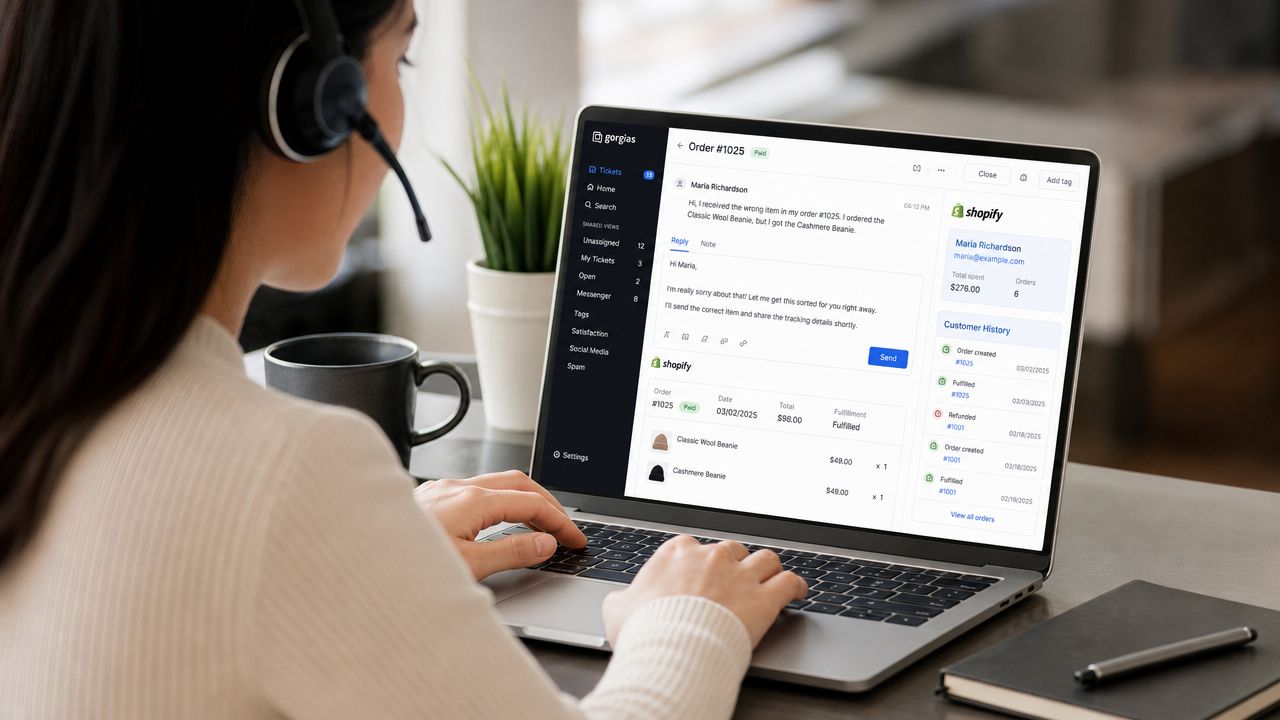
Gorgias is strongest when the support team's work is tightly tied to the Shopify store itself. That means order edits, refunds, shipping checks, cart context, and repeat questions that live close to the transaction.
The inbox feels like part of Shopify
For Shopify-centric workflows, Gorgias surfaces order details, cart data, and customer lifetime value inside the support inbox, and several comparisons note that agents can refund, cancel, or edit orders without switching tools in many cases, according to this Gorgias workflow review.
That matters more than a feature checklist suggests. When an agent can resolve a late shipment complaint, check what the customer bought, and fix the order from one view, the process is cleaner. Less tab switching usually means fewer mistakes, fewer internal pings, and less dependence on senior agents to handle “simple” issues.
There's also a strategic angle here. Support teams on Shopify often carry part of the conversion burden, especially for pre-purchase questions, discount requests, and “where is my order” contacts that sit close to retention. That's why many teams pair helpdesk decisions with broader ecommerce conversion strategies, not just service metrics.
The operational win is less switching
Gorgias usually fits best when:
The store is Shopify-first: The team doesn't need to support a complex non-Shopify environment.
Agents need fast context: Seeing order and customer details in-thread saves time every day.
The team wants simpler operations: Admin overhead is lower when the workflow model matches ecommerce out of the box.
A lot of Shopify teams don't need an enterprise service platform. They need a fast inbox that reduces friction and keeps agents close to the order. That's where Gorgias tends to feel right.
Teams that care most about speed inside the Shopify workflow often prefer software that removes clicks, even if it gives up some back-office control.
For operators comparing the wider category, this roundup of Shopify customer service apps is useful because it frames Gorgias in the context it competes in. Not every support stack problem needs to be solved with a heavier platform.
Where Zendesk Wins for Enterprise Scale

Zendesk starts to make more sense when support stops being one Shopify queue and starts becoming an operating system problem.
Control starts to matter more than convenience
Independent comparisons describe Zendesk as stronger for advanced routing, SLA enforcement, custom dashboards, and a larger integration ecosystem, with one 2026 review citing 1,500+ integrations as a key advantage in this operations-focused comparison.
That changes the buying logic. A team managing multiple brands, different queues, separate service levels, or non-store channels often needs stronger rules and better visibility more than it needs in-ticket commerce actions.
Zendesk is also easier to justify when support touches more than customers. Wholesale questions, internal escalations, marketplaces, warranty workflows, and regional teams tend to create complexity that a Shopify-native inbox doesn't handle as elegantly.
Zendesk fits broader service operations
Zendesk usually wins when the business needs:
Need | Why Zendesk tends to fit |
|---|---|
Complex routing | Tickets can be organized by team structure, priorities, and service rules |
Stronger reporting | Managers need dashboards beyond basic queue visibility |
Broader integrations | The support stack extends beyond Shopify apps |
Multi-channel maturity | Email, chat, social, and other channels need tighter operational control |
The trade-off is obvious. Zendesk usually asks for more setup, more admin attention, and more process discipline. For smaller Shopify brands, that can feel heavy. For larger teams, that weight is often the point.
Zendesk earns its keep when support leadership needs control, not just convenience.
A support lead choosing between Gorgias or Zendesk should ask a blunt question: is the team mostly solving order problems, or running a service operation across many moving parts? That answer usually narrows the field quickly.
Pricing and Total Cost of Ownership
Pricing is where the Gorgias Zendesk comparison gets practical fast. These products don't just charge different amounts. They charge on different logic.
Two pricing models, two very different risks
Zendesk's published pricing is seat-based, starting at $19 per agent/month and rising to $115 per agent/month on higher plans. Gorgias is described as ticket-based, starting at $10/month for 50 tickets, with unlimited users included, according to Zendesk's own comparison of operating models.
That creates two different cost risks:
Gorgias risk: Ticket volume rises faster than headcount.
Zendesk risk: Headcount grows before the business fully uses the platform's deeper capabilities.
If a Shopify brand has a lean team but a lot of support contacts, ticket-based pricing can become the thing finance complains about first. If the brand has a larger org with stricter roles and more agents, seat-based pricing may feel more predictable.
A practical pricing table
Gorgias vs Zendesk Pricing Models (2026)
Metric | Gorgias | Zendesk |
|---|---|---|
Core pricing model | Ticket-based | Seat-based |
Entry pricing | $10/month for 50 tickets | $19 per agent/month |
Other published tiers | 300 tickets for $50/month, 2,000 tickets for $300/month, 5,000+ tickets for $750/month | Plans rise up to $115 per agent/month |
User model | Unlimited users included | Pay per agent |
Best fit financially | Smaller Shopify teams with simpler staffing and manageable ticket economics | Growing teams that want more predictable per-seat planning |
The hidden part of TCO isn't just subscription price. It's admin time, implementation effort, reporting workarounds, and the cost of a future migration if the platform no longer fits.
A simple rule helps. If the business is mostly optimizing Shopify support speed, Gorgias can be economical and operationally clean. If the business is building a larger service function, Zendesk often costs more in setup but can reduce operational friction later.
For operators auditing software spend across the full support stack, this breakdown of Shopify app stack cost is worth reviewing before making the switch.
AI Features in 2026 What Actually Works
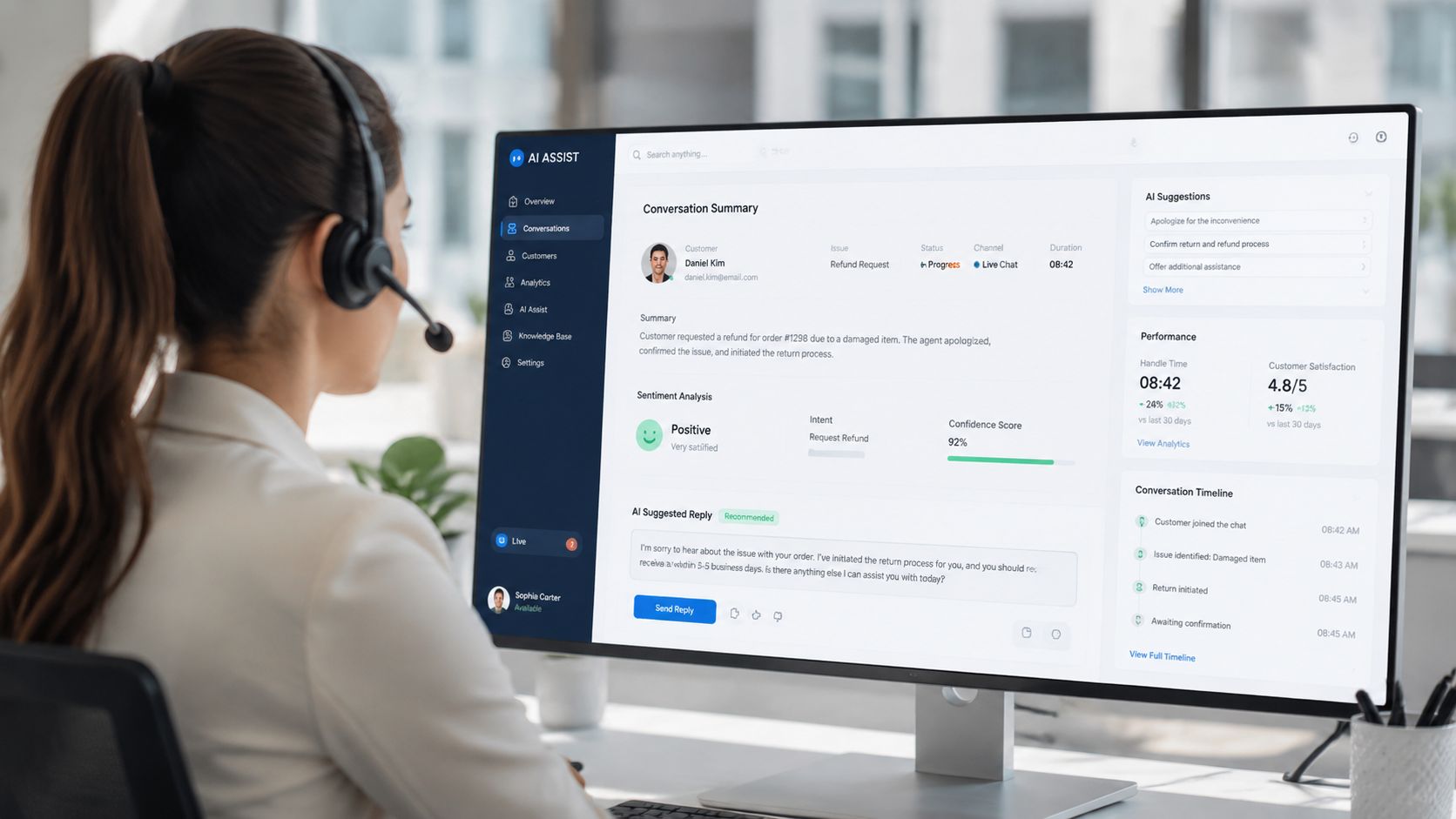
Most AI messaging in support software sounds better than the day-to-day reality. The useful question isn't whether the platform has AI. It's whether the AI reduces agent effort without creating cleanup work.
What teams actually need from AI
Recent comparison coverage notes that support teams in 2026 are dealing with rising ticket volumes, higher expectations for AI-assisted resolution, and the fact that voice, QA, and advanced AI often require higher tiers or partners in both ecosystems, including newer options discussed in this market overview of Gorgias vs Zendesk.
For a Shopify operator, the practical split looks like this:
Gorgias AI fits ecommerce actions: It tends to make the most sense when the team wants AI close to order context, macros, and repetitive support flows tied to the storefront.
Zendesk AI fits operational control: It makes more sense when the team wants broader routing, workflow logic, and support structure across multiple channels.
That means neither platform should be bought on AI claims alone. Both can help with summarization, response assistance, and handling routine conversations. Both can also push key functions into higher tiers, add-ons, or outside tools.
AI is useful when it removes repetitive work. It becomes expensive when agents have to audit every output like a junior hire.
Where newer options enter the conversation
This is also where newer tools deserve a look. Some teams aren't really choosing between Gorgias and Zendesk at all. They're asking whether a more AI-forward layer should sit beside or replace parts of the helpdesk stack. One example is Supermoon for Shopify support teams, which often comes up when operators want a different angle on AI, voice, QA, and workflow design.
There's a wider stack question hiding underneath the helpdesk choice. AI works better when customer and order data are clean. Teams already thinking about identity, enrichment, and context across systems may also find value in reviewing leading data enrichment software for 2026, especially if support and lifecycle marketing share customer data.
Migration Considerations What to Expect
Switching helpdesks looks simple on a pricing page and messy in real life. Data moves. Workflows don't always move cleanly. Agents carry habits from the old system into the new one, and that's usually where rollout friction starts.
What usually breaks during a migration
Three things cause most of the pain.
Historical data gets imported without much usefulness. Old tickets may arrive, but views, tags, and context often need cleanup before the team can trust the system.
Macros and automations need rebuilding. Even when two tools offer similar concepts, the logic behind them usually needs to be reworked.
Managers underestimate training. Agents can learn the interface quickly enough. What takes longer is learning the new operating model.
A move from Gmail or a lightweight inbox into Gorgias usually centers on process discipline. A move into Zendesk usually adds a second layer, because the team must also learn how to work inside more structured routing and reporting rules.
How to keep the move under control
The safest migration pattern is boring on purpose:
Start with live queues: Move the current workflows first. Don't begin by perfecting archive imports.
Rebuild top macros first: The small set used every day matters more than a giant long tail.
Name one owner: A migration without one decision-maker turns into a committee problem.
Run a parallel period: Keep a short overlap where leads validate that routing, permissions, and reporting behave as expected.
A rushed migration creates fake evidence. The team blames the new platform when the actual issue is unfinished setup. That's especially common in the Gorgias vs Zendesk debate because the tools solve different problems. Bad implementation can make either one look worse than it is.
How to Choose Based on Your Team Size
The cleanest way to decide is by matching the platform to team shape, not brand ambition.
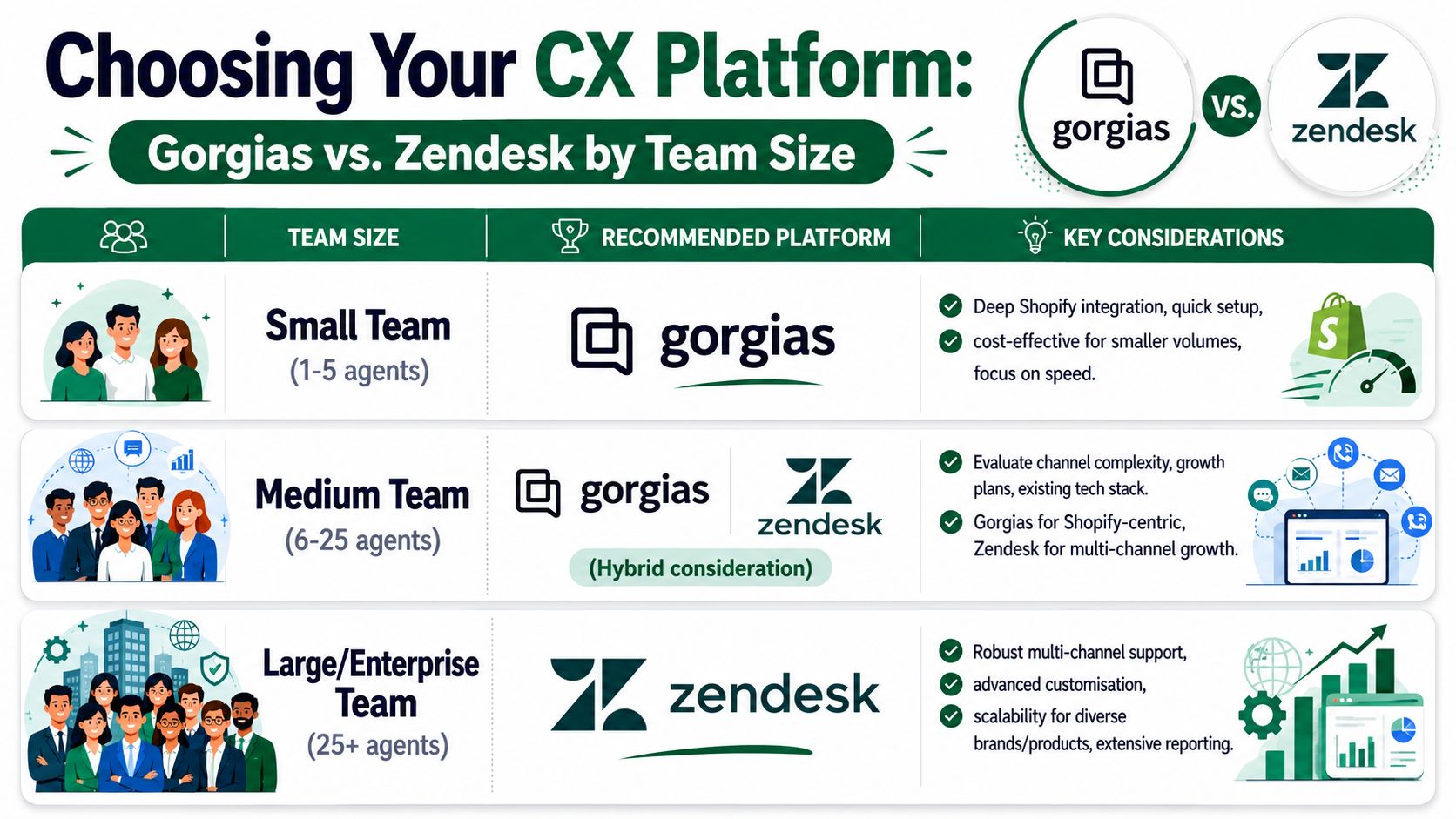
Small teams
If the support team is small and the store is heavily Shopify-centered, Gorgias is usually the cleaner choice. The setup path is shorter, the order context is closer to the inbox, and the team can spend less time stitching tools together.
This is especially true when leadership wants support to help with retention and revenue conversations, not just resolve tickets.
Mid-sized teams
This is the dangerous middle. The business has outgrown ad hoc support, but it may not need a full enterprise service layer yet.
A mid-sized team should ask:
How many channels are active?
Does support need strict routing and SLA discipline?
Are other brands, regions, or departments entering the queue?
If the answer is still mostly Shopify and direct-to-consumer support, Gorgias can still fit. If complexity is spreading beyond the store, Zendesk starts to look safer.
Larger support orgs
Once the team gets larger and more specialized, Zendesk usually has the advantage. More managers want dashboards. More queues need logic. More channels need consistency. More teams want permissions and structure.
The earlier independent comparison cited Zendesk as generally better for scale and configurability, while Gorgias is often favored by Shopify brands under roughly 15 agents that want faster setup and lower-friction ecommerce support. That's a useful threshold to keep in mind from the earlier section, even if the final call should still be based on complexity first.
Buy for the workflow you need to run every day, not the brand identity you want to project.
Don't Just Choose Your Tools Influence Them
The helpdesk decision matters. So does what happens after it.
Operators using Gorgias, Zendesk, and newer support tools usually know where the friction sits long before the vendor does. They know which automations are brittle, which reports don't answer real questions, and which feature requests would save actual team time. That knowledge has value.
For Shopify teams that want direct access to app builders, there's also a broader path than filing support tickets. Serious operators increasingly build relationships with vendors because it grants them influence, roadmap visibility, and better conversations when software costs keep climbing. This piece on why 8-figure Shopify brands build direct relationships with app founders captures that shift well.
The point isn't to become a hobbyist advisor. It's to make sure the software stack is shaped by people who use it under pressure.
If that approach fits how you operate, join the network. App Store Research is a platform that connects Shopify merchants with paid product research interviews with app developers and UX teams. The value is access, influence over roadmaps, and direct conversations with founders building the tools used every day. The cash, often $150–$250/hr per the participation brief, is a byproduct of that access.

Reviewed by
Filip Djokic
Product Designer at appstoreresearch.com
Filip is a Product and UI/UX Designer with over 10 years of experience in digital product design. With a strong background in the Shopify ecosystem, he focuses on improving user experiences and turning merchant insights into better product decisions at appstoreresearch..