Best Shopify Shipping Apps 2026: Optimize Your Deliveries
/
Shipping usually breaks in the same place. Not in the warehouse, and not with the carrier account. It breaks in the handoff between checkout logic, label creation, tracking, and the customer message that follows. One app handles rates. Another prints labels. A third claims to reduce support load after dispatch. Then a 3PL sits in the middle and forces the team to work around someone else's workflow.
That's why “best Shopify shipping apps” is a messy query. It mixes different operational jobs into one buying decision. A store shipping domestic parcels from one location doesn't need the same stack as a Shopify Plus brand managing multiple warehouses, cross-border duties, and post-purchase tracking expectations. The wrong choice usually doesn't fail all at once. It shows up as margin leakage, messy exception handling, and support tickets that should never have existed.
The Shopify app market is crowded enough that app discovery itself is a real ops problem. Store Leads reports 23,286 apps published by 14,605 vendors in the Shopify App Store, which explains why shipping tools often blur together unless a team evaluates them by operational job instead of category tag.
For teams trying to tighten the last mile, this guide splits the field into the actual jobs these tools perform. Labels and rate-shopping. Post-purchase tracking. International complexity. Checkout rate logic. It's the same discipline used when mapping an ultimate guide to final mile delivery to real fulfillment operations instead of generic software categories.
Table of Contents
The 2026 shipping app landscape
Why the category feels harder than it should
The three jobs to separate before buying
ShipStation
Where ShipStation fits
Trade-offs that matter
Shippo
Where Shippo fits best
What to watch
Easyship
Best use case
Where teams get into trouble
Pirate Ship
Why it works
Where it stops working
PH Multi Carrier Shipping Label PluginHive
Best fit
The trade-off to watch
Intuitive Shipping
Best fit
What it doesn't replace
Advanced Shipping Rules
Where it earns its keep
Where it stays narrow
ShipperHQ
Who should look closely
What to budget for operationally
ShippingEasy
A practical fit for growing teams
Limits to expect
Ordoro
Where Ordoro makes sense
When it becomes too much system
Top 10 Shopify Shipping Apps, Feature & Pricing Comparison
Final Thoughts
The 2026 shipping app landscape
A lot of Shopify teams hit the same problem at roughly the same point. Orders are growing, shipping costs are getting harder to predict, and the app list starts to blur together. One tool prints labels. Another changes checkout rates. A third promises tracking, duties, and cross-border support. Buy the wrong one first, and you pay for overlap while the underlying problem stays in place.
Shopify's own Orders and shipping app category shows how crowded this market has become. Merchants are not choosing between one default option and a few weak backups. They are choosing among established apps with different carrier relationships, different checkout capabilities, and very different opinions about who should own shipping after the order is placed.
That is why this category gets misread so often.
“Shipping app” is not one job. It is several jobs grouped under one label, and that is where a lot of buying mistakes start. Some apps are built to generate labels and rate-shop across carriers. Some are built to control checkout logic that Shopify cannot model cleanly on its own. Others are strongest after the sale, where tracking, branded updates, duties, and international paperwork create the operational drag.
A smart evaluation starts by naming the job first, then the app.
That framing also helps with cost control. Teams often stack a label platform, a rate tool, and a post-purchase app without checking whether two of them solve the same problem. If you are trying to reduce overlapping Shopify app spend, shipping software is one of the first places to audit.
Why the category feels harder than it should
The hard part is not feature scarcity. It is feature overlap.
A label app may advertise checkout rates. A checkout rules app may offer limited carrier logic. An international shipping platform may also handle tracking emails and landed cost estimates. On paper, that sounds efficient. In practice, mixed products can be excellent at one task and only acceptable at the rest. That trade-off matters once order volume rises and small workflow gaps start creating manual work for support, ops, or warehouse staff.
The right question is simple. Which operational job is currently breaking first?
The three jobs to separate before buying
Use this split before comparing any of the apps in this guide:
Label and rate-shopping tools handle order import, carrier selection, label printing, manifests, and fulfillment updates.
Checkout rate logic tools control what the customer sees before purchase, especially when product mix, zones, surcharges, or packaging rules make native Shopify settings too blunt.
Post-purchase and international tools manage tracking visibility, shipment communication, duties, taxes, and cross-border complexity.
This distinction matters even more for brands using a 3PL. If the 3PL already creates labels, a full shipping console may add little value. The better investment may be tighter checkout logic, cleaner tracking, or stronger international handling. That is the thread running through the rest of this guide. Choose the app for the job, not the app with the longest feature list.
ShipStation
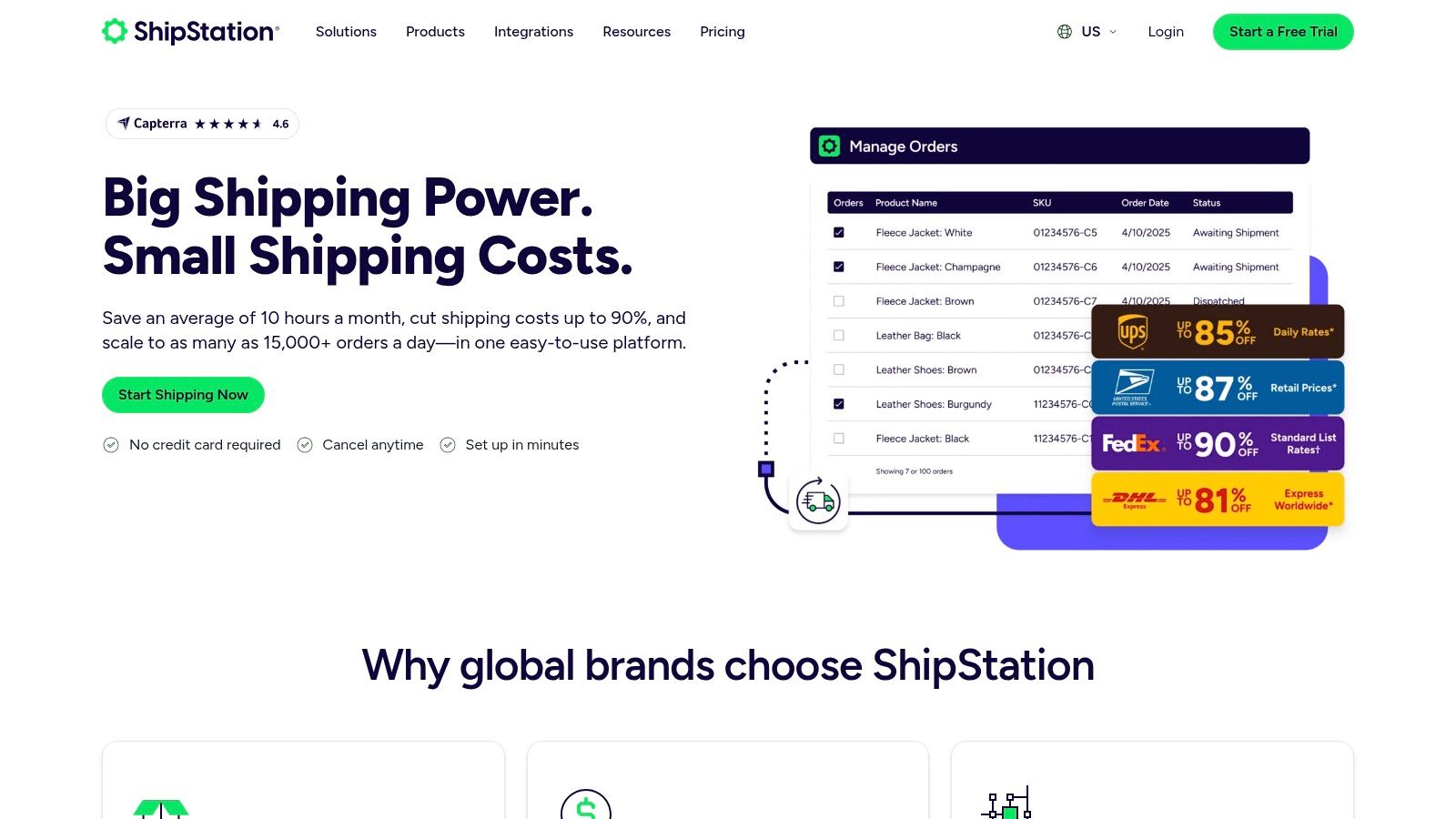
ShipStation is still one of the first tools operators look at when order volume grows past what Shopify admin workflows can comfortably handle. It centralizes orders across channels, supports multi-carrier workflows, and gives fulfillment teams a mature automation layer for tagging, service mapping, and batch processing.
For a domestic-heavy brand with multiple sales channels or multiple warehouse workflows, ShipStation often makes sense because it turns repetitive shipping decisions into rule-based actions. This is its core advantage. Not label printing by itself, but fewer touches per order and tighter control over service selection.
Where ShipStation fits
ShipStation is strongest when the team needs a real shipping operations console instead of a lightweight Shopify app. It's a good fit for brands shipping enough volume that batching, presets, and automation rules change labor efficiency in a noticeable way.
A serious operator should also evaluate how the app behaves in the full stack, not just in the demo. That includes handoff to warehouse staff, exception handling, and how tracking gets written back into Shopify. This is the same discipline used in how to evaluate Shopify apps, where the workflow matters more than the feature list.
Trade-offs that matter
ShipStation's main downside isn't capability. It's complexity. Advanced rule sets can become brittle if the team keeps layering exceptions without cleaning up the underlying shipping policy.
Best for multi-channel ops: It works well when Shopify is one channel among several and the shipping team wants one operational surface.
Less attractive for simple stores: A single-origin domestic brand may not need a separate shipping hub if Shopify-native workflows already cover the basics.
Worth pressure-testing with exports and reporting: Teams that rely on downstream data often care about how easily shipping data can be pulled into other systems, including workflows like efficient ShipStation data extraction.
Shippo
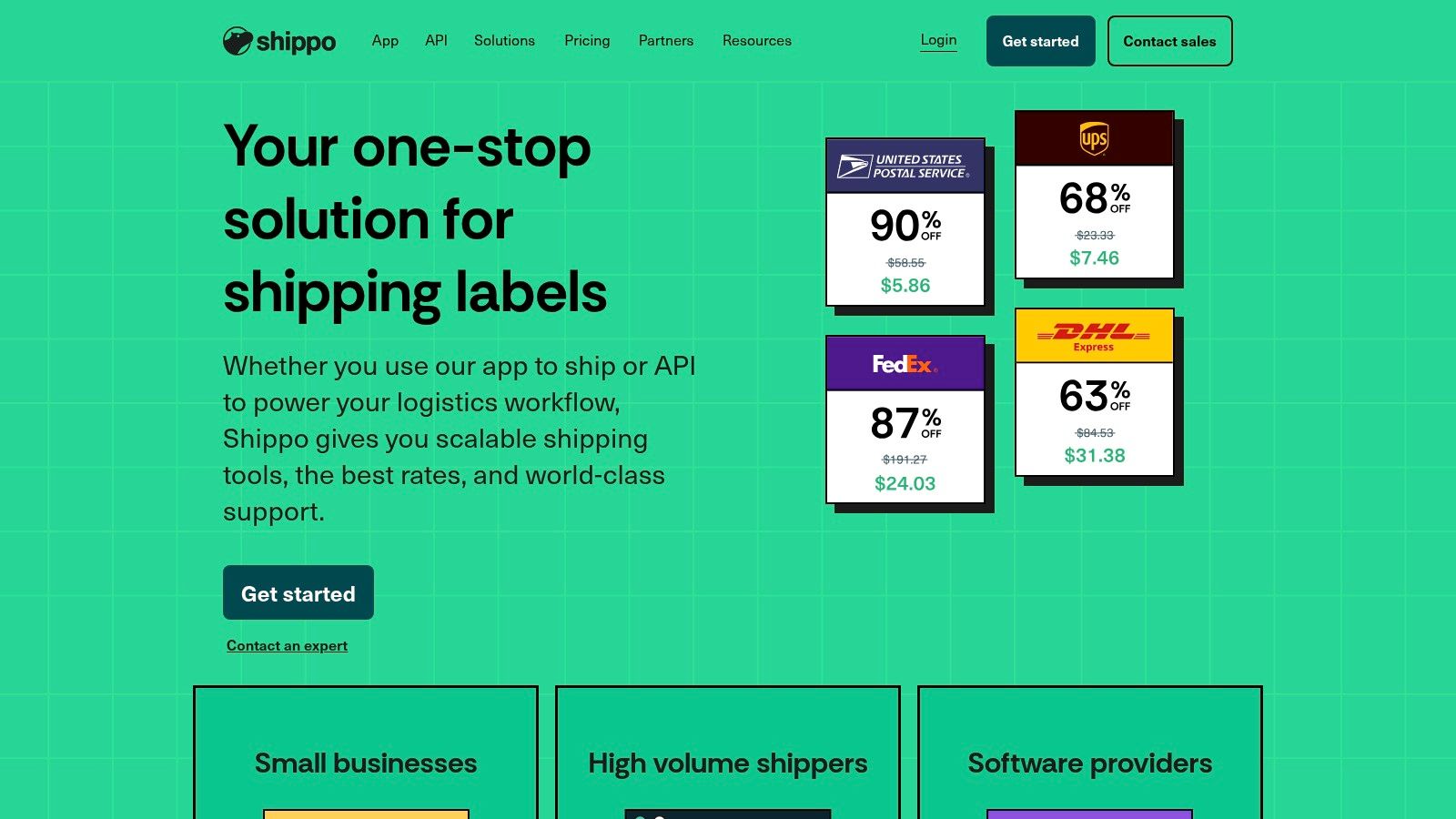
Shippo sits in a useful middle ground. It's broad enough for growing brands, simple enough for lean teams, and flexible enough to remain relevant if the business later needs API-based workflows. That's why it shows up so often in serious shortlists.
The strongest argument for Shippo is that it doesn't force an operator to overbuild too early. A team can start with a straightforward label and carrier setup, then add automation and more advanced integrations as the operation gets less forgiving.
Where Shippo fits best
Shippo is a practical choice for Shopify teams that want multi-carrier shipping without buying into a heavier system on day one. The platform's own public guide notes access to 40+ global carriers, which makes it relevant for brands that aren't purely domestic and don't want to repaint the shipping stack later.
That matters for cost control too. App costs don't usually spike because one app is expensive. They spike because overlapping tools accumulate around preventable gaps. Teams trying to reduce Shopify app costs should look closely at whether Shippo covers enough of the label, rate, and tracking surface to prevent unnecessary layering.
What to watch
Shippo is cleanest when the operation stays within standard parcel workflows. Once a brand has highly specific routing logic, unusual packaging rules, or checkout scenarios that require deeper merchandising of rates, a dedicated rate engine may still need to sit beside it.
A good shipping platform doesn't eliminate every other tool. It reduces how many tools need to touch the same order.
For many operators, that's enough. The goal isn't one app that does everything. It's one app that does the core work reliably without forcing constant workarounds.
Easyship
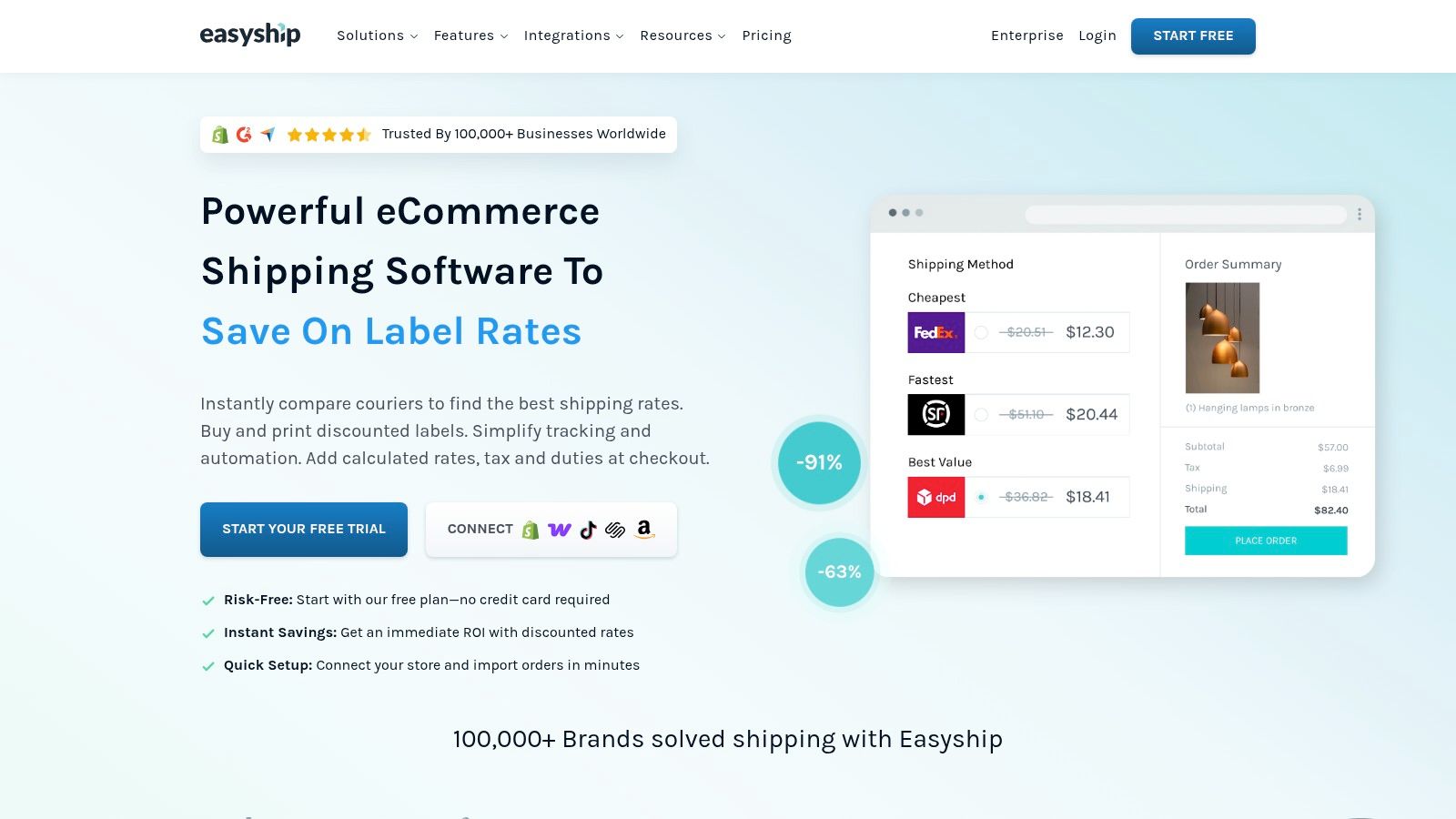
Easyship is one of the clearer picks for brands that already know international shipping isn't optional. It combines multi-carrier shipping with cross-border mechanics like duties, taxes, and international documents, which makes it more than a domestic label tool with a few global add-ons.
That distinction matters when the shipping team is trying to prevent checkout surprises instead of cleaning them up later. Cross-border shipping problems are usually expensive because they combine margin issues, support load, and customer disappointment in a single workflow failure.
Best use case
Easyship works best for brands shipping both domestic and international orders that want one operating layer for labels, rates, and landed-cost visibility. It's especially useful when the store needs live rates at checkout and customs-related workflows that can't live in spreadsheets and tribal knowledge.
For operators with crowdfunding history, marketplace complexity, or mixed destination profiles, Easyship can reduce the number of disconnected decisions a shipping team makes per order. That's the kind of simplification that matters.
Where teams get into trouble
The usual problem isn't the app itself. It's setup discipline. If shipping zones, product data, package assumptions, or Shopify checkout settings are messy, live rated checkout can produce confusing results.
Good fit for cross-border growth: Duties, taxes, and international documentation sit close to the shipping workflow instead of in a separate mental model.
Not always ideal for domestic-only brands: A US-only store shipping straightforward parcels may be paying for international capability it won't use.
Needs clean rate architecture: Checkout accuracy depends on upstream configuration being correct.
Easyship is a strong choice when the business requires international shipping infrastructure. It's less compelling when “international” is just a future possibility with no current operational weight.
Pirate Ship
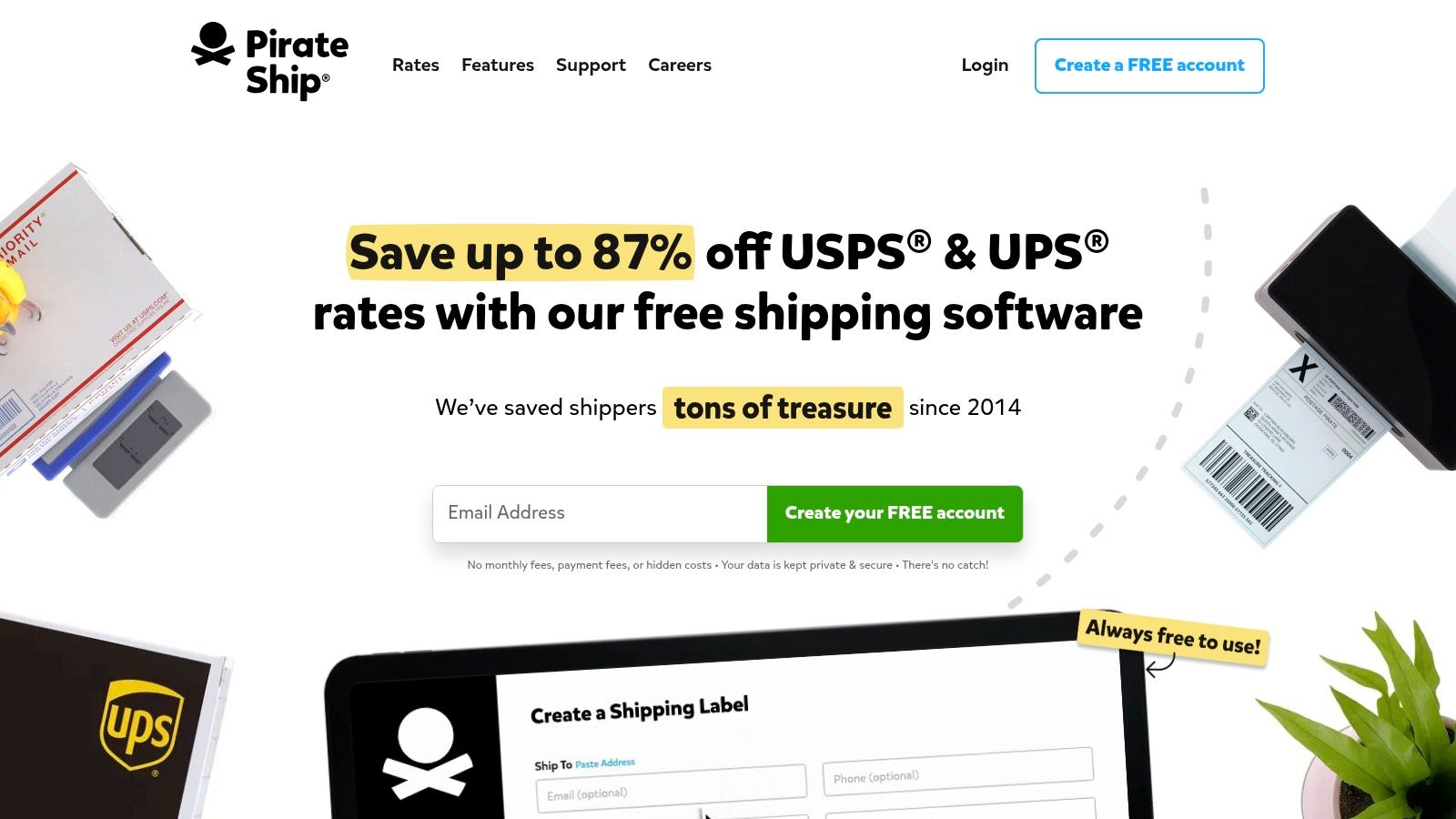
Pirate Ship solves a narrower problem than most apps in this list, and that's exactly why some operators like it. For straightforward US parcel shipping, it stays focused on labels and postage instead of trying to become an all-in-one operating system.
That focus makes it attractive for smaller brands and lean teams that want low-friction domestic shipping. If the workflow is simple and the team mostly needs USPS and UPS labels with Shopify fulfillment sync, Pirate Ship avoids a lot of software weight.
Why it works
Pirate Ship is strongest when the operation doesn't need complex checkout logic or enterprise workflow controls. The value is speed, clarity, and keeping recurring software costs down while still improving shipping execution.
Domestic-only stacks often perform better when they're simpler. A store with one warehouse, one region, and predictable parcel profiles usually gets more benefit from clean process design than from buying a more elaborate shipping platform.
Where it stops working
Pirate Ship becomes less compelling when the business needs one of three things. Rich automation, broader carrier coverage, or advanced checkout rate presentation. At that point, the team usually starts bolting on more tools.
Simpler is better for domestic shipping until the stack starts compensating for what the shipping app can't do.
That's the trade-off. Pirate Ship can be an efficient answer to a simple domestic problem. It usually isn't the right long-term center of gravity for a brand with complex 3PL coordination, international growth, or multiple operational edge cases.
PH Multi Carrier Shipping Label PluginHive
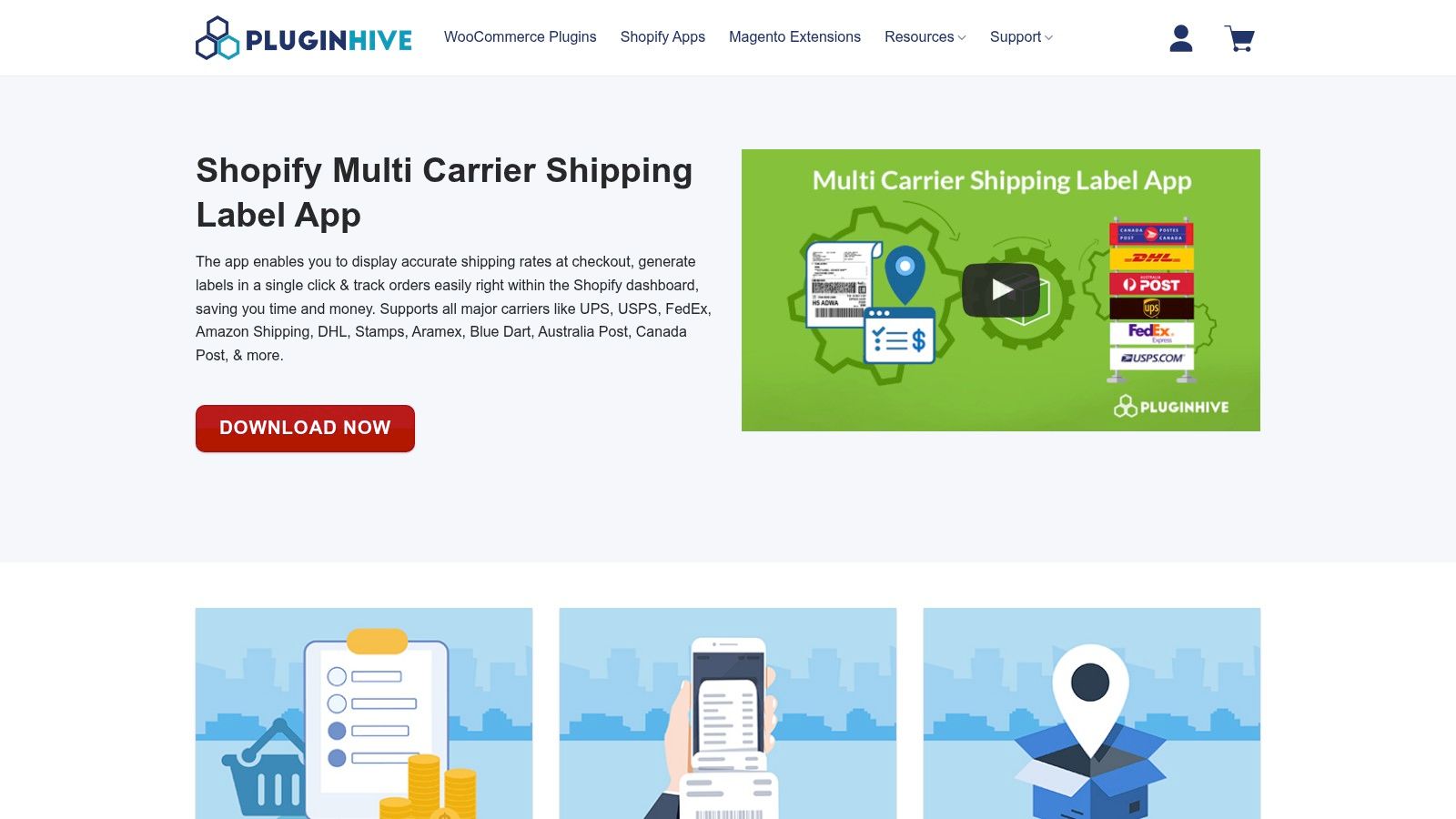
A common ops problem looks like this. Orders live in Shopify, the warehouse team works in Shopify, but shipping execution gets pushed into a separate system that adds clicks, training overhead, and more room for mistakes. PH Multi Carrier Shipping Label by PluginHive is built for merchants who want that work to stay closer to the order record.
That makes PluginHive a different kind of fit than ShipStation or Shippo. It is less about becoming the center of a large shipping stack and more about handling one specific job well inside Shopify. Generate labels, pull live carrier rates, manage pickups, and push tracking updates without asking the team to live in another dashboard all day.
Best fit
PluginHive works well for Shopify operators who want one app to cover checkout rates plus day-to-day label execution. Stores with straightforward carrier setups, in-house fulfillment, or a small team that values process discipline usually get the most from it.
The advantage is operational, not theoretical. Fewer system handoffs usually mean fewer fulfillment errors, less onboarding friction for staff, and faster exception handling when an order needs to be edited or re-rated.
The trade-off to watch
The app gets more attractive when Shopify is already the operational center of gravity. It gets less attractive when shipping logic starts to outgrow what a Shopify-centered workflow can comfortably handle. If the business needs heavily layered rate rules, unusual packaging scenarios, or checkout logic tied to margin controls, a dedicated rate-management tool can still make more sense.
Plan setup also matters. Live carrier-calculated rates at checkout depend on your Shopify plan and configuration, so the actual cost is not just the app subscription. For stores evaluating that jump, it helps to review when to upgrade to Shopify Plus for more advanced shipping and checkout control before treating any shipping app as a complete answer.
Best for: merchants who want rates, labels, pickups, and tracking to stay tightly connected to Shopify admin
Main benefit: less context switching for the team handling fulfillment
Main limitation: less suited to highly customized enterprise shipping logic or very complex multi-origin rule sets
Intuitive Shipping

Intuitive Shipping isn't really a label tool. It's a checkout rate logic engine for stores whose shipping model no longer fits into Shopify's default settings. That makes it much more valuable to the right operator than another generic “shipping app” label suggests.
Brands with oversize products, mixed packaging logic, multiple origins, or margin-sensitive shipping promises often need this kind of control. The problem isn't printing labels after the order. The problem is charging the right amount before the order exists.
Best fit
Intuitive Shipping is a strong option for complex catalogs where shipping rates need to reflect actual business rules instead of broad averages. The app's value comes from modeling the business more accurately at checkout, which is where margin loss often begins.
A store selling oversized items, products with packaging constraints, or restricted shipping combinations will usually benefit more from better rate logic than from another label platform. That's why this category needs to stay separate in evaluations of the best Shopify shipping apps.
What it doesn't replace
Intuitive Shipping doesn't replace shipping execution. It doesn't become the warehouse. It doesn't become a 3PL. It doesn't eliminate the need for labels, tracking, or returns tooling elsewhere in the stack.
Use it when checkout logic is the problem: It's valuable when native Shopify settings can't represent how the catalog ships.
Don't use it as a general shipping fix: If the underlying issue is warehouse throughput or post-purchase messaging, this won't solve that.
Expect configuration work: Precision requires setup discipline and testing.
For advanced operators, that's usually acceptable. More control at checkout is worth the implementation effort when rate accuracy directly affects conversion and margin.
Advanced Shipping Rules
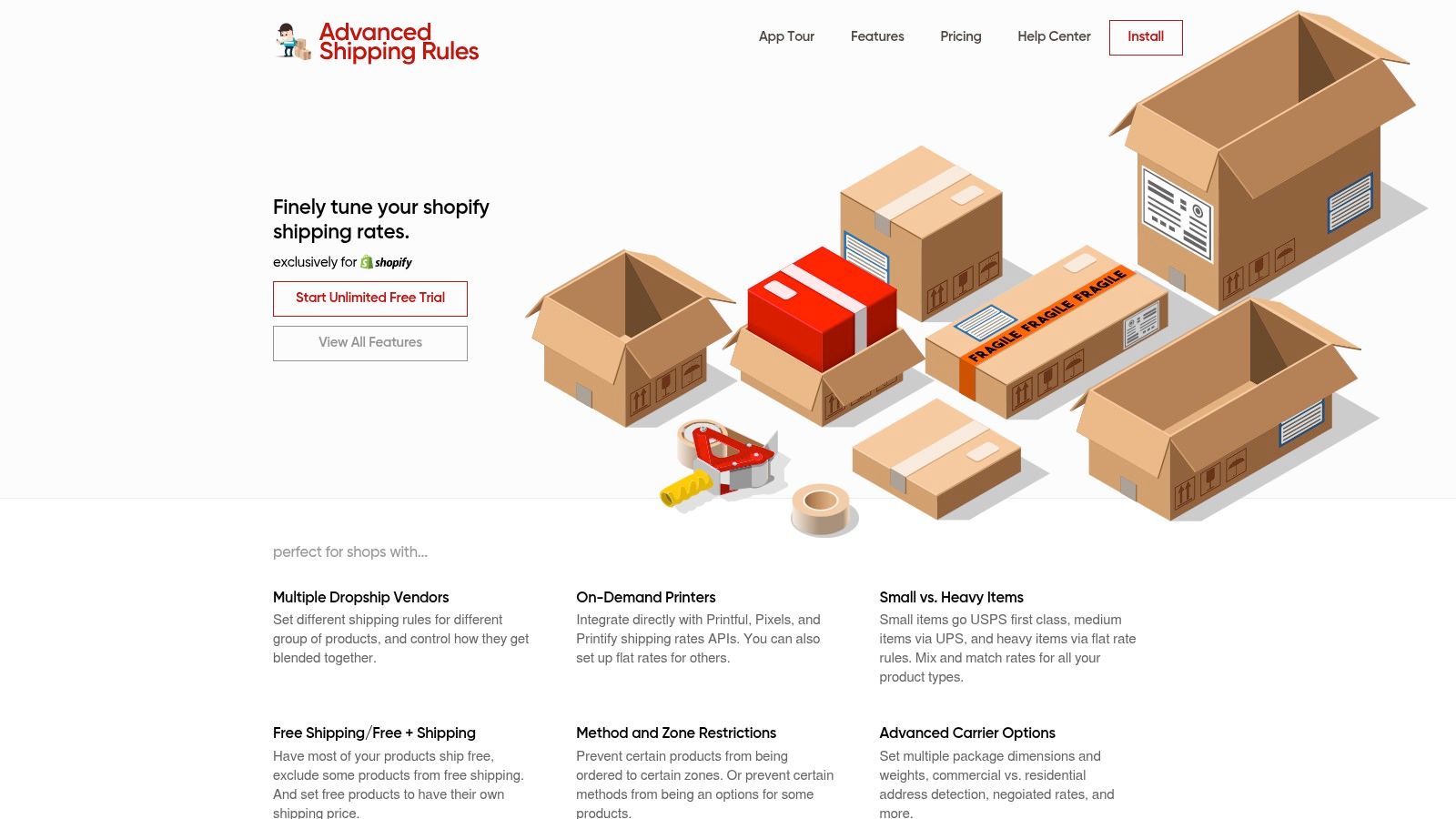
Advanced Shipping Rules has a narrower mission than many apps here, and that narrowness is useful. It exists to bend checkout rate behavior around real catalog and fulfillment edge cases. For stores with multiple suppliers, awkward product groups, or shipping methods that need to be hidden, combined, capped, or marked up selectively, that's often enough.
The app tends to earn attention when a team says some version of “Shopify can't do that.” That's the right entry point. Not carrier discounts, not label printing, but rate merchandising logic.
Where it earns its keep
Advanced Shipping Rules is useful when product-level or destination-level logic becomes too specific for native settings. It helps stores shape what shoppers see and pay, which is where a lot of shipping friction begins.
That makes it especially relevant for merchants juggling multiple shipping profiles that don't cooperate cleanly, or supplier-based fulfillment models that would otherwise produce confusing checkout experiences.
Where it stays narrow
The narrow focus is also the limitation. This is a rates app, not a broader fulfillment operations system. Labels, post-purchase tracking, and warehouse execution still need to live elsewhere.
Stores often overbuy shipping software when the actual need is one reliable checkout logic layer.
That's where Advanced Shipping Rules can be the better buy. It won't centralize the full shipping operation. It can fix a very expensive checkout problem without asking the team to rebuild everything else.
ShipperHQ
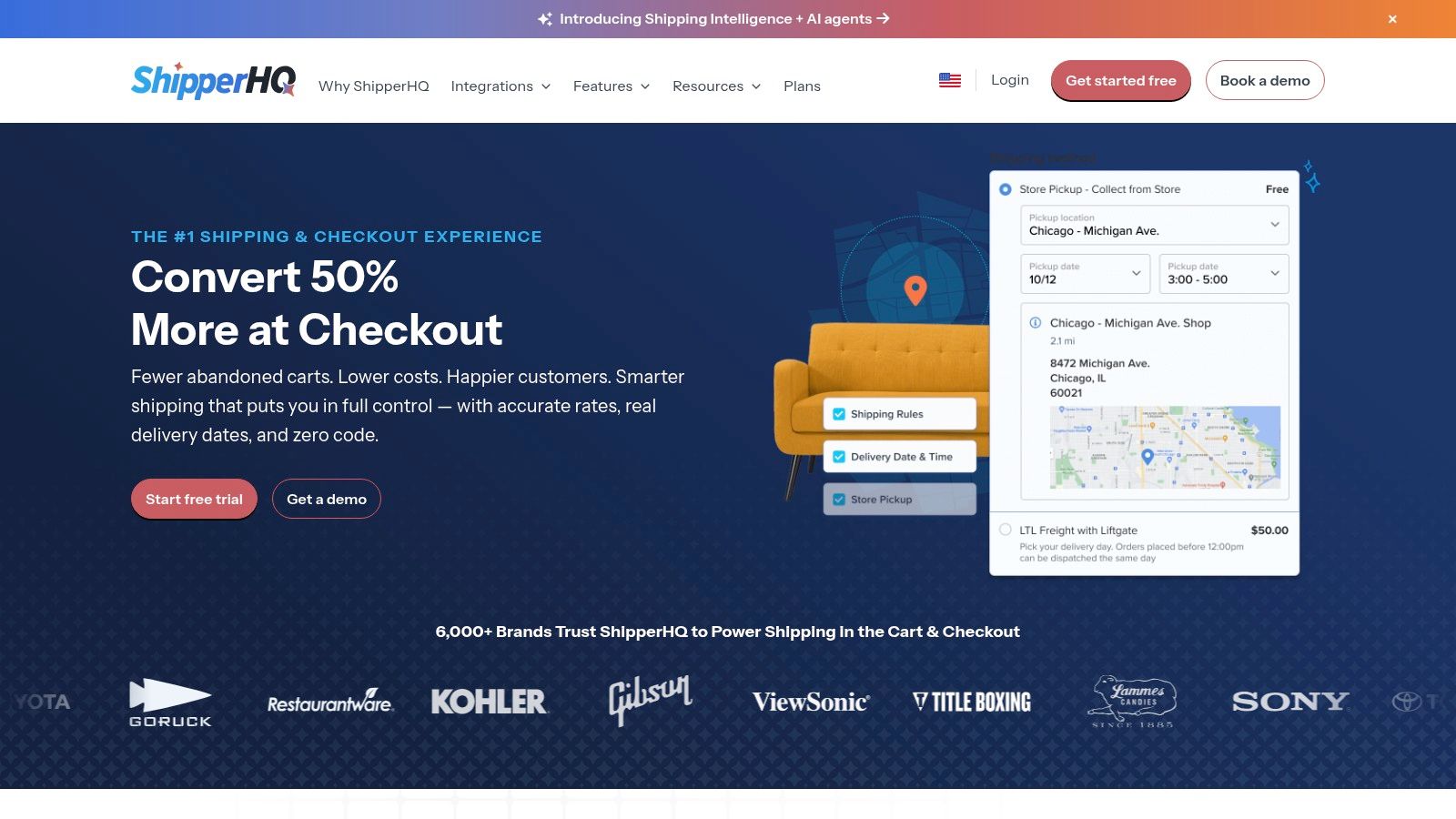
ShipperHQ belongs in enterprise shipping conversations because it focuses on precision at checkout. Delivery methods, carrier presentation, restrictions, handling fees, multi-origin logic, freight scenarios, and delivery date messaging can all become part of the checkout promise instead of scattered assumptions across teams.
That's valuable for brands where shipping is a major conversion and margin variable. If the store's shipping offer is part of the commercial model, not just a backend function, a stronger checkout rate layer matters.
Who should look closely
ShipperHQ makes the most sense for operators with complicated promises to keep. That might mean LTL, location-based restrictions, mixed-origin shipping, or more demanding delivery expectations. It's also relevant when the store needs accurate shipping presentation before the order is placed, not just efficient fulfillment after payment.
This tends to show up more often in larger operations. For teams assessing when to upgrade to Shopify Plus, shipping complexity is often one of the hidden reasons the existing setup starts to strain.
What to budget for operationally
ShipperHQ is not a replacement for everything else. It's focused on rates and method presentation. That means many businesses still need separate tools for labels, tracking, and warehouse execution.
The payoff is strongest when the business has enough shipping complexity that checkout precision materially affects profitability. For simple catalogs, that level of control is usually unnecessary. For complex ones, it can be one of the more defensible software costs in the stack.
ShippingEasy
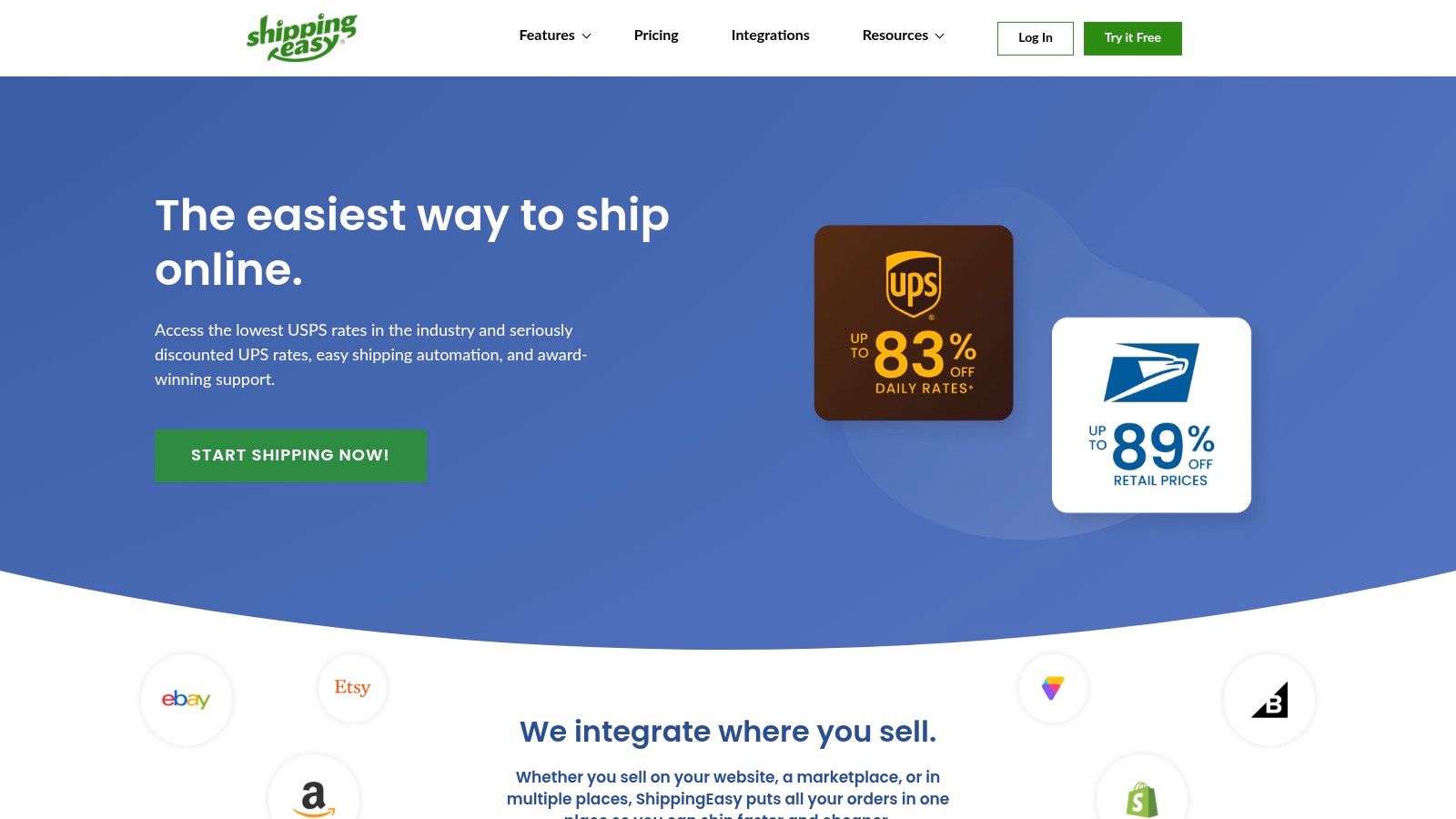
ShippingEasy sits closer to the approachable end of the market. It's aimed at growing brands that need multi-carrier shipping, batch workflows, and automation without stepping into a much heavier operational platform.
That positioning gives it a clear place. Not every team needs a highly configurable shipping command center. Many just need cleaner order flow, less manual label work, and tracking pushed back into Shopify reliably.
A practical fit for growing teams
ShippingEasy works well for stores that are outgrowing basic shipping workflows but aren't yet at enterprise complexity. It can offer enough structure to improve throughput without asking the team to redesign the entire shipping operation.
That makes it relevant for brands in the in-between stage. They've moved beyond ad hoc fulfillment, but they still want software that's easy to onboard and maintain.
Limits to expect
The trade-off is ceiling, not usability. Teams with more demanding carrier requirements, more advanced automation needs, or broader international workflows may eventually want something with deeper operational reach.
Independent app market data reported by Craftberry's Shopify app statistics article shows that adoption in the Shopify ecosystem tends to concentrate around high-trust tools with visible repeat use. The broader lesson for shipping teams is straightforward. The apps that stay in the stack usually combine practical implementation, clear value, and dependable execution, not just long feature pages.
Ordoro
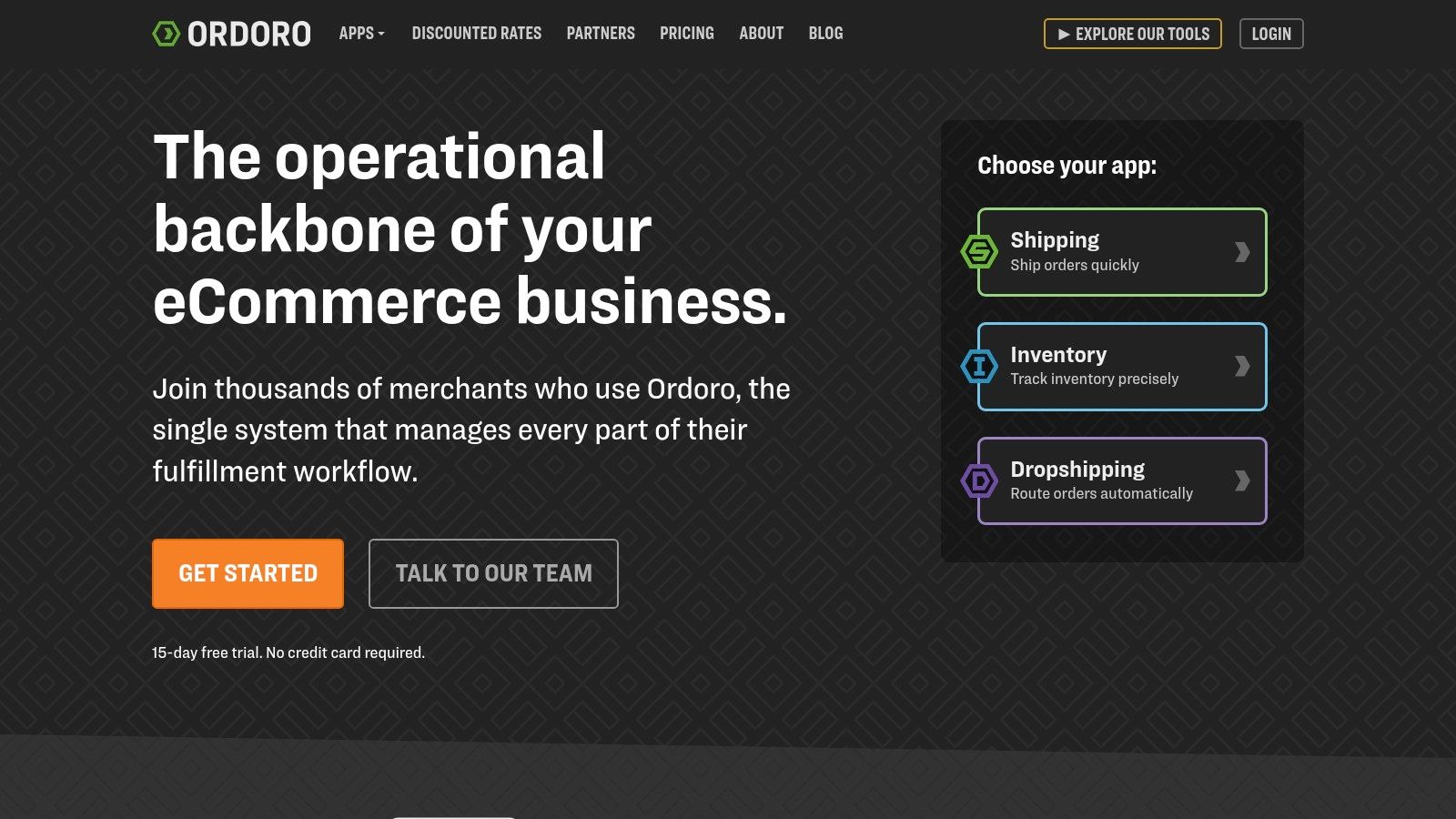
Ordoro is the app to consider when “shipping” is really shorthand for a broader operations problem. It combines shipping with inventory and dropship workflow support, which changes the buying decision. This isn't just about getting labels out the door. It's about centralizing moving parts that otherwise sit in different systems.
That can be useful for brands with multi-channel inventory pressure, supplier routing, or a fulfillment model that extends beyond owned warehouse flow. In those cases, a shipping-only tool may solve the smallest part of the problem.
Where Ordoro makes sense
Ordoro makes sense when the business wants one operational hub for order routing, inventory visibility, and shipping execution. That's especially relevant for merchants dealing with distributed fulfillment models or a mix of in-house and supplier-driven shipment workflows.
It can also appeal to teams that are tired of stitching together separate apps for labels, stock sync, and order routing. Fewer operational surfaces can mean fewer errors if the system is implemented well.
When it becomes too much system
The risk with Ordoro is acquiring a broader platform than an operation needs. If the primary requirement is just label generation and carrier comparison, inventory and dropship modules may add complexity faster than they add value.
One signal worth watching is the audience profile of the tools under consideration. For example, ClickPost customer research notes that 30% of its network is on Shopify Plus, which is a useful reminder that some shipping and post-purchase tools naturally skew toward larger, more international operators. Ordoro isn't the same product, but the buying logic is similar. Broader ops platforms make the most sense when the business complexity is already there.
Top 10 Shopify Shipping Apps, Feature & Pricing Comparison
A useful shipping stack starts by assigning each app a job. Some tools are built to print labels fast. Some control checkout rates. Some handle cross-border tax, duty, and carrier complexity. If one app is trying to do all three, check whether you are buying overlap instead of solving the actual bottleneck.
The table below keeps that lens in view so you can compare 10 actual options, not a bloated list with duplicate entries.
App | Primary job | Core features / USP | Best for | Pricing signal & scale | AppStoreResearch angle |
|---|---|---|---|---|---|
ShipStation | Label generation and fulfillment ops | Multi-channel order import, automation rules, carrier discounts, batch labels | Teams that need a mature shipping console across higher order volume and multiple workflows | Subscription pricing. Usually makes more sense once shipping volume justifies automation setup time | Useful if you want operator feedback on workflow edge cases, automation friction, or warehouse process fit before committing |
Shippo | Label generation with lighter setup | Discounted labels, broad carrier access, branded tracking, simple UI | SMBs that want fast setup and flexible carrier options without a heavy ops layer | Entry-level pricing is accessible. Costs stay easier to follow than some larger platforms | Worth a look if you want candid feedback from merchants comparing carrier coverage, label costs, and day-one usability |
Easyship | International shipping and landed cost control | Global carriers, duties and taxes handling, live checkout rates, cross-border workflows | Brands shipping internationally or trying to reduce cross-border surprises at checkout and delivery | Pricing fits merchants with real international volume or complexity. Less compelling if shipping is mostly domestic | Good fit for testing international workflows with merchants who care about duty collection, delivery promises, and exception handling |
Pirate Ship | Low-cost domestic label buying | No monthly fee, USPS and UPS discounts, simple batch labels | Small US-focused shops that mainly want cheaper postage without extra system overhead | No subscription. Strong value for straightforward domestic shipping | Useful for hearing from cost-focused operators who care more about postage savings than advanced automation |
PH Multi-Carrier Shipping Label PluginHive | Shopify-centric rates and labels | Live carrier rates in Shopify, bulk labels, pickups, tracking updates | Merchants that want checkout rate visibility and shipping execution closer to the Shopify admin | Tiered pricing by volume. Shopify carrier-calculated rates may be required depending on setup | Relevant if you need feedback from stores testing carrier-calculated checkout behavior, label flow, and admin usability |
Intuitive Shipping | Checkout rate logic | Advanced rules engine, dimensional logic, SmartBoxing, sandbox testing | Stores with oversize items, mixed shipping requirements, multi-origin setups, or margin-sensitive shipping rules | Higher setup effort than basic tools. Pays off when shipping logic is part of margin protection | Strong option for paid research around complex rule sets, packaging logic, and hard-to-model checkout scenarios |
Advanced Shipping Rules | Conditional checkout rate control | Product-group rules, surcharges, method hiding, service-level adjustments | Merchants that need cleaner conditional logic at checkout without adopting a broader platform | Rates-focused pricing. Best for stores solving a checkout pricing problem, not a warehouse execution problem | Helpful if you want merchant input on edge-case rate rules, product grouping, and rule maintenance over time |
ShipperHQ | Enterprise checkout and delivery logic | Multi-origin rating, delivery dates, LTL and freight support, advanced rate management | Larger or more complex stores that need precise shipping promises before purchase | Enterprise-oriented pricing. Usually justified by freight, multi-origin, or high-cost shipping mistakes | Best suited to merchants who can test freight quoting, origin logic, and delivery promise accuracy in real catalog conditions |
ShippingEasy | Mid-market label workflow improvement | Multi-carrier rate shopping, automation, batch labels, returns | Growing brands that have outgrown basic shipping tools but do not need a full operations platform | Accessible pricing with room to grow. Good middle ground for mid-volume teams | Good channel for feedback on onboarding, day-to-day processing speed, and whether the feature set matches growing teams |
Ordoro | Broader operations hub with shipping | Shipping, inventory, dropship automation, supplier routing | Businesses trying to reduce app sprawl across shipping, inventory, and fulfillment routing | Modular pricing. Cost rises as you add inventory and dropship functions | Useful if your evaluation includes routing, inventory visibility, and whether one broader system can replace several narrower apps |
One pattern is easy to miss. Label tools often look similar on feature lists, but the core difference is between execution apps and checkout logic apps. ShipStation, Shippo, Pirate Ship, and ShippingEasy are closer to shipping execution. Intuitive Shipping, Advanced Shipping Rules, and ShipperHQ are closer to shipping merchandising and margin control. Easyship and PluginHive sit in the middle depending on how much international or carrier-rate complexity you carry.
That distinction matters because it keeps you from paying twice for overlapping features. A merchant that needs better live rates at checkout may not need another label platform. A merchant struggling with pick-pack speed probably does not need a more advanced checkout rules engine. AppStoreResearch is most useful here as a factual input, not a sales pitch. It can help surface operator feedback tied to the exact job you need the app to handle.
Final Thoughts
The best Shopify shipping apps aren't “best” in the abstract. They're best for a specific operational job. That's the only framing that keeps teams from overbuying, overlapping tools, or trying to force one product to solve checkout, warehouse, and post-purchase at the same time.
For labels and rate-shopping, ShipStation and Shippo are the clearest all-around contenders in different directions. ShipStation is stronger when the operation needs a mature shipping console with deeper workflow control. Shippo is a cleaner fit when the team wants flexibility and broad carrier access without taking on as much operational weight. Pirate Ship works when the stack is domestic, straightforward, and intentionally simple. ShippingEasy fills the middle for brands that need better process but not a full rebuild.
For checkout logic, the decision is different. Intuitive Shipping, Advanced Shipping Rules, and ShipperHQ are about what the customer sees before purchase. They matter when the business has a real shipping merchandising problem. Oversize catalogs, multi-origin setups, freight methods, supplier complexity, and margin-sensitive shipping promises usually need dedicated rate logic. In those cases, adding another label tool won't fix the expensive part of the workflow.
For international shipping and post-purchase expectations, Easyship deserves attention because it sits closer to the cross-border problem itself. It's better suited to brands that need duties, taxes, and international documentation close to the shipping workflow. Teams evaluating broader post-purchase tools such as ClickPost, AfterShip, Wonderment, Easyship, or Zonos should be honest about where customer friction is happening. If the support team is drowning in WISMO, stronger tracking and notification logic may matter more than another discounted label rate. If the issue is landed cost shock or customs confusion, international tooling belongs closer to the center of the stack.
The biggest mistake operators make is evaluating these apps as if they're all competing in one category. They aren't. Some reduce pick-pack-ship labor. Some protect margin at checkout. Some reduce support load after dispatch. Some support 3PL workflows better than owned-warehouse workflows. A serious selection process starts with the broken workflow, not the app store ranking.
That's also why direct operator feedback matters. Shopify's app ecosystem is large, visible, and review-driven, but reviews rarely capture the messy part of implementation. They don't show how a shipping app behaves with a specific 3PL, a difficult catalog, or a team that has to manage both domestic parcel flow and cross-border exceptions. For app teams building in this category, that gap is exactly where product research becomes commercially useful.
For operators who want more influence over the tools they use, app store research is a platform that connects Shopify merchants with paid product research interviews with app developers and UX teams. It gives brands direct access to founders and product teams building the stack they rely on every day, along with early visibility into what's being built and influence in roadmap conversations. The incentives matter, but the bigger value is access. Operators who want that kind of seat at the table can apply to participate and join the network.

Author
Jonathan Kennedy
Jonathan Kennedy is the founder of app store research and shopexperts, platforms that connect operators, founders, and experts across the Shopify ecosystem to drive better decisions, product development, and growth.