User Interviews Alternatives: Compare Top Platforms
/

User Interviews Alternatives: Compare Top Platforms
Tired of low-value “research” gigs on User Interviews? A Shopify operator might bring real expertise in fulfillment, CRO, retention, subscriptions, or managing a complex app stack, then open the dashboard and find generic studies about grocery habits or consumer finance. That mismatch is the core problem.
Generalist panels are built for volume. They cast a wide net, which helps researchers, but it often compresses specialist expertise into the same queue as everyone else. For a serious Shopify operator, that usually means too many irrelevant screeners, too little context, and too few conversations that connect to the tools used every day.
That's why the best user interviews alternatives aren't always the biggest panels. The better question is which network treats Shopify knowledge as a specialty instead of a generic “professional” tag. This comparison looks at the main options with that lens.
For teams also working on product UX from the other side, this guide on improve mobile usability via expert testing is a useful complement.
Table of Contents
User Interviews at a glance
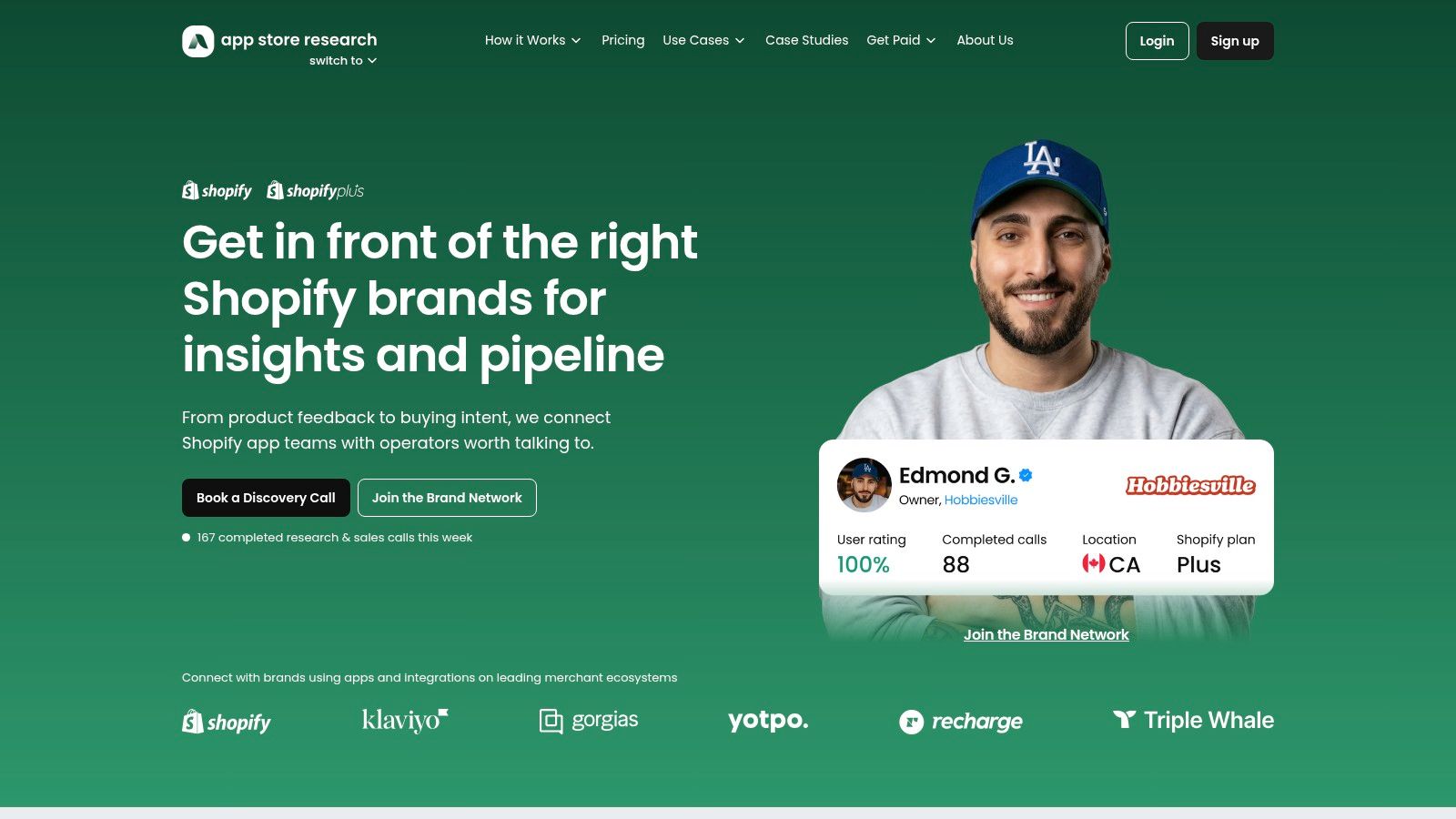
You already know the situation. You keep User Interviews active because it reliably surfaces projects, handles scheduling, and takes incentive admin off your plate. For broad research access, it works.
That convenience is why User Interviews remains the default benchmark in this category. It bundles participant discovery, booking, and payout handling into one system, which makes it useful for operators who want a consistent flow of studies without building direct researcher relationships from scratch.
For a Shopify operator, that strength is also the limit.
User Interviews is built for range. It gives you exposure to a wide mix of consumer and B2B projects across software, fintech, healthcare, ecommerce, and general product research. If your goal is volume and variety, that is a real advantage. If your goal is higher-value access tied to deep Shopify experience, a broad panel starts to flatten your edge.
What User Interviews is actually good at
The platform is strongest when you want steady deal flow from many categories, not targeted access to one ecosystem. That makes it a practical holding place for operators with cross-functional experience who can credibly speak to multiple tools, workflows, and buyer contexts.
It also removes operational drag. Traditional interview recruiting can take 2 to 4 weeks end to end, with costs of about $150 to $500 per interview, so a managed panel is often the faster option for researchers and the easier option for participants.
That matters. Convenience keeps the pipeline active.
Why experienced Shopify operators start looking elsewhere
The core trade-off is simple. User Interviews is good at broad matching. It is weaker at signaling why a Shopify Plus operator, app founder, agency lead, or retention specialist should command better projects and better rates than a general ecommerce respondent.
Generalist panels tend to group specialized operators into broad ecommerce buckets. That creates acceptable access, but weaker differentiation. You still get opportunities. You get fewer that reflect your actual influence, stack depth, or decision-making authority inside the Shopify ecosystem.
If you stay on User Interviews, tighten your positioning hard. Your profile should spell out platform scope, app stack, revenue context, channels owned, and the decisions you directly influence. If you want a sharper way to present that expertise, this guide on writing a better research project pitch will help you qualify for better-fit studies while you evaluate more specialized alternatives.
Where it wins general consumer and B2B coverage
User Interviews wins on reach. That's the cleanest reason it remains relevant among user interviews competitors.
Its real advantage is scale
Broad panel infrastructure has changed what “user interview software” even means. The category now splits across participant panels, interview execution tools, testing platforms, and AI-led systems because these products solve different jobs, not one interchangeable job (Prolific versus User Interviews analysis).
For an operator evaluating alternatives to User Interviews, that distinction matters. User Interviews is strongest when the need is broad recruiting coverage across many buyer types, not when the need is surgical access to one ecosystem.
A Shopify operator with cross-functional experience may still benefit from that range:
Broader category exposure: Studies can span SaaS, consumer apps, operations software, and ecommerce tools.
Steady application flow: There's usually something available, even if much of it isn't ideal.
Decent infrastructure: Screeners, scheduling, and incentive handling are already baked in.
Who should stay on it
User Interviews still makes sense for operators who want optionality more than specialization. Someone running a brand, advising across ecommerce, and participating in occasional B2B research can keep it as a general channel.
It's also useful for early-stage consultants who haven't yet narrowed their niche. Broad participation can help them learn how researchers frame problems and how different companies recruit for insight work.
Practical rule: Keep User Interviews if a wide funnel is still valuable. Leave it as the main platform only if generic relevance isn't a problem.
Where it falls short rate ceilings and generalist projects
The main complaint experienced operators have with User Interviews isn't usability. It's valuation.
Generalist access creates generalist outcomes
When a platform aggregates everyone into one large marketplace, the default result is average pricing and average-fit studies. That's efficient for buyers of research. It's less attractive for specialists whose day-to-day experience is commercially valuable.
A lot of “user interviews alternatives” content focuses on features, testing modes, and panel size, but misses the core issue: recruiting model fit. One comparison makes that point directly by separating broad panels from harder-to-reach professional recruiting and intercept-based approaches, arguing that the key decision is not “best tool” but which recruiting model fits the audience and pipeline (recruiting model comparison).
Why this matters more in Shopify
This gap shows up faster in Shopify than in many other categories. Shopify operators aren't generic software users. They often manage subscription apps, reviews, loyalty, search, merchandising, shipping, analytics, CRO tooling, and agency/vendor relationships at the same time.
That means their value in research isn't just demographic. It's operational. Founders and product teams want to know why one app stayed in the stack, why another got removed, what triggers churn, where pricing breaks trust, and which workflows still create friction.
A broad professional panel can surface some of those conversations. It usually won't center them.
For a Shopify operator, the difference between “professional research participant” and “merchant advisor inside the ecosystem” is the whole game. That's why many people searching user interviews vs respondent, or other user interviews alternatives, eventually end up looking for narrower networks instead of just larger ones.
Respondent strongest as direct alternative
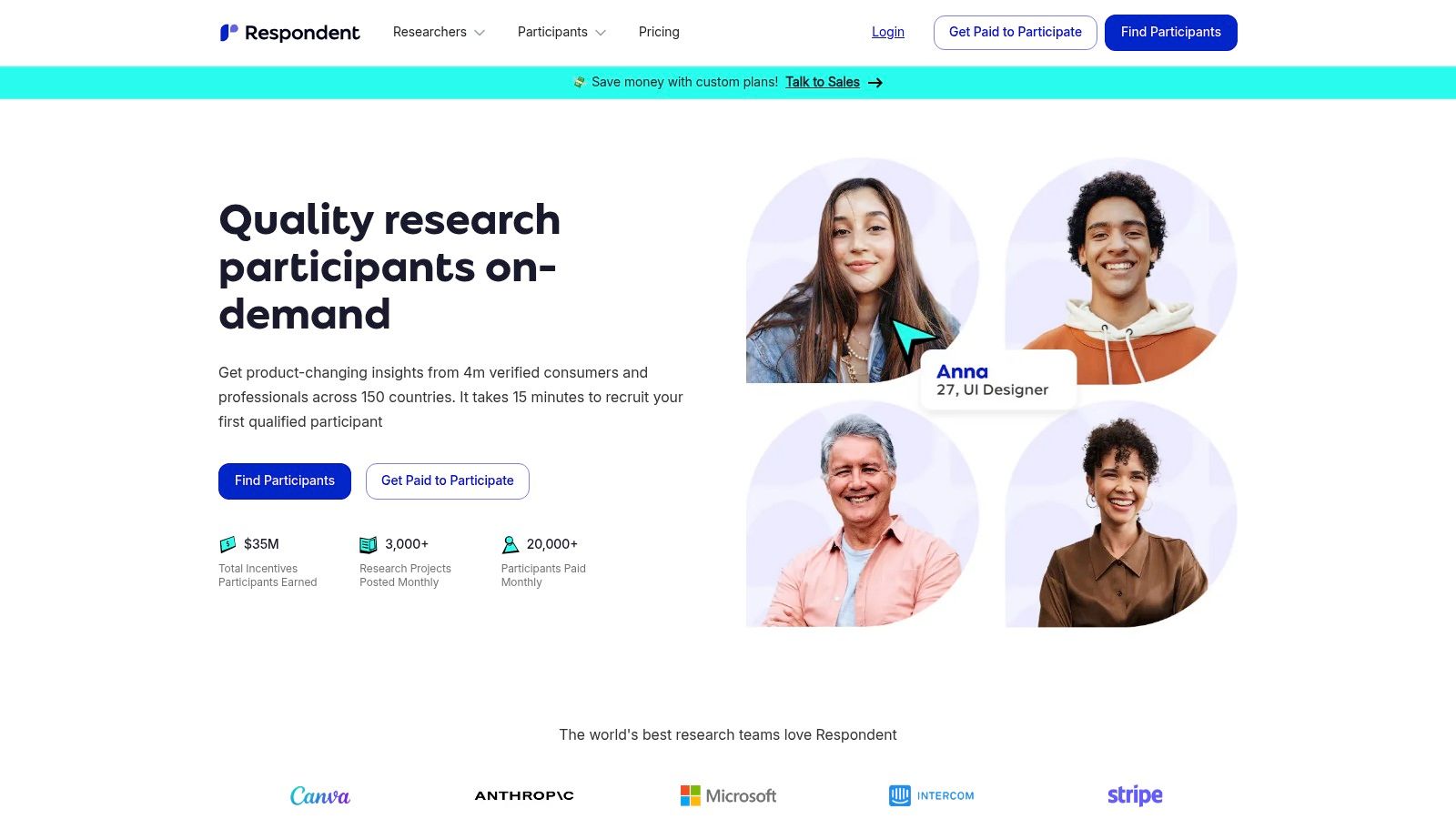
You are already on User Interviews. You keep seeing studies that are adjacent to your work but not quite built for your level of context. Respondent is usually the next platform to test because it filters harder for professional identity and business experience.
Respondent is the closest substitute if your goal is better-fit interviews without changing the basic model. It still operates as a broad recruiting marketplace, but the project mix tends to skew more toward business software, operations, purchasing, and role-based expertise than mass consumer research.
Why Respondent is the closest substitute
Respondent works best when researchers care about who you are at work, not just whether you match a demographic. That matters for Shopify operators who sit across app selection, retention, merchandising, subscriptions, reviews, analytics, and vendor decisions.
The practical advantage is straightforward. You are more likely to see studies framed around real commercial decisions, vendor evaluation, and workflow pain, instead of generic opinion prompts. If you have experience with stack decisions inside ecommerce, Respondent usually surfaces more relevant opportunities than a consumer-heavy panel.
It is especially strong for:
B2B software interviews: Better fit for conversations about tools, buying criteria, implementation friction, and switching behavior.
Role-based recruiting: Researchers often screen by function, seniority, company type, or decision-making responsibility.
Higher-value conversations: The project structure more often resembles paid expert feedback than lightweight usability tasks.
Where Respondent still misses Shopify depth
Respondent is still a generalist platform for professionals. That is the ceiling.
A Shopify operator there is commonly grouped with ecommerce managers, marketers, agency leads, and SaaS buyers from every direction. That is an improvement over broad consumer panels, but it does not isolate the merchant who actively runs a Shopify stack, works inside the app ecosystem, and can speak to specific tools with first-hand operational detail.
That gap shows up fast in app research. If a team wants feedback from merchants who use recharge, loyalty apps, search tools, subscription infrastructure, or review platforms, broad professional targeting is not precise enough. Specialized recruiting around targeting users of specific apps and tools in Shopify stores produces a different level of interview quality.
Use Respondent if you want the nearest step up from User Interviews. Use a Shopify-specific network if you want your category knowledge to carry more weight and influence the actual decisions behind app retention, pricing, and adoption.
Prolific strongest for academic quant
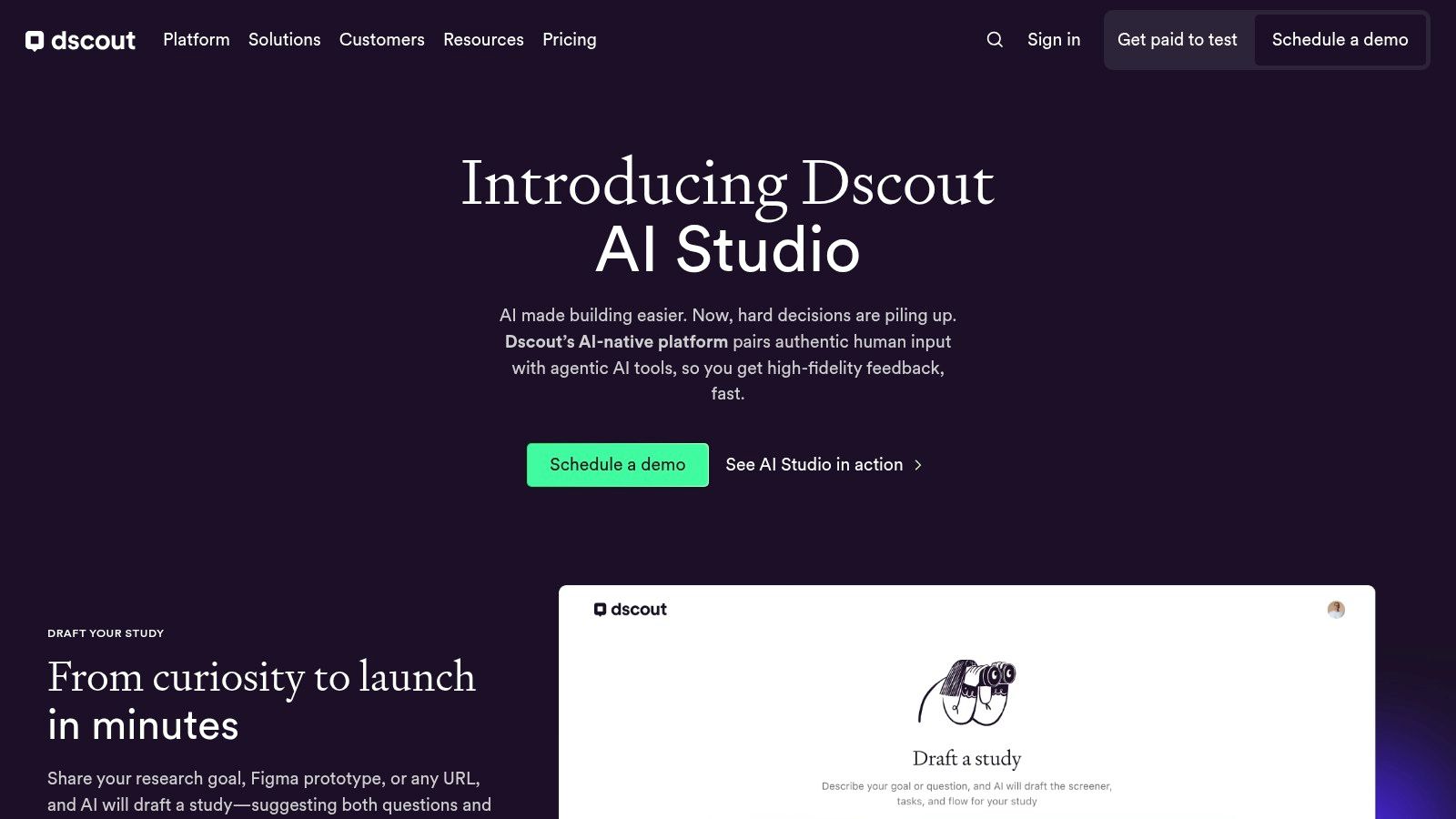
You join Prolific expecting the same kind of paid expert conversations you get on User Interviews. Instead, the queue skews toward surveys, structured tasks, and tightly defined research flows. That is the point of the platform, and it is why Prolific works better for quant than for high-value Shopify operator interviews.
Prolific is built for researchers who care about clean sampling, fast fieldwork, and controlled study design. If the job is a survey, concept test, or repeatable task with standardized inputs, Prolific makes sense. If the job is a strategic conversation with a merchant whose stack choices can shape product decisions, it is a weak primary channel.
Best when the task is data not operator influence
Prolific fits studies where the output is data first. Researchers can recruit for structured participation without turning the project into an expert call. That makes it useful for academic work, product surveys, message tests, and other formats where consistency matters more than depth.
For Shopify operators, that trade-off is clear. You get lower-commitment opportunities and less scheduling friction, but you also give up the premium attached to specialized context.
Recruitment quality still decides whether a study produces signal or noise. Teams that want sharper participant targeting should spend time on writing better screener questions, especially when they need people with specific operational experience.
Why Shopify operators should not prioritize it
If you are already using User Interviews, Prolific is not the upgrade path. It is a side channel.
Use it for occasional volume-based work. Do not use it as your main route to monetize Shopify expertise or influence app teams. The platform rewards reliable participation in structured studies. It does not center the operator who can speak in detail about retention problems, app overlap, merchandising workflows, or stack-level purchasing decisions.
That is the central comparison. User Interviews gives you broad access to interview-style research. Prolific gives you cleaner access to quant-style tasks. A specialist option like appstoreresearch.com gives Shopify operators the highest-value position in the market because the match is based on store context, app usage, and direct relevance to product decisions.
appstoreresearch.com strongest for Shopify operator specialization
You are already on User Interviews. You get plenty of requests, but too many are still generic. The core problem is fit. A Shopify operator creates the most value when the researcher needs store-level context, app-stack knowledge, and opinions shaped by real revenue consequences.
appstoreresearch.com is stronger precisely because it stays narrow. It is built for merchants, operators, and agency professionals inside the Shopify ecosystem. That specialization changes the quality of the match and the quality of the conversation.
Built for merchant relevance, not broad panel coverage
User Interviews asks a generalist question first: does this person match the screener? appstoreresearch.com asks a better question for ecommerce software research: is this operator close enough to the product problem to give useful commercial feedback?
That means the targeting can revolve around the details that matter in Shopify. Role. Store setup. Tool category. Workflow ownership. Existing app usage. If a product team needs merchants using a certain kind of tool, or wants targeting users of specific Shopify apps and tools, the platform is designed for that level of specificity.
That is the difference experienced operators should care about. Better targeting produces better sessions.
Why the economics are higher quality
Specialist research pays for judgment, not just attendance. appstoreresearch.com presents itself as a network for paid feedback with Shopify-focused participants and publishes its operating model on how app store research works. It also publishes example compensation ranges for interviews, including rates positioned around $150 to $250 per hour on that same workflow and participant-facing material.
That pricing makes sense. A retention lead, agency founder, or ecommerce manager is not interchangeable with a general ecommerce respondent. They bring stack knowledge, implementation scars, and a clearer read on what will or will not survive contact with a live store.
The upside is not extra side income. It is influence.
The best projects put you in direct contact with app founders and product teams who can act on what you say. That is materially different from joining a broad panel where your experience is flattened into one more respondent profile.
Why Shopify operators should choose it over another generalist option
Generalist platforms win on volume. Specialists win on relevance and access.
For a Shopify operator, relevance is usually the better trade. Fewer invitations is fine if the invitations are tied to tools you use, categories you understand, and product decisions you can shape. That leads to stronger conversations, better compensation, and more strategic relationships with teams building in the ecosystem.
If you already use User Interviews, appstoreresearch.com is the sharper alternative for monetizing actual Shopify expertise. It treats operator context as the asset, not a screening afterthought.
User Interview Alternatives, 4-Way Comparison
Platform | Implementation complexity | Resource requirements | Expected outcomes | Ideal use cases | Key advantages |
|---|---|---|---|---|---|
User Interviews: The Generalist Baseline | Low, integrated screening, scheduling, payments | Moderate budget; many low-to-mid incentives | Broad consumer/B2B feedback at high volume; mixed signal quality | Exploratory consumer research, high-volume recruiting | Largest participant pool; easy setup; reliable payments |
Respondent: The Strongest Direct Alternative | Medium, richer targeting and professional screeners | Higher incentives for experts; more selective recruitment | Higher-quality B2B insights from professionals | B2B product feedback, expert interviews, SaaS research | Strong B2B targeting; higher pay; professional participant profiles |
Prolific: Best for Academic & Quantitative Tasks | Low, simple survey/task deployment | Low incentives; fast turnaround | Clean, vetted quantitative data for surveys and experiments | Academic studies, short surveys, behavioral experiments | High data quality; vetted participants; transparent pay |
appstoreresearch.com: The Shopify Operator Specialist | Medium, vetting and niche matching; direct interviews | Premium incentives; specialized Shopify-only pool | High-signal, Shopify-specific insights with direct product influence | Shopify app feedback, product roadmap input, expert consultations | Hyper-relevant participants; premium pay; direct access to app founders |
Combining panels strategically
Run a mixed panel strategy. User Interviews can cover broad recruiting. Respondent can fill expert B2B gaps. Prolific can handle fast, structured quant work.
That stack breaks down when the feedback you need depends on real Shopify operating context.
A Shopify app team does not benefit much from generic respondents who can talk about ecommerce in the abstract. They need merchants, agency leads, and operators who have handled theme conflicts, app overlap, subscription churn, attribution mess, and checkout constraints in live stores. Specialized access changes the quality of the conversation because the participant already understands the trade-offs.
That is why appstoreresearch.com is the strongest option in this list for Shopify operators already using User Interviews. It is built around a narrower, more valuable premise. Your expertise is relevant before the call starts. You are not entering a general marketplace and hoping the next project fits. You are entering a network where Shopify knowledge carries weight with the people making product decisions.
Compensation matters, but it is not the main reason to choose a specialist platform. The bigger upside is influence. You get direct exposure to founders and product teams shaping the apps you depend on, and your feedback lands in a setting where operational detail is useful instead of ignored.
If your goal is broad volume, stay with User Interviews. If your goal is Shopify-specific access, appstoreresearch.com is the better bet. For broader reading on usability and evaluation from the product side, this piece on how Wonderment Apps optimizes website usability is also worth reviewing.
app store research connects Shopify merchants with paid product research interviews for app developers and UX teams. For serious operators, the appeal is access, influence on roadmap decisions, and earlier visibility into the apps shaping the Shopify ecosystem.

Author
Jonathan Kennedy
Jonathan Kennedy is the founder of app store research and shopexperts, platforms that connect operators, founders, and experts across the Shopify ecosystem to drive better decisions, product development, and growth.